
Figuring out how to get real estate clients isn't about finding one magic bullet. It's about getting two things right: building a rock-solid business foundation and then executing marketing strategies that actually work.
Your success really comes down to defining who you want to work with, figuring out what makes you different, and then picking the right places to find those people—whether that's through your network or smart digital ads. This is how you build a pipeline that doesn't run dry.
Build Your Foundation for a Steady Client Pipeline
Before you spend a dime on marketing or ask a single person for a referral, you need to get your house in order. Think of this as building the engine for your business. Without a strong foundation, even the best leads will fall through the cracks, and you'll just be spinning your wheels.
This early work is all about making smart, strategic decisions. It’s about getting laser-focused on who you serve and why they should pick you over the dozens of other agents in town.
Define Your Ideal Client and Niche
If you try to be the agent for everyone, you end up being the agent for no one. I've seen it time and time again. The fastest way to get clients is to focus your energy on a specific slice of the market. This lets you craft a message and service that truly connects.
Start by asking yourself a few simple questions:
- Who do I genuinely enjoy working with? Are you energized by the excitement of first-time homebuyers, the savvy of seasoned investors, or the unique needs of downsizing seniors?
- Which neighborhood do I know like the back of my hand? Becoming the go-to expert for a specific area gives you an incredible competitive edge.
- What kind of properties am I passionate about? Do you love historic homes, new construction, or urban condos?
Answering these helps you create a clear picture of your ideal client. For example, instead of just "buyers," you might focus on "dual-income millennial couples looking for their first single-family home in the Northwood neighborhood, with a budget between $450,000 and $600,000." That kind of specificity is a marketing superpower.
Craft a Compelling Value Proposition
Once you know who you're talking to, you have to give them a compelling reason to listen. Your value proposition is just a clear, simple answer to the question every potential client has: "Why should I work with you?" And it has to be better than just promising "great service."
A powerful value proposition should:
- Spell out a unique benefit only you provide.
- Solve a real problem for your target client.
- Set you apart from the competition.
A great example? Instead of something generic, try this: "I help first-time homebuyers in Austin win in a tough market. My clients get daily market analysis and access to off-market listings, so they can secure a home without overpaying."
Choose the Right Client Acquisition Channels
Not all lead generation strategies are created equal. You need to know where to invest your time and money for the best return.
Overall, the average client acquisition conversion rate in real estate hovers around 4.7%, but that number can be misleading. It changes dramatically depending on the source.
For instance, organic search might have a 3.2% conversion rate, but phone calls are an absolute game-changer. A staggering 38% of closed deals come from phone calls, because 61.7% of people searching online would rather just pick up the phone to connect. This tells you that having a multi-channel approach is non-negotiable.
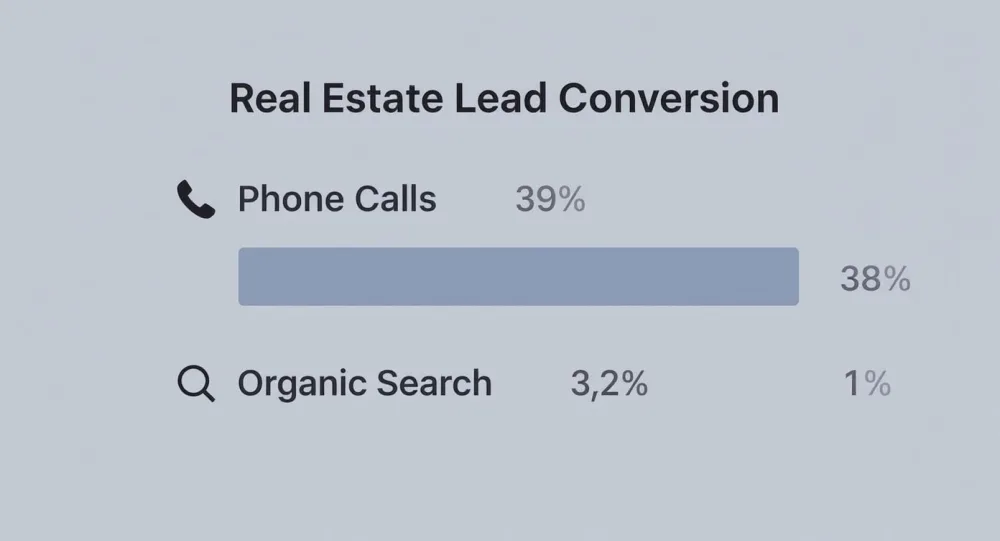
As you can see, while people might find you online, the real connection—the one that turns a lead into a client—often happens over the phone. Your entire strategy needs to make that jump from online discovery to offline conversation as smooth as possible.
To help you decide where to focus your efforts, here's a quick breakdown of the most common channels.
Quick Guide to Real Estate Client Acquisition Channels
| Channel | Average Conversion Rate | Primary Investment | Best For |
|---|---|---|---|
| Referrals | 10% - 20%+ | Time & Relationships | Agents with an established network looking for high-trust leads. |
| Online Ads (PPC) | 1% - 3% | Money | Quickly generating a high volume of top-of-funnel leads. |
| Social Media | 1% - 5% | Time & Creativity | Building a personal brand and engaging with the community. |
| Cold Outreach | <1% - 2% | Time & Resilience | Agents who are comfortable with high-volume, low-yield prospecting. |
| Open Houses | 2% - 5% | Time & Effort | Meeting active, unrepresented buyers face-to-face. |
This table gives you a starting point. The key is to pick a few channels that align with your strengths and budget, and then master them. For a more detailed look at building out your plan, check out our complete guide on marketing strategies for realtors and these real estate marketing ideas you can put to work this week.
Master Timeless Referral and Networking Strategies
In a world buzzing with notifications and online ads, you can’t beat the power of a genuine human connection. Honestly, the best, most reliable clients often come from the oldest method in the book: word-of-mouth. Building a solid referral and networking system isn't just one strategy; it’s the bedrock of a long-lasting real estate career.
The whole game here is about creating relationships built on trust. When someone you know and respect recommends a professional, you're almost certainly going to give them a call. That's the simple, powerful principle we're going to break down.

Cultivate a Strong Referral Network
Your past clients are an obvious starting point for referrals, but a truly powerful network goes way beyond that. Think about all the other pros involved in a typical transaction. Mortgage brokers, home inspectors, real estate attorneys, and title company reps can all become incredible referral partners.
The secret is making these relationships a two-way street. Don't just ask for business—send it their way first. When you recommend a fantastic mortgage broker to your client, you can bet that broker will remember you when their own client needs a great agent.
This same idea applies to local business owners. Get to know the owner of the popular coffee shop, the go-to home contractor, or the CPA everyone in town trusts. These people are deeply plugged into the community and can become your biggest advocates.
How to Ask for Referrals Without Feeling Awkward
Let’s be real: asking for referrals can feel a little cringey. But it doesn't have to. The trick is to stop thinking of it as "asking for a favor" and start seeing it as "offering to help someone they know." Timing and your tone are everything.
Here’s a simple, low-pressure script I've adapted over the years. Try it after a successful closing:
"I'm so glad we were able to find you the perfect home! I truly enjoyed working with you. My business is really built on helping people I enjoy working with, just like you. I was wondering if you know anyone else—maybe a friend, family member, or colleague—who's thinking about buying or selling and could use the same level of care?"
This approach feels genuine because it is. You're simply offering to extend the great service they just experienced to other people in their circle.
Turn Open Houses into Lead Generation Events
An open house isn't just for showing off a property; it's a golden opportunity to meet active, unrepresented buyers. With the right strategy, you can walk away with a list of promising new leads every single weekend.
To make your open houses actually work for you, try this:
- Ditch the Paper: Use a tablet for a digital sign-in. It looks far more professional and you won't have to spend an hour trying to decipher messy handwriting later.
- Offer Real Value: Instead of just a basic property flyer, have something genuinely useful ready to go, like a neighborhood market report or a first-time homebuyer's guide. You can email it to them right after they sign in.
- Engage Meaningfully: Don’t just stand by the door. Ask smart, open-ended questions like, "What are the must-have features you're looking for?" or "How's your home search been going so far?"
These small tweaks can transform a passive event into an active lead-gen machine. You stop being a door-opener and become a helpful resource they'll actually remember.
Become a Fixture in Your Community
The most successful agents I know are often the most visible people in their communities. Getting involved locally cements your reputation as the neighborhood expert and builds a massive amount of trust. This isn't about selling; it's about connecting.
Here are a few impactful ways to get involved:
- Sponsor a local youth sports team.
- Volunteer at community festivals or charity events.
- Host a free workshop for first-time homebuyers at the local library.
- Join the chamber of commerce or a local business association.
When people see you constantly giving back to the community, they automatically associate your name with trust and reliability. Don't underestimate it: word-of-mouth referrals remain one of the most reliable sources of new business, which just goes to show how valuable building a strong personal network truly is.
Dominate Your Digital Presence to Attract Clients
Forget postcards. Your next client is on their phone right now, scrolling through listings and looking for an agent they can trust. If you're not showing up where they're looking, you're practically invisible. Building a powerful digital presence isn’t just a "nice to have" anymore—it’s the main arena where agents win or lose.
This is about more than just having a website. It’s about building a connected online ecosystem that grabs attention, builds real trust, and funnels leads straight to you. From your site to your social media, every piece needs to work together to cement your reputation as the go-to expert in your market.
Build a Lead-Generating Website
Think of your website as your digital storefront. A pretty design is fine, but its most important job is turning casual visitors into actual leads. This all starts with getting smart about local search engine optimization (SEO).
People rarely just Google "real estate agent." They get specific. They're searching for answers to real-life questions, like:
- "best neighborhoods for families in Austin"
- "homes for sale near Northwood elementary"
- "how to buy a house with a low down payment"
When you create blog posts and neighborhood guides that answer these exact queries, you pull highly motivated buyers and sellers directly to your site. This is content marketing, and it positions you as a helpful authority before you've even had a conversation. Pair it with an email capture and a simple nurture sequence so those visitors don't slip away — our guide to real estate email marketing walks through how.
Master Social Media for Real Estate
Social media is where you stop being just an agent and start being a person. It’s where you build a brand and connect with your community. It's no surprise that a massive 52% of real estate agents worldwide now find leads on social platforms.
But just posting your latest listing won't cut it. You need a strategy for each platform, and killer visuals are non-negotiable. Listings with professional photos sell 32% faster, and homes marketed with video get a staggering 403% more inquiries.
Here’s a quick breakdown of where to focus:
- Instagram: This is your visual highlight reel. Use Reels for quick property tours, post "Day in the Life" Stories to humanize your work, and design slick carousels with tips for first-time homebuyers.
- Facebook: Look beyond your business page. The real gold is in local community groups. Jump in, share valuable info, answer questions, and build relationships without a hard sell.
- LinkedIn: This is where you flex your professional muscle. Connect with mortgage brokers, attorneys, and corporate relocation managers to grow your referral network. Share market stats and client success stories to show you know your stuff.
The secret to social media is simple: be consistent and provide value. Before you ask for a single thing, give, give, give. Share your knowledge generously, and you’ll build an audience that trusts you. When they’re ready to buy or sell, you’ll be the first person they call.
For a deeper dive, our guide on creating engaging real estate social media content is packed with actionable ideas you can start using today.
Demystify Paid Advertising Campaigns
Organic growth is great, but sometimes you need to get in front of the right people now. That’s where paid ads on platforms like Google and Facebook come in. But be warned, the competition is fierce—the average cost per acquisition in search ads can hit $116.61. You need a smart strategy to make sure your money is working for you.
Skip the generic "looking to buy a home?" ads. Get specific. Target your ads based on life events (like "newly engaged" or "recently relocated") or specific interests (like "luxury real estate investing"). The most successful campaigns offer something of real value in exchange for an email address.
Examples of Paid Ad Campaigns That Actually Work:
- Offer a Free Resource: Run a Facebook ad targeting first-time buyers in your city with a free download, like "The Ultimate First-Time Homebuyer's Checklist."
- Promote a Specific Listing: Create a Google Ad campaign targeting keywords like "3 bedroom home in [Your Neighborhood]" that sends people to a stunning landing page for that exact property.
- Run Retargeting Ads: Show ads to people who have already visited your website. These are warm leads who are already familiar with you, making them much more likely to convert.
By blending an optimized website, genuine social media engagement, and surgically targeted ads, you create a digital machine that consistently attracts and converts new clients.
Use Real Estate Tech to Win More Listings
When you're sitting at a seller's kitchen table, remember this: they aren't just hiring you, they're hiring your marketing plan. The way you present that plan is often the single thing that makes them choose you over the agent who was there an hour before. This is where modern real estate tech becomes your ace in the hole, transforming a standard pitch into a compelling showcase of why you're the best choice.
It’s about more than just making a property look pretty. It’s about showing sellers you have a concrete strategy to attract more buyers and get their home sold faster. You're not just making promises; you're demonstrating a proven system for success.

Transform Empty Spaces With Virtual Staging
An empty house is a tough sell. It feels cold, and buyers struggle to picture where their couch would go or how they'd live in the space. Virtual staging completely flips that script.
Instead of spending thousands on physical furniture rentals, you can use AI tools like Pedra's virtual home staging to digitally furnish rooms in seconds. That vacant living room? Now it's a cozy family hub. The empty spare bedroom becomes a serene master retreat.
During your listing presentation, pull up a side-by-side comparison: one photo of their empty room, and one that’s been virtually staged. The "wow" factor is instantaneous. You’re proving you can make their property connect with buyers on an emotional level from the moment they see it online.
Make Every Listing Shine With Photo Enhancements
Let's be real—not every home is camera-ready on photo day. That’s where professional photo enhancements save the day, fixing common visual hiccups that can make a buyer scroll right past.
These tools do so much more than just brighten a dark room. Think about the possibilities:
- Declutter a space by digitally erasing personal photos or distracting junk.
- Swap a gloomy sky for a perfect blue one to make your exterior shots pop.
- Perform "virtual renovations," like changing an outdated wall color or updating flooring to match modern trends.
This shows sellers that you'll present their home in its absolute best light, no matter what. It's a small detail that communicates a huge commitment to quality and builds serious trust.
Using high-impact visuals is a proven way to boost engagement and attract serious buyers.
Impact of Visual Marketing on Listings
| Visual Technology | Impact on Listing Performance | Ideal for Attracting |
|---|---|---|
| Virtual Staging | Increases buyer emotional connection and perceived value. | Buyers who need help visualizing a space, especially for empty homes. |
| Photo Enhancements | Improves first impressions and reduces listing time on market. | All buyers, by ensuring every photo is professional and appealing. |
| 360° Virtual Tours | Boosts online engagement and attracts out-of-town or busy buyers. | Remote buyers and those who want to pre-qualify homes before visiting. |
| Drone Footage | Showcases property size, layout, and neighborhood context. | Buyers for luxury properties, large lots, or homes with unique features. |
Ultimately, a strong visual strategy doesn't just sell the house—it sells you as the agent who knows how to get it done right.
Create Immersive Experiences With 360 Tours and Drone Footage
In a market saturated with static photos, buyers are craving a more dynamic experience. Offering things like 360-degree virtual tours and professional drone footage immediately sets you apart as an agent who gets it.
A 360-degree tour is a game-changer. It lets out-of-town buyers or people with packed schedules "walk through" the home from their couch. That drastically widens your potential buyer pool, which is a massive selling point for any homeowner.
Drone footage gives a perspective that's impossible to get from the ground. It can highlight the full scope of the property, its lot size, and how close it is to the local park or waterfront. A polished listing video for real estate ties these shots together into a tour buyers actually finish watching. For sellers with a unique property, this isn't just a nice-to-have; it's a must.
When you weave these technologies into your listing presentation, you stop being just another agent. You become a high-tech marketing partner. And as you adopt these tech-forward strategies, you can learn more about streamlining your entire process in our guide to real estate marketing automation. This is how you stop competing on commission and start winning on pure value.
Team Up: Forging Smart Partnerships in Niche Markets
You can't do it all alone. While mastering referrals and digital marketing is a huge part of the game, collaborating with other professionals is what really opens the door to new client segments. This is how you stop chasing one-off leads and become the go-to agent at the center of a local business ecosystem.
The trick is to think beyond other real estate agents. You want to build genuine, two-way relationships with professionals who serve your ideal clients before they even start thinking about moving. When you do that, you become the obvious choice when the time comes.

Find Your Key Strategic Partners
So, who are these magic partners? Start by thinking about professionals who work with people going through major life and financial changes. These are your best bets.
- Corporate Relocation Specialists: These folks handle employee moves for big companies. Partnering with one can mean a steady stream of serious buyers who need to find a place, fast.
- Wealth Managers and Financial Planners: Their clients are always looking for smart ways to invest. You can be their real estate go-to for everything from rental properties to luxury homes.
- Property Developers: Getting in with local developers can give you a sneak peek at new construction. Imagine offering your clients exclusive access to homes before they even hit the open market.
The key is making it a win-win. Offer to co-host a first-time homebuyer seminar for a financial planner's clients. Or, create a killer local market report they can share in their newsletter. Always lead by giving value.
Put Your Referral Agreements in Writing
To make these partnerships stick, you need a simple, clear referral agreement. This doesn't need to be some monster legal document. Just a straightforward outline of the referral fee and when it gets paid.
Putting it on paper keeps things transparent and shows your partners you're a serious professional. This one small step solidifies the relationship, protects everyone involved, and turns a casual chat into a reliable lead-generating machine. By building these alliances, you create a powerful network that consistently sends quality clients your way. It's how you build a business that lasts.
Your Top Questions About Getting Clients, Answered
Getting a real estate business off the ground can feel like a mystery. You're probably wondering where to start, what actually works, and how long it's going to take. Let's tackle the questions I hear most often from agents, with no-fluff answers to give you some real clarity.
We'll get into the nitty-gritty of timelines, budgets, and the strategic decisions that separate the agents who thrive from those who struggle.
How Long Does It Really Take a New Agent to Get Their First Client?
Honestly, it can take anywhere from one to six months. There's no magic number here. The timeline depends entirely on your existing network, how hard you're willing to hustle every day, and the marketing dollars you can put to work.
Agents who get their first deal in under three months are the ones who hit the ground running. They tell everyone they know—from their cousin to their old college roommate—that they're in the business. They have a non-negotiable schedule for prospecting and they invest smartly, even if it's just a small amount, in targeted marketing.
The secret to speeding things up is consistent daily action. It's not about one big, flashy move. It’s the small, focused tasks you do day in and day out that build momentum and bring clients to your door.
I'm Just Starting Out. What's the Most Cost-Effective Way to Find Clients?
When your budget is tight, your most valuable assets are your time and your relationships. You don't need a massive marketing fund to start building a solid client base.
Your first move should always be to tap into your Sphere of Influence (SOI). This is your goldmine. It's everyone you already know: friends, family, past coworkers, and people from your gym or local clubs. Make sure every single one of them knows you're in real estate and eager to help.
Once you've worked your SOI, here are a few other low-cost, high-impact strategies:
- Show up at local events. This is a free and surprisingly effective way to meet people organically. Think farmers' markets, town festivals, or charity runs.
- Host open houses for a top agent. Find a busy agent in your brokerage and offer to run their open houses. It costs you nothing and puts you face-to-face with active, unrepresented buyers.
- Be genuinely helpful on social media. Forget the "just listed" posts for now. Share neighborhood guides, tips for first-time homebuyers, or local market stats. This positions you as an expert and attracts people who will eventually need an agent.
Should I Focus on Buyers or Sellers as a New Agent?
Most new agents get their start working with buyers, and for good reason. It's generally easier to find buyers through open houses or online lead platforms. This is your real-world training ground—you'll learn the transaction process inside and out, become an expert on local inventory, and get a few commission checks in the bank.
But here's a warning: don't get stuck in the buyer-only trap. Your long-term, sustainable success hinges on getting listings. A single listing is a marketing machine. It generates buyer leads from the yard sign, your online ads, and the open house. It's a magnet for new business.
The best approach? Do both. While you're actively helping buyers to build experience and cash flow, dedicate a portion of your time every week to seller prospecting. You could "farm" a neighborhood with mailers or just relentlessly practice your listing presentation. This dual strategy is what builds a resilient business that can weather any market.
How Many Leads Do I Need to Get One Client?
You've probably heard a big number thrown around, like 100 leads to get one closing. That statistic is almost useless because it ignores the most important factor: lead quality. The real answer is, "it depends entirely on where the lead came from."
A warm referral from a past client might convert at a 1-in-10 rate. They already trust you. On the flip side, a cold lead from a broad Facebook ad might be closer to 1-in-200. The source is everything.
Ultimately, the number of leads you have is far less important than the quality of your follow-up system. Consistent, long-term nurturing is what turns a name and email into a closed deal. A disciplined follow-up plan can dramatically improve your conversion rate, squeezing more value out of every single lead you get.
Ready to make every listing irresistible and show sellers you have the best marketing plan? With Pedra, you can instantly create stunning virtual staging, photo enhancements, and listing videos with a single click. Elevate your marketing and win more clients — try Pedra today.