
Think of a real estate marketing plan as your business's GPS. It’s the strategic guide that maps out exactly how you'll find new clients and build your reputation. It turns abstract goals like "grow my business" into a concrete, day-by-day plan covering everything from your next Instagram post to your annual ad budget. This is your blueprint for creating predictable, sustainable growth.
Building Your Marketing Foundation
Before you even think about spending a dime on ads or printing a single flyer, you have to lay a solid foundation. I’ve seen too many agents jump straight into tactics, chasing the latest shiny object without a clear strategy. That’s the fastest way to burn through your budget and your energy.
Building a marketing plan is like building a house. You wouldn't order the couches before the foundation is poured and the blueprints are approved. Let's get that foundation right first.
Set Clear, Measurable Goals
The first step is to get specific. Vague wishes like "I want to sell more homes" won't get you anywhere. You need to set clear, measurable goals—the kind you can actually track and hit. This is what turns random marketing activities into a focused, powerful campaign.
Here are a few examples of what strong, actionable goals look like:
- Generate 25% more qualified seller leads over the next six months.
- Increase organic traffic to my website by 40% in the next year.
- Add an average of 15 new subscribers to my email list each week for the next quarter.
- Secure three new luxury listings over $1 million by the end of Q4.
These kinds of concrete targets give you a destination. Just as importantly, they give you benchmarks to check your progress against, so you know when to double down on what's working or pivot your strategy.
A goal without a plan is just a wish. Setting measurable objectives creates accountability and turns your marketing from a game of chance into a system designed for growth.
Define Your Unique Value Proposition
Let's be honest: what makes you different from the other hundred agents in your area? Your Unique Value Proposition (UVP) is the simple, powerful answer to that question. It's the promise you make to clients that no one else can.
Maybe you're the go-to expert for first-time homebuyers, patiently walking them through every step. Perhaps you’re a tech-savvy agent who uses incredible virtual tours and digital ads to sell homes faster. Or maybe you're deeply connected to the community, with a referral network that's second to none.
Whatever it is, pinpoint it. This is your secret sauce. Once you have that clarity, all of your real estate marketing materials—from your business card to your website copy—will be built around it. To consistently deliver on this promise, it's worth exploring tools for real estate marketing automation that can help streamline your processes.
Create Detailed Buyer and Seller Personas
You can't talk to everyone at once. Great marketing feels like a one-on-one conversation, and to do that, you need to know exactly who you're talking to. This is where buyer and seller personas come in.
These are detailed profiles of your ideal clients, based on real data and your own experience. Go deeper than just age and income. Get into their heads.
- What are their motivations? Are they moving for a new job, a bigger yard for the kids, or to downsize for retirement?
- What are their pain points? Are they terrified of bidding wars? Confused by the paperwork? Worried about finding an agent they can trust?
- How do they communicate? Do they live on Instagram? Prefer a quick text over a phone call? Read every email you send?
For example, you might create "First-Time Felicia," a 28-year-old teacher who’s overwhelmed by the mortgage process and just needs a patient guide. Then there’s "Downsizing David," a 65-year-old retiree whose main goal is to get top dollar for his home to fund his next chapter.
When you know these details, you can craft marketing messages that speak directly to their real-world needs and fears, making your outreach incredibly effective.
Building an Unforgettable Digital Presence

Think of your digital presence as your 24/7 open house. Long before a potential client ever picks up the phone to call you, they’ve already Googled you. They’ve scrolled through your listings, checked out your social media, and formed an opinion.
A polished digital footprint isn't just a "nice-to-have" anymore; it's the very first handshake. Your website, social profiles, and especially your listing visuals all need to work together to build instant trust and show you’re a pro. When someone searches for an agent in your town, that first impression needs to set you leagues apart from the competition.
Master Your Listing Visuals
The days of snapping a few quick phone pictures are over. If you want to secure top dollar and attract serious buyers, professional, high-quality visuals are non-negotiable. Don’t think of your listing photos as mere documentation—they are a core marketing asset.
The numbers don't lie. Listings with high-quality photos sell a whopping 32% faster. And agents who consistently invest in professional photography? They earn double the commission income on average. It's a clear line: great visuals lead to better results. You can see more compelling stats in this breakdown of key real estate marketing statistics.
To really capture a buyer's attention, you need a mix of media that creates a complete and immersive experience.
- Professional Photography: Bright, crisp, well-composed photos are the absolute baseline. They need to highlight the home's best features and make it feel inviting.
- Property Video Tours: A cinematic walkthrough helps buyers connect with the space on an emotional level. It tells a story that static images just can't, showing the natural flow and feel of the home.
- 360-Degree Virtual Tours: These are a total game-changer. Immersive tours let buyers "walk" through the property at their own pace, exploring every nook and cranny right from their couch.
A great listing visual does more than just show a room; it sells a lifestyle. It helps a buyer imagine their future life within those walls, which is the most powerful sales tool you have.
Create a Polished Website
Your website is the central hub of your entire digital world—it’s the one piece of online real estate you completely own and control. It needs to be clean, modern, and incredibly easy for people to use, especially on a phone, which is where most of your clients will find you first.
A high-performing agent website needs a few key things:
- An Intuitive Home Search: Make it dead simple for visitors to search for properties. An integrated IDX feed is a must, and the search bar should be front and center.
- Featured Listings: This is your chance to shine. Beautifully showcase your own listings with big, high-resolution photos and well-written descriptions.
- About You: Don't be afraid to tell your story and connect on a personal level. What makes you different? Share your value proposition and include a professional headshot.
- Client Testimonials: Social proof is everything. Sprinkle in glowing reviews from past clients to build immediate credibility with new visitors.
Your website is also a powerful engine for getting found on search engines. To really dive into turning your site into a lead-generating machine, check out our guide on SEO for real estate marketing.
Optimize Your Google Business Profile
When a local buyer or seller types "real estate agents near me" into Google, your Google Business Profile (GBP) is often the very first thing they see. Taking the time to optimize this free profile is one of the highest-impact things you can do for local lead generation. An incomplete profile just looks unprofessional and can absolutely cost you clients.
To make your profile stand out, make sure it’s complete and you're keeping it fresh.
- Verify Your Business: The first step is to claim and verify your profile. This gives you control over what people see.
- Use High-Quality Photos: Upload a professional headshot, your logo, and maybe even a few shots of your office or you with happy clients at a closing.
- Gather Reviews: Actively ask your happy clients to leave a review. And be sure to respond to every single one—good or bad. It shows you're engaged and that you care.
- Use Google Posts: Think of this as a mini-blog. Share quick updates about new listings, open houses, or market news to keep your profile active.
Winning Clients With Content And Social Media
Your digital presence—what you post on social media and what you send to your email list—is one of your most powerful, non-stop marketing tools. This isn't about spamming your followers with "Just Listed" flyers. It's about strategically building a reputation as the go-to local expert, one helpful post, email, and video at a time.
When you get this right, you stop chasing leads and start attracting them. Let’s break down how to create a realistic, sustainable system for your content that actually gets you clients.
Your Social Media Playbook
Just having a Facebook or Instagram profile isn't a strategy. Your goal is to become a trusted voice in your community, and that takes a plan. A great small business social media strategy can be a fantastic guide here.
Start by focusing on the platforms where your ideal clients actually hang out. For most agents, that's still Facebook and Instagram. But don't just treat them as a digital billboard for your listings. They're community hubs for conversation and sharing your expertise.
The numbers don't lie. An incredible 92% of Realtors in the U.S. rely on Facebook for generating leads. And if you’re using video, you’re in a different league entirely. Listings with videos get a mind-blowing 403% more inquiries. Plus, 73% of homeowners say they’re more inclined to list with an agent who uses video. It's no longer optional.
Here’s how to make this work for you:
- Become a Local Ambassador: Feature a new coffee shop, a popular park, or a favorite small business every week. This shows you're deeply invested in the community, not just in the transactions that happen there.
- Share Quick, Actionable Tips: Start a weekly series like "Market Minute Mondays" or "Tip Tuesdays." Post a quick, valuable piece of advice for buyers or sellers. Think topics like "3 Overlooked Costs When Buying a Home" or "The One Thing Every Seller Should Do Before Listing."
- Pull Back the Curtain: Show the real-life hustle. Share short clips of you prepping for an open house, celebrating at a closing, or previewing new properties. It humanizes you and builds a genuine connection that people remember.
The Unmatched Power Of Video
If you're still hesitant about video, you're leaving money on the table. It’s simply the most effective way to showcase properties and your personality. You don’t need a professional film crew—your smartphone is powerful enough to create content that gets results.
Weave these video formats into your weekly plan:
- Quick Market Updates: Shoot a 60-second video from your car or office breaking down one key market stat. Keep it simple and easy for anyone to understand.
- Candid Property Walkthroughs: Ditch the slideshow. A casual, agent-led video tour gives buyers a genuine feel for the home's layout and vibe.
- Q&A Sessions: Use Instagram Stories to ask followers for their biggest real estate questions. Then, record short, direct-to-camera videos answering them.
Video builds trust faster than any other type of content. It lets potential clients get to know, like, and trust you before you ever meet face-to-face. In a business built on relationships, that’s a massive head start.
Building Your Pipeline With Email
Social media is fantastic for grabbing attention, but email is where you build lasting relationships. Not every lead is ready to buy or sell right now. A smart email strategy keeps you top-of-mind, so when they are ready, you're the first person they call.
The key is to provide consistent value, not just sales pitches. A simple monthly newsletter can be incredibly effective.
What goes into a great newsletter?
- A link to your best piece of content from the month (like a blog post or video).
- A "Featured Listing of the Month."
- A quick, digestible update on local market trends.
- A personal note or a brief story about a recent client success.
This strategy cultivates a long-term pipeline of prospects who view you as a trusted resource, not just another agent. To learn more about setting up a system that consistently brings in new business, check out our guide on real estate content marketing.
Your Secret Weapon: A Simple Content Calendar
Consistency is everything in content marketing, but it's also the hardest part. This is where a content calendar becomes your best friend. It doesn't need to be fancy—a basic spreadsheet is all you need to get started.
Plan out your themes for the month ahead. For example:
- Week 1: Focus on tips for first-time homebuyers.
- Week 2: Shift to seller-focused advice on home prep.
- Week 3: Showcase community features and local businesses.
- Week 4: Share and analyze recent market data.
This simple framework eliminates the daily "what should I post?" panic and ensures you’re delivering a well-rounded, valuable mix of content to your audience.
Grow Faster with Paid Ads and Local Partnerships
Organic marketing is your long game, but let's be honest—sometimes you need to get leads now. That's where paid ads and smart local partnerships come in. Think of them as your accelerators, letting you skip the line and get directly in front of the right people, right when they need you. This is how you shift from passively waiting for the phone to ring to actively making it happen.
This isn't about blindly throwing cash at Facebook and hoping something sticks. It’s about a deliberate one-two punch: laser-focused digital ads combined with the old-school, tried-and-true power of a solid local network. Let's break down how to make both work for you.
Running Targeted Digital Ad Campaigns
The real magic of platforms like Google, Facebook, and Instagram is how specific you can get. You’re no longer just advertising to a zip code; you’re reaching people based on their location, what they're interested in, and even what they've been doing online (like browsing Zillow for the past week).
Imagine this: you launch a Facebook ad that only shows up for people within a 15-mile radius of your main territory who have recently shown interest in "mortgage pre-approval" or "first-time homebuyer grants." That's the power we're talking about. Your ad spend goes directly toward people who are already halfway to your door, not just random homeowners.
If you really want to get serious about paid ads, learning the ropes of effective Google Ads management is a fantastic place to start. It’s a skill that pays for itself many times over.
Here are a few ad ideas you can run this week:
- Promote a Hot Listing: Got a new property on the market? Boost it directly to people in that specific school district. A simple ad saying, "Just Listed: 4-bedroom family home in the coveted Northwood school district! Take the 360° tour now," is incredibly effective.
- Generate Seller Leads: Offer something genuinely useful, like a free guide on "5 Essential Fixes to Maximize Your Home's Sale Price." People who download it are telling you they're thinking about selling. Now they're on your email list.
- Build Your Brand: Run a quick, 30-second video of you talking about what makes your neighborhood special. It’s a simple way to get your face out there and build that all-important name recognition.
Paid ads put you in the driver's seat. You decide the budget, you pick the audience, and you get instant feedback on what’s working. It's the fastest way to figure out what messaging actually connects with buyers and sellers in your area.
The Untapped Goldmine of Local Partnerships
While digital ads are great, some of your best, most qualified leads will still come from handshakes and coffee meetings. Building a rock-solid referral network is a non-negotiable part of any sustainable real estate agent marketing plan. This is all about creating win-win relationships with other local pros whose clients will eventually need an agent.
And I'm not just talking about other agents. Your best partners are often in related fields.
- Mortgage Brokers & Lenders: This is the most obvious and powerful partnership. Grab coffee with a few local brokers until you find one you click with. When you can send a buyer to a lender you trust (and they do the same for you), everyone wins—especially the client.
- Home Inspectors & Contractors: These folks are on the front lines. An inspector meets sellers who are just about to list. A contractor is often the first to know a family is planning a big pre-sale renovation. Get to know the good ones.
- Local Businesses: Don't sleep on the power of community hubs. Sponsoring a local kids' soccer team or co-hosting a "First-Time Homebuyer Q&A" at a popular coffee shop gets your brand out there in a genuine, helpful way.
The key to making this work? Give before you get. Send a referral to a great mortgage broker before you ever ask for one back. That simple act of goodwill builds trust and makes them eager to return the favor. Before you know it, you'll have a referral engine sending you high-quality, pre-qualified leads.
Your Actionable 90-Day Marketing Roadmap
A great plan is worthless without action. Let’s turn all this strategy into a practical, 90-day roadmap you can actually use, starting today. This isn't just theory; it's a step-by-step guide designed to build real momentum and get you tangible results in the next quarter.
We’ll break it down into three focused phases. Each month has a specific mission: laying the groundwork, creating and engaging, and then scaling up with ads and partnerships. This approach keeps things manageable and makes sure every action builds on the last.
Month 1: The Foundation Phase
The first 30 days are all about getting your house in order. The goal here is to polish your digital storefront and get the right systems in place for growth. Before you can attract new clients, your website and social profiles need to look professional and be ready to turn visitors into leads.
This first month isn't about getting a sudden rush of new business. It’s about building the professional infrastructure that makes all your future marketing efforts hit harder. Think of it as sharpening your axe before you start swinging.
Here's your checklist to get that foundation solid:
- Audit Your Online Presence: Take a hard look at your website, social media profiles, and Google Business Profile. Is your branding consistent? Do you have a professional headshot and up-to-date contact info everywhere?
- Optimize Your Google Business Profile: Don't just fill it out—complete it. Add high-quality photos, clearly define your service areas, and make a point to ask 3-5 recent happy clients for reviews to build that crucial social proof.
- Define Your Core Content Pillars: Based on your ideal client, pick 3-4 key topics you'll own. This could be things like first-time homebuyer tips, local market stats, or community spotlights. These pillars will guide everything you create in Month 2.
- Set Up Your Email System: Choose a service like Mailchimp or ConvertKit and create a simple "lead magnet." A PDF "Home Buyer's Checklist" is a classic for a reason—it works. This is how you'll start building your email list.
Month 2: The Content and Engagement Phase
With your foundation poured and set, Month 2 is all about creating value and starting conversations. This is when your content strategy comes to life. You'll start building an audience and positioning yourself as the go-to local expert. Consistency is everything here.
Your focus now shifts from setup to outreach. The mission is to become a visible, helpful resource in your community. Every piece of content you put out there should answer a question, solve a problem, or showcase your unique knowledge of the area.
Here’s what to do this month:
- Shoot Your First Videos: Seriously, don't overthink it. Grab your smartphone and record two short videos. One can be a quick market update (under 60 seconds), and the other a simple tour of a local park or a favorite neighborhood spot.
- Publish Weekly Content: Stick to your content pillars. Write one blog post or send one genuinely useful email newsletter each week. Post on your main social media channel at least 3-4 times per week, mixing in your videos, quick tips, and local highlights.
- Engage Proactively: Block off 15 minutes every single day to interact with people online. Jump into local Facebook groups to comment, answer questions on neighborhood forums, and engage with other local businesses on their social accounts.
Your content's job is to build trust at scale. A single helpful video or blog post can answer a potential client's question before they even think to ask it, establishing your credibility long before you ever meet.
Month 3: The Scaling and Growth Phase
You've built a solid organic engine. Now, it's time to add some high-octane fuel. In Month 3, you’ll introduce paid advertising and formalize local partnerships to really accelerate your lead generation. Best of all, you'll use what you learned from your organic content to make your paid campaigns smarter from day one.
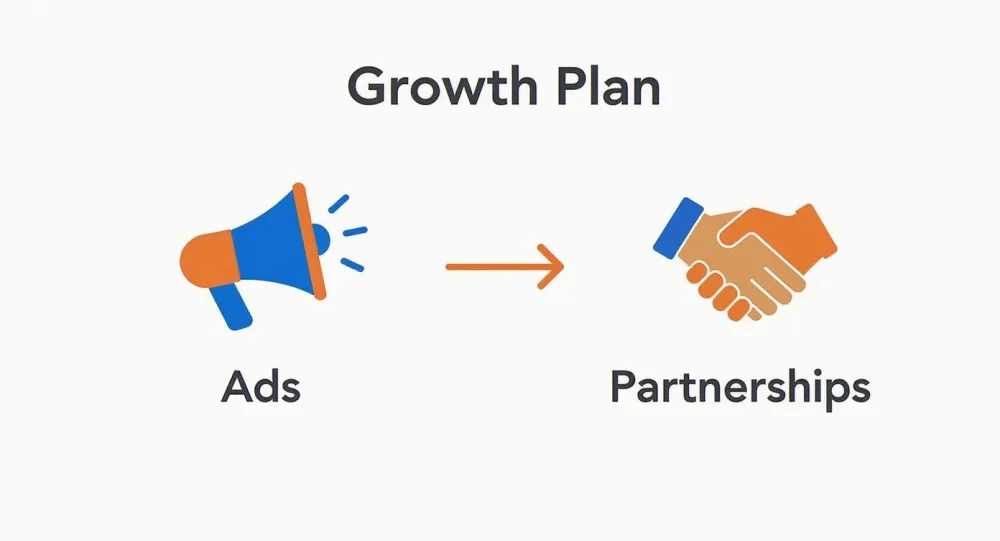
This visual shows how targeted ads and strategic partnerships work together as powerful growth levers for your business.
By this point, you already know which topics and types of listings get the most eyeballs and comments. That data is gold because it tells you exactly where to put your ad budget. This final phase of your 90-day real estate agent marketing plan is about turning proven content into a predictable machine for generating leads.
Your scaling checklist looks like this:
- Launch a Targeted Ad Campaign: Start small with a budget of just $5-$10 per day. "Boost" your most popular blog post or a new listing to a highly targeted audience in your specific zip codes on Facebook or Instagram.
- Host a Local Event or Webinar: Think a "First-Time Homebuyer Q&A" at a local coffee shop or an online webinar. The goal is to get face-to-face (or screen-to-screen) with potential clients and provide real value.
- Formalize One Partnership: Pick one key potential partner—a mortgage broker, a home inspector, a local stager—and take them to lunch. Hash out a clear, simple plan for how you can refer business to each other.
To help you visualize this journey, here’s a high-level look at how these pieces fit together over the quarter.
Sample 90-Day Marketing Plan Outline
| Phase | Focus Area | Example Tasks |
|---|---|---|
| Month 1 (Days 1-30) | Foundation & Setup | • Audit and polish all social profiles and website. • Fully optimize Google Business Profile. • Ask 5 past clients for reviews. |
| Month 2 (Days 31-60) | Content & Engagement | • Publish one blog/video per week. • Post 3-4x weekly on primary social channel. • Engage in local online groups for 15 mins/day. |
| Month 3 (Days 61-90) | Scaling & Growth | • Launch first paid ad campaign ($5-10/day). • Host one webinar or small local event. • Formalize one referral partnership. |
This structure provides a clear path from setup to sustainable growth, ensuring you're always focused on the activities that will move your business forward.
Your Top Real Estate Marketing Questions, Answered
Once you start putting a real estate marketing plan into action, the questions always start popping up. It's only natural. I get these all the time from agents, so I wanted to tackle the big ones head-on.
My goal here is to give you straight, no-fluff answers. This isn't about theory; it's about what actually works in the trenches so you can focus on selling homes and growing your business. Let's get into the nitty-gritty of budgeting, tracking what matters, and staying consistent without burning out.
How Much Should I Actually Spend on Marketing?
There’s no magic number here, but a solid rule of thumb is to set aside 10% of your gross commission income (GCI) for marketing. This approach is great because your budget naturally scales up as your business grows.
Of course, your personal situation is what really counts. If you’re a brand-new agent, you'll probably need to invest more upfront just to get your name out there and build some momentum. On the flip side, a veteran agent with a steady stream of referrals might spend less, focusing more on nurturing their existing network.
The percentage isn't nearly as important as how you track it. Your plan needs a real, line-by-line budget.
- Mix it up: Start by blending low-cost, high-effort stuff (like creating your own social media videos) with a dedicated, smaller budget for targeted paid ads.
- Watch your ROI: Pay close attention to which channels—Facebook ads, your Google Business Profile, local event sponsorships—are actually bringing in leads that turn into clients.
- Be ready to pivot: If you discover that your Google Ads are delivering high-quality seller leads for a great price, don't be afraid to shift more of your budget in that direction.
A smart marketing budget is a living thing. It's not something you set in January and forget about. Check in on your spending and your results every quarter to make sure your money is working as hard as you are.
What Are the Most Important KPIs to Track?
You could track a hundred different metrics, but most of them are just noise. Drowning in data is just as bad as having none. Your Key Performance Indicators (KPIs) should tell you a clear story about what’s working and what isn't.
If you only track a handful of things, make it these. They directly connect your marketing to your bank account.
- Lead Volume: Simple but crucial. How many qualified inquiries are you getting from each marketing channel every month?
- Cost Per Lead (CPL): This is your efficiency metric. Divide what you spent on a channel (e.g., your Facebook ads) by the number of leads it brought in. Now you know where your money is best spent.
- Website Traffic & Engagement: Don't just look at how many people visit your site. The real gold is in how long they stick around. High traffic but a low "time on page" is a red flag that your content isn't connecting.
- Social Media Engagement Rate: Followers are a vanity metric. What you really want to measure are the likes, comments, and shares compared to your audience size. This shows you if people are actually listening.
- Lead-to-Client Conversion Rate: This is the big one. Out of all the leads you get, how many actually sign a listing agreement or a buyer's rep agreement? This KPI tells you everything about your lead quality and how effective your follow-up is.
How Do I Create Marketing Content Consistently?
Consistency feels like the biggest hurdle in content marketing, doesn't it? The secret isn't finding more time—it's being smarter with the time you have. The best way to do this is content batching.
Stop trying to think of something new to post every single day. Instead, block off a chunk of time—say, four hours on a Friday morning—and create all your content for the next month.
During your batching session, you could:
- Map out all your social media posts in a content calendar.
- Write two short blog posts answering common client questions.
- Shoot three quick market update videos on your phone.
Once everything is created, use a scheduling tool to put it on autopilot. This frees up your mind and your calendar.
And don't forget to repurpose everything! One good piece of content can fuel your marketing for an entire week. For example, a single video about the local market can become a blog post, several short clips for Instagram Reels, a highlight in your email newsletter, and a graphic with a key stat for Facebook. You do the work once and reap the rewards all month long.
Ready to elevate your listings with stunning, AI-powered visuals that capture buyer attention? Pedra transforms your property photos into professional-grade virtual staging, photo enhancements, and immersive 360° tours in just seconds. See how thousands of agents are selling faster by visiting Pedra.
Once your plan is in place, our guide to the best marketing and advertising for realtors covers the ten tactics worth building it around.