
Words That Sell: Crafting Your Perfect Property Pitch
Whether you need an apartment description, a rental property listing, or a house for sale template — a compelling property description is as crucial as striking visuals. It's your first, best chance to connect with buyers, paint a picture of their future, and prompt action. This guide offers diverse property description examples to sharpen your marketing. We'll explore 8 distinct categories, from luxury estates to eco-friendly homes, providing practical inspiration. Well-crafted property description examples like these, paired with quality photos, create powerful listings that can significantly speed up your sales.
⚡ Jump to Your Property Type:
| Property Type | Best For | Jump To |
|---|---|---|
| Luxury Estates | High-end properties $500K+ | View Template → |
| First-Time Buyer Homes | Starter homes, condos, affordable | View Template → |
| Investment Properties | Rentals, multi-family, cash flow | View Template → |
| Historic Homes | Pre-1950s, architectural significance | View Template → |
| Vacation Rentals | Airbnb, VRBO, short-term | View Template → |
| Fixer-Uppers | Needs work, sold as-is | View Template → |
| Eco-Friendly/Green | Solar, sustainable, energy-efficient | View Template → |
| Urban Lofts/Modern | Downtown condos, contemporary | View Template → |
In a hurry? Scroll down for Quick Copy-Paste Templates you can use right now.
Quick Copy-Paste Templates
Need a description in the next 5 minutes? Here are condensed templates for each property type. Customize the [bracketed] parts:
Luxury Template (60 seconds to customize):
Nestled in [exclusive neighborhood], this [architectural style] masterpiece offers [X] bedrooms and [X] bathrooms of unparalleled luxury. [Standout feature like "Chef's kitchen with Wolf/Sub-Zero appliances"] flows seamlessly to [outdoor feature]. [Unique element like "Private vineyard/ocean views/smart home"]. A rare opportunity for discerning buyers seeking [lifestyle benefit].
First-Time Buyer Template:
Your homeownership journey begins here! This charming [X]-bed, [X]-bath [home type] features [recent update like "updated kitchen/fresh paint"], [low-maintenance feature like "vinyl siding/newer roof"], and [included items like "all appliances included"]. Located in [neighborhood] near [schools/transit/parks]. Move-in ready and perfect for first-time buyers!
Investment Property Template:
Turnkey [property type] generating $[X]/month gross rent. [Cap rate]% cap rate in [appreciation status] neighborhood. [Unit breakdown with rents and lease terms]. [Tenant payment history]. [Major recent updates like roof/HVAC]. [Value-add opportunity if any]. Full financials available. Serious investors only.
Fixer-Upper Template:
[Location] opportunity! This [X]-bed, [X]-bath [property type] offers incredible potential for [investors/renovators/DIY buyers]. Solid bones with [any strong points like "good foundation/newer roof"]. Needs [honest assessment: full renovation/cosmetic updates/system updates]. Excellent [location benefit]. Sold strictly as-is.
Vacation Rental Template:
[Property name] awaits! Your [location type] getaway features [X] bedrooms (sleeps [X]), [standout amenity like "hot tub/ocean views/fireplace"], and is [distance] from [major attraction]. Fully equipped kitchen, [wifi/entertainment], and [included items like "beach gear/linens"]. Perfect for [target guest: families/couples/groups]. Book your [seasonal] escape!
Historic Property Template:
Step into history! This beautifully [preserved/restored] [year built] [architectural style] home features [original period details like "hardwood floors/stained glass/ornate millwork"]. [Modern updates like "updated kitchen/baths"] seamlessly blend with authentic character. [Unique historical element or story]. [Historic designation if applicable like "Listed on National Register"]. [Location benefit]. A rare opportunity to own a piece of [area] heritage.
Eco-Friendly/Green Template:
Sustainable luxury meets modern comfort! This [certification like "LEED-certified/net-zero"] home features [energy features like "solar panels/geothermal/superior insulation"], [sustainable materials like "bamboo floors/recycled glass counters"], and [eco amenity like "rainwater collection/EV charging"]. Average utility bills under $[X]/month. [Indoor air quality feature]. Eco-conscious living without compromise in [neighborhood].
Urban Loft/Contemporary Template:
Urban living at its finest! This [X]-bedroom loft/condo features [standout design element like "14-foot ceilings/floor-to-ceiling windows/exposed brick"], [modern kitchen with specific appliances], and [premium amenity like "rooftop access/smart home tech"]. [View description]. Walk Score [X] - steps from [transit/dining/entertainment]. [Building amenities]. Modern sophistication in the heart of [neighborhood].
Want the full detailed templates with more context? Read the complete guide below.
⚡ Even Faster: Need a custom description in 30 seconds without any manual work? Try our Free AI Real Estate Listing Description Generator - just answer a few questions and let AI write it for you. 100% free, no signup required.
The Universal Property Description Formula
Before diving into specific examples, here's the proven structure that works for ANY property:
Opening Hook (1 sentence)
Grab attention with the property's #1 selling point or unique feature.
Example: "Waterfront luxury meets modern convenience in this architectural masterpiece."
Key Features (2-3 sentences)
List the most important aspects: bedrooms/baths, standout features, recent updates.
Example: "This 4-bed, 3.5-bath contemporary home features floor-to-ceiling windows, a chef's kitchen with Thermador appliances, and a primary suite with private balcony overlooking the lake."
Lifestyle Benefits (2-3 sentences)
Explain HOW the features benefit the buyer's life.
Example: "Imagine morning coffee watching sunrise over the water, or entertaining guests in the open-concept living area that flows seamlessly to the outdoor deck."
Location & Neighborhood (1-2 sentences)
Highlight key nearby amenities, schools, transit, or neighborhood character.
Example: "Located in the sought-after Lakeview district, walk to top-rated schools, waterfront parks, and vibrant downtown dining."
Call to Action (1 sentence)
Encourage the next step.
Example: "Schedule your private showing today before this rare opportunity is gone."
Total length: 150-250 words for online listings. Use this formula, then customize based on your property type below.
1. Luxury Real Estate Property Description
When it comes to high-end real estate, a standard property description simply won't suffice. Luxury real estate property descriptions are a specialized form of real estate copywriting designed to captivate affluent buyers. This approach moves beyond listing mere features; it crafts a narrative of prestige, exclusivity, and sophisticated living. It works by using elevated language, vivid imagery, and a keen focus on what sets a property apart—be it unique architectural details, premium materials, bespoke amenities, or the unparalleled lifestyle it offers. These descriptions are among the most potent property description examples for a niche but highly valuable market segment.
The core of a luxury property description lies in its ability to evoke emotion and aspiration. It meticulously details elements like custom-designed interiors, specific high-end appliance brands (think Sub-Zero, Wolf, or Miele), rare marbles or hardwoods, and technologically advanced smart home features. The language is carefully chosen to paint a picture of elegance and comfort, appealing directly to the desires and expectations of discerning buyers looking for more than just a house, but a statement residence. High-quality, professional photography and videography are almost always integral, working in tandem with the text to create a compelling presentation.
Why This Approach Matters in the Luxury Market
This specialized descriptive style is crucial in the luxury sector because it helps justify a premium price point. By highlighting the exceptional quality, craftsmanship, and unique attributes, these descriptions build perceived value. They attract serious, qualified buyers who are already looking for properties of a certain caliber, thereby streamlining the screening process. Furthermore, a well-crafted luxury description creates an aspirational appeal, making the property more memorable and desirable, and effectively differentiating it from more standard listings in a competitive market.
Key Features & Benefits:
- Emphasis on Premium Materials and Finishes: Specific mentions of brand names and origins of materials (e.g., "Italian Calacatta marble," "Brazilian cherrywood floors") add credibility and allure.
- Detailed Architectural Descriptions: Highlighting the architectural style, renowned architects or designers, and unique structural elements (e.g., "soaring coffered ceilings," "a cantilevered viewing deck") appeals to sophisticated tastes.
- Lifestyle-Focused Language: Words and phrases are chosen to sell a dream – "an entertainer's paradise," "a tranquil private retreat," "unrivaled panoramic views."
- Exclusive Amenity Highlights: Features like private spas, home theaters, wine cellars, infinity pools, or private docks are given prominence.
- Integration with High-Quality Visuals: The text complements and enhances stunning photography and videography.
Pros of Using Luxury Property Descriptions:
- Attracts qualified, serious buyers already in the luxury market.
- Justifies and supports premium pricing.
- Creates a strong aspirational appeal and emotional connection.
- Significantly differentiates the listing from standard properties.
Before diving deeper into crafting these narratives, let's consider some critical data points that underscore the preferences of affluent buyers and market realities. These key takeaways, which will be presented in the summary box infographic below, offer a quick reference:
- Premium Materials are Paramount: 90% of affluent buyers prioritize high-quality materials and finishes.
- Exclusive Amenities Drive Value: 75% of these buyers place significant importance on exclusive amenities.
- Market Time Consideration: Luxury properties typically have an average market time of around 120 days.
The infographic below visually summarises these key statistics about luxury real estate:
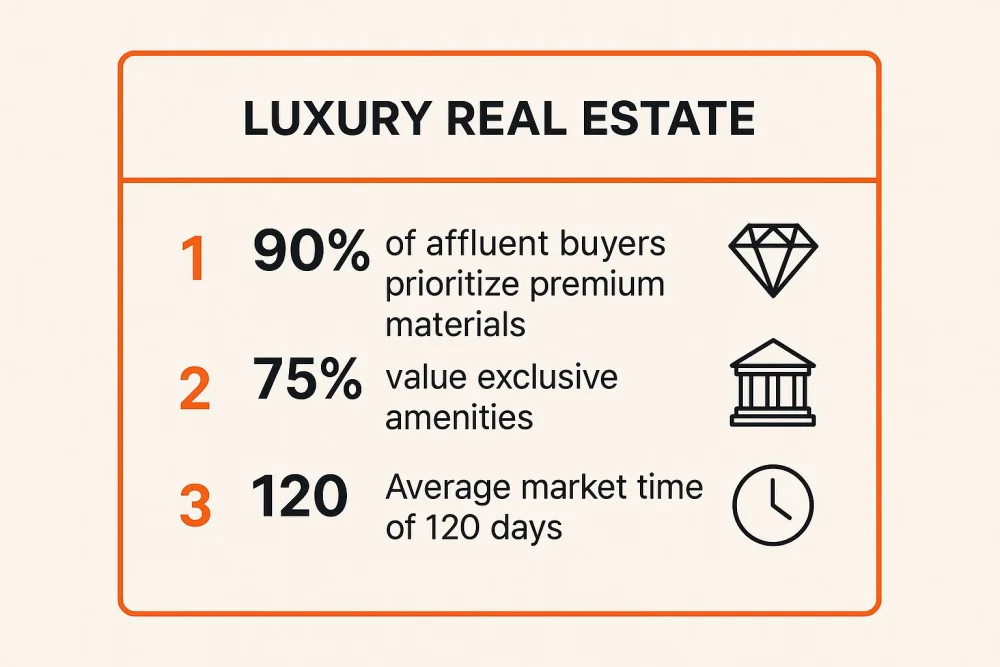
Infographic showing key data about Luxury Real Estate Property Description
As the infographic highlights, the significant emphasis on premium materials and exclusive amenities underscores what truly resonates with luxury buyers. This data confirms that focusing on these aspects in your property description is not just advisable but essential. The longer average market time also suggests that patience and sustained, high-quality marketing efforts are characteristic of this segment.
Potential Challenges (Cons):
- Niche Appeal: May alienate or seem out of reach to the broader market.
- Expertise Required: Demands extensive knowledge of luxury features, brands, and architectural terms.
- High Expectations: Sets very high expectations for the property's condition and showing experience.
- Longer Marketing Cycles: As indicated, luxury properties often take longer to sell.
Examples of Effective Luxury Descriptions:
Here are a couple of property description examples that embody this luxury approach:
- "Nestled within a private, gated enclave, this stunning Mediterranean villa offers an unparalleled lifestyle. A grand entrance welcomes you with a hand-carved Italian marble foyer, leading to expansive living areas adorned with custom millwork. The state-of-the-art chef's kitchen boasts Sub-Zero and Wolf appliances, perfect for culinary exploration, while the master suite provides a serene retreat with a spa-like bathroom and private terrace. Outdoors, an infinity pool seamlessly merges with breathtaking views of your private vineyard, creating an oasis of tranquility."
- "Experience the pinnacle of urban living in this exquisite penthouse sanctuary. Floor-to-ceiling windows frame panoramic city skyline views, bathing the open-concept living space in natural light. Cutting-edge smart home automation controls everything from lighting to climate with a simple voice command. The residence features direct private elevator access, ensuring utmost discretion, and a gourmet kitchen equipped with Gaggenau appliances, making it an entertainer's dream."
These examples use specific details, sensory language, and highlight exclusivity to attract the target buyer.
Actionable Tips for Crafting Luxury Descriptions:
- Be Specific with Brands and Materials: Name-drop luxury brands for appliances, finishes (e.g., "Poggenpohl cabinetry," "Lutron lighting").
- Emphasize Privacy and Exclusivity: Use terms like "private oasis," "gated community," "secluded wing," "uncompromised privacy."
- Detail Architectural Style and Designer Influence: Mention the architectural style (e.g., "Contemporary masterpiece," "Classic Georgian revival") and any renowned architects or designers involved.
- Spotlight Unique Views and Location Benefits: Describe views vividly ("sunset views over the ocean," "serene lakefront setting") and highlight proximity to exclusive amenities or neighborhoods.
- Sell the Experience: Focus on how the features translate into a lifestyle – the joy of entertaining in a chef's kitchen, the peace of a private garden.
When and Why to Use This Approach:
This meticulous, evocative descriptive style is indispensable when marketing properties at the higher end of the market. Use it for homes that genuinely possess the features, finishes, and unique characteristics that warrant premium pricing. It's the right choice when your target audience is affluent, discerning, and seeking a property that reflects their status and lifestyle aspirations. This approach is less about selling square footage and more about selling a dream and a legacy.
For a visual exploration of marketing high-end properties, the following video provides insightful perspectives:
https://www.youtube.com/embed/4jnzf1yj48M
The art of writing luxury property descriptions has been significantly shaped and popularized by leading global real estate firms such as Sotheby's International Realty and Christie's International Real Estate, as well as by top-tier agents in affluent markets like Beverly Hills and Manhattan. Their success underscores the power of sophisticated storytelling in real estate. Mastering this type of description is a key component of a comprehensive high-end strategy. Learn more about Luxury Real Estate Property Description and discover other advanced techniques to elevate your listings and attract the right clientele.
2. First-Time Homebuyer Friendly Description
Stepping into the property market for the first time can be daunting. Buyers are often navigating unfamiliar processes, managing tight budgets, and seeking reassurance that they're making a sound investment. This is where the "First-Time Homebuyer Friendly Description" shines as a powerful tool in your arsenal of property description examples. This approach isn't just about listing features; it's about crafting a narrative that speaks directly to the hopes, concerns, and practical needs of those embarking on their homeownership journey. It aims to demystify the property and present it as an accessible, smart, and exciting first step, making it a deserving entry in any comprehensive list of property marketing strategies.
What is it and How it Works?
A First-Time Homebuyer Friendly Description is a carefully tailored piece of marketing copy designed to resonate with individuals or families purchasing their inaugural home. It prioritizes clarity, affordability, and practicality over luxury or niche appeal. The core principle is to alleviate common anxieties associated with a first home purchase—such as unexpected repair costs, complex maintenance, or uncertain future value.
It works by:
- Building Confidence: Using straightforward language, avoiding industry jargon, and highlighting aspects that make the home easy to own and manage. Descriptions focus on stability and ease, assuring buyers they are making a secure choice.
- Emphasizing Value and Affordability: The narrative focuses not just on the price tag, but on what the buyer gets for their money—move-in readiness, included items, low running costs, and the potential for building equity.
- Painting a Picture of Attainable Homeownership: It makes the dream feel real and within reach, rather than an overwhelming financial burden. The language used is inviting and encouraging.
- Addressing Key Concerns Proactively: By mentioning recent updates (like a new roof or HVAC system), low-maintenance features, or included warranties, the description preemptively answers questions a first-time buyer might be hesitant to ask or might not even know to consider.
This type of description effectively acts as a reassuring guide, showcasing the property as a welcoming and sensible entry point into the housing market. It's about making the property approachable and understandable.
Why This Approach Matters for First-Time Buyers
First-time buyers represent a significant portion of the real estate market, often comprising 30-40% of home purchases in many regions. They bring unique concerns and needs that differ markedly from seasoned buyers or investors. By specifically addressing their anxieties about maintenance, affordability, and the unknown aspects of homeownership, this approach builds trust and confidence. It positions you as an advocate and educator, not just a salesperson, which is crucial for this demographic who may be wary and seeking guidance.
This tailored approach increases the likelihood that first-time buyers will engage with your listing, schedule a showing, and ultimately feel comfortable making an offer. It helps them envision themselves in the home, not as an overwhelming financial commitment, but as a natural and achievable step in their lives. By removing barriers of jargon and complexity, you're essentially holding their hand through the process via your marketing copy.
Key Features & Benefits:
- Clear, Jargon-Free Language: Avoiding technical real estate terms and explaining things in simple, everyday language makes the property accessible and less intimidating.
- Emphasis on Move-In Readiness: Highlighting that the home is ready to live in, with recent updates or included appliances, eliminates the fear of immediate, unexpected expenses.
- Low Maintenance Highlights: Mentioning features like vinyl siding, newer roofs, or HOA-maintained exteriors addresses concerns about ongoing upkeep and costs, which are common worries for first-time buyers with limited savings and DIY experience.
- Affordability Indicators: While you may not state the price in the description itself (depending on platform rules), language focusing on "value," "included items," "low utility costs," or "potential for equity" speaks directly to budget concerns.
- Proximity to Essential Amenities: Highlighting nearby schools, public transport, grocery stores, and parks addresses practical lifestyle needs relevant to young families or individuals starting out.
- Positive, Encouraging Tone: The overall language is uplifting, using words like "charming," "perfect start," "welcoming," "opportunity," and "your new home," which foster a sense of excitement and possibility.
Pros of Using First-Time Homebuyer Friendly Descriptions:
- Directly Appeals to a Large, Active Market Segment: Taps into a demographic that is actively searching and motivated to buy.
- Builds Rapport and Trust: Positions you as helpful and understanding, fostering a positive relationship from the first interaction.
- Reduces Perceived Barriers: Makes the home feel attainable and the buying process less daunting.
- Encourages Engagement: Buyers are more likely to inquire or schedule showings when they feel the property is "right" for them and within their grasp.
Before diving into specific examples and actionable tips, it's valuable to understand some key data points that underscore the priorities and concerns of this buyer group. These insights, presented in the summary box infographic below, provide a quick snapshot:
- Affordability is Key: 85% of first-time buyers cite affordability as their top concern.
- Move-In Ready is Highly Desired: 60% prefer properties that are move-in ready, avoiding the hassle and cost of immediate repairs or updates.
- Financing Dominance: 95% of first-time buyers utilize financing (mortgages), making terms, rates, and the overall cost predictability extremely important.
The infographic below visually summarizes these key statistics about first-time homebuyers:
Infographic showing key data about First-Time Homebuyer Friendly Description
As the infographic confirms, addressing affordability and move-in readiness in your descriptions is not just advisable—it's essential for connecting with this market. These data points should inform the specific features and benefits you choose to highlight.
Potential Challenges (Cons):
- May Not Appeal to Luxury or Investor Buyers: The straightforward, budget-conscious tone might not resonate with buyers seeking high-end features or those looking at properties purely as investment vehicles.
- Can Seem Too Basic for Experienced Buyers: Seasoned buyers might find the simplified language unnecessary or even condescending.
- Requires Accurate Assessment: You must genuinely ensure the property fits the "first-time buyer friendly" criteria (e.g., it shouldn't have major deferred maintenance or be in need of significant renovation if you're marketing it as move-in ready).
Examples of Effective First-Time Buyer Descriptions:
Here are property description examples tailored for first-time buyers:
- "Welcome home! This delightful 3-bedroom, 2-bathroom ranch is the perfect start to your homeownership journey. Freshly painted interiors and a brand-new kitchen (2023) mean you can move in and start making memories right away. The fully fenced backyard is ideal for pets or future play areas, and the attached garage offers convenience and storage. Located in a friendly neighborhood, you're just a short walk from Lincoln Park and a quick drive to grocery stores and schools. This home is move-in ready and waiting for you!"
- "Your first home awaits! This charming 2-bedroom, 1.5-bathroom townhouse offers low-maintenance living with an HOA that takes care of exterior upkeep, landscaping, and snow removal—perfect for busy professionals or those new to home maintenance. Inside, you'll find updated flooring, a modern kitchen with all appliances included (refrigerator, stove, dishwasher, washer, dryer!), and plenty of natural light. The community also features a pool and playground. Close to the metro station for an easy commute. Affordable, convenient, and ready for you to call it home."
These examples use encouraging language, highlight practical benefits, and focus on ease and value.
Actionable Tips for Crafting First-Time Buyer Descriptions:
- Highlight Recent Updates and Inclusions: Specifically mention any recent improvements (new roof, updated HVAC, fresh paint) and what's included in the sale (appliances, window treatments), as these represent immediate value and savings.
- Emphasize Low Maintenance Features: Point out vinyl siding, newer windows, updated systems, or HOA-maintained exteriors to ease concerns about upkeep costs and effort.
- Use Encouraging, Accessible Language: Choose words like "charming," "welcoming," "perfect for," "easy," "convenient," "your new home," and "start your journey." Avoid overly technical terms.
- Mention Practical Location Benefits: Focus on proximity to essential services like grocery stores, public transportation, good schools, and parks—things that matter for daily life.
- Quantify Value Where Possible: If applicable, mention low HOA fees, energy-efficient features that reduce utility bills, or recent appraisals that confirm value.
- Be Honest and Realistic: Don't oversell. If it's a starter home, frame it positively as a "great opportunity to build equity" rather than trying to make it sound like a luxury property.
When and Why to Use This Approach:
This description style is ideal for properties priced in the entry-level to mid-range segment of your local market, particularly homes that are in good, livable condition and don't require significant work. Use it when your likely buyer pool includes young professionals, newlyweds, or families making their first purchase. It's the right choice when you want to make the property feel accessible, reduce buyer anxiety, and build trust quickly.
For further insights into effectively reaching and engaging with first-time buyers in the real estate market, this video offers valuable perspectives:
https://www.youtube.com/embed/dQw4w9WgXcQ
The strategy of tailoring property descriptions to first-time buyers has been widely adopted and refined by real estate professionals and platforms focused on making homeownership more accessible, such as Realtor.com and Zillow, as well as agents specializing in starter home markets. Their success highlights the importance of empathetic, clear communication. Mastering this approach is a vital tool in a well-rounded marketing strategy. Learn more about First-Time Homebuyer Friendly Description and explore additional techniques to connect with diverse buyer segments and accelerate your sales.
3. Investment Property Description
For real estate investors, the decision to purchase a property is driven by a completely different set of criteria than for those seeking a primary residence or vacation home. Emotions take a back seat; the focus is squarely on numbers, potential returns, and risk mitigation. This is where the "Investment Property Description" becomes an indispensable tool in your collection of property description examples. This approach is not about selling a dream home or a lifestyle; it's about presenting a compelling business opportunity backed by concrete data. It's a strategic, analytical form of marketing copy designed to attract savvy investors looking for profitable ventures.
What is it and How it Works?
An Investment Property Description is a highly specialized style of real estate marketing that prioritizes financial data, income potential, and operational details over aesthetic appeal or emotional resonance. It's essentially a condensed prospectus presented in a listing format. The goal is to quickly communicate the property's viability as an investment asset.
It works by:
- Leading with Financial Metrics: The description prominently features key performance indicators like current rental income, cap rate (capitalization rate), cash-on-cash return, gross rent multiplier, occupancy rates, and existing lease terms. These numbers are the primary hook for investor buyers.
- Providing Operational Details: It includes specific information about the property's income-generating components, such as the number of units, unit mix (e.g., 2 one-bedrooms, 1 two-bedroom), individual unit rents, tenant lease end dates, tenant payment history, and management structure (self-managed or professionally managed).
- Highlighting Stability and Upside: The description balances showcasing current stable income with identifying potential for increased returns, such as below-market rents that could be raised, value-add opportunities (like adding laundry facilities or storage units), or strong market appreciation trends.
- Emphasizing Condition and Maintenance: Investors need to know about the property's physical state, recent capital expenditures (roof, HVAC, plumbing), and any deferred maintenance that might impact immediate cash flow or require future investment. Honesty about condition is critical for building credibility.
- Focusing on Location Fundamentals: While emotional "neighborhood charm" is less relevant, location is still key, but framed through an investment lens: proximity to employers, universities, transportation hubs, population growth trends, and neighborhood rental demand.
- Professional Tone and Data-Driven Language: The language is straightforward, factual, and business-like. It avoids flowery adjectives and focuses on verifiable information. Phrases like "fully leased," "strong tenant history," "turnkey operation," and "excellent fundamentals" are common.
This description type essentially speaks the language of real estate investment, providing the critical data points an investor needs to perform their due diligence and make a swift, informed decision. It respects the investor's time and expertise by getting straight to the financial facts.
Why This Approach Matters for Investors
Real estate investors, whether they are seasoned portfolio builders or individuals looking for their first rental property, evaluate opportunities based on rigorous financial analysis. They need specific data to calculate their potential return on investment (ROI), assess risk, and compare the property against other investment options, both in real estate and in other asset classes. A vague or emotion-driven description simply doesn't provide the necessary information and will be quickly dismissed.
By providing a clear, data-rich Investment Property Description, you demonstrate professionalism and an understanding of the investor mindset. You save them time by presenting the key metrics upfront, which increases the likelihood they will engage further by requesting full financials or scheduling a showing. This approach filters out less serious inquiries and attracts qualified, motivated investors who are ready to analyze and potentially make a swift offer based on the numbers. It positions the property as a serious business opportunity, not just a piece of real estate.
Key Features & Benefits:
- Prominent Display of Financial Metrics: Cap rate, cash-on-cash return, gross rent, and net operating income (NOI) are highlighted clearly.
- Detailed Lease Information: Specifics on current leases, including rent amounts per unit, lease expiration dates, and tenant payment reliability, provide transparency and allow for accurate cash flow projections.
- Clear Unit Breakdown: For multi-family properties, a clear description of the unit mix (number of bedrooms/baths per unit) and individual rents is essential.
- Emphasis on Property Condition and CapEx: Mentioning recent major repairs or capital expenditures (e.g., "New roof 2022," "HVAC systems updated 2021") reassures investors about the property's physical stability and reduces perceived risk of immediate large expenses.
- Market and Location Analysis (Investment-Focused): Information on neighborhood rental demand, occupancy trends, proximity to job centers or universities, and local market appreciation provides context for long-term viability.
- Value-Add Opportunity Identification: If applicable, clearly stating potential for rent increases, additional income streams, or property improvements that could boost value.
- Professional, Factual Language: A straightforward, no-nonsense tone that builds credibility with experienced investors.
Pros of Using Investment Property Descriptions:
- Attracts Serious, Qualified Investor Buyers: Filters out casual browsers and focuses on those with the intent and capability to purchase.
- Facilitates Faster Decision-Making: Provides the data investors need upfront, speeding up their analysis and due diligence process.
- Demonstrates Professionalism and Market Knowledge: Shows you understand investment criteria, building trust and credibility.
- Reduces Unnecessary Inquiries: By being data-transparent, you minimize questions from unqualified or mismatched buyers.
- Supports Higher Valuations Based on Income: When the numbers are strong, a clear presentation of them can justify and support a solid asking price based on income potential.
Understanding the priorities and concerns of real estate investors is crucial for crafting effective descriptions. The data points below, summarized in the infographic, highlight what drives investment decisions:
- Cap Rate Focus: 70% of investors prioritize cap rate as a key decision-making metric.
- Cash Flow is King: 90% of investors focus on positive cash flow as a fundamental requirement.
- Portfolio Growth: 65% of investors are actively looking to expand their portfolios, indicating a strong, ongoing market.
The infographic below visually summarizes these key statistics about Investment Property Description:
Infographic showing key data about Investment Property Description
As the infographic confirms, these financial metrics are not optional add-ons; they are the core of what investors are searching for. Your description must prominently feature this data to resonate with this buyer segment.
Potential Challenges (Cons):
- Highly Specialized and Niche: Will not appeal to owner-occupant buyers or those looking for a primary residence.
- Requires Accurate, Verifiable Data: You must have precise financial records and lease details. Any inaccuracies can severely damage credibility and potentially lead to legal issues.
- Can Be Dry and Unengaging for Non-Investors: The data-heavy, business-like tone lacks the emotional appeal that motivates other buyer types.
- Demands Transparency: Investors will conduct thorough due diligence. Any attempt to hide issues or inflate numbers will backfire. Honesty about challenges is as important as highlighting strengths.
Examples of Effective Investment Property Descriptions:
Here are property description examples tailored for investors:
- "Turnkey 4-plex generating $4,800/month gross rent ($57,600 annually). 6.5% cap rate in a strong, appreciating neighborhood. Four 2-bed/1-bath units, all currently leased: Unit A $1,200 (lease ends 12/2025), Unit B $1,200 (lease ends 3/2026), Unit C $1,200 (lease ends 9/2025), Unit D $1,200 (lease ends 6/2026). Excellent tenant payment history, zero delinquencies in 3 years. Newer roof (2021), updated electrical panels (2020). Individual utility meters (tenants pay all utilities). Low maintenance, professionally managed. Property is in excellent condition. Value-add opportunity: rents are approximately $100/month below current market comps, providing immediate upside potential upon lease renewals. Full financials (3-year income/expense statements, rent roll, lease copies) available for qualified buyers. Serious investors only. Priced at $740,000."
- "Prime location duplex, perfect for an owner-occupant investor or portfolio addition. $3,000/month gross rent ($36,000/year). 7.2% cap rate. Two spacious 3-bed/2-bath units with separate entrances and private yards. Unit 1 (owner-occupied or rentable at $1,500/month), Unit 2 currently leased at $1,500/month (lease expires 8/2025), tenant has been in place for 5 years with flawless payment record. Recent updates include new windows (2023), updated kitchens (2022), and a new water heater (2023). Minimal landlord responsibilities, easy to manage. Located near university campus, ensuring strong rental demand. Live in one, rent the other, or rent both for solid cash flow. Priced to sell at $420,000. Schedule your showing and request full financials today."
These examples lead with financial data, provide specific lease and operational details, and maintain a factual, professional tone while highlighting both current performance and potential.
Actionable Tips for Crafting Investment Property Descriptions:
- Lead with Key Financial Metrics: Put the monthly/annual gross rent and cap rate in the very first sentence. This is the hook for investors.
- Provide Detailed Rent Roll Information: List each unit (or give a summary for larger properties), individual rents, lease expiration dates, and tenant payment history. Transparency builds trust.
- Highlight Recent CapEx and Property Condition: Clearly state recent major repairs or upgrades (roof, HVAC, plumbing, electrical) and the overall condition. This addresses immediate investor concerns about hidden costs.
- Quantify Expenses Where Possible: If you have the data, mention approximate annual taxes, insurance, and HOA fees (if applicable). This helps investors calculate NOI and cash flow more accurately.
- Identify Value-Add Opportunities Clearly: If rents are below market, if there's potential for an ADU, or if minor improvements could justify higher rents, state it explicitly as an "upside opportunity."
- Use Professional, Data-Driven Language: Avoid emotional or flowery language. Stick to facts, figures, and objective assessments. Use terms like "turnkey," "strong fundamentals," "positive cash flow," "stable tenancy," "below-market rents," "value-add potential."
- Mention Availability of Full Financials: Always state that detailed income/expense statements, rent rolls, and lease copies are available upon request for serious, qualified buyers. This is standard practice and expected.
- Be Transparent About Challenges: If there is deferred maintenance, a vacancy, or a tenant issue, it's better to disclose it upfront in a factual manner than to have it discovered later. Investors appreciate honesty and will factor it into their offer.
When and Why to Use This Approach:
This description style is essential when marketing any income-generating property: single-family rentals, multi-family buildings (duplexes, triplexes, apartment buildings), commercial properties leased to tenants, or even short-term rental properties where income data is available. Use it whenever your primary target buyer is an investor, not an owner-occupant. It's the right choice when you have solid financial data to present and when the property's value is intrinsically tied to its income-producing capability.
For deeper insights into the strategies and considerations of real estate investing and effective property marketing to this audience, the following video is a valuable resource:
https://www.youtube.com/embed/investment-property-guide
The practice of crafting detailed, financially transparent investment property descriptions has become a standard championed by investment-focused real estate platforms like Roofstock, LoopNet, and by brokers specializing in multi-family and commercial properties, such as Marcus & Millichap. Their methodologies underscore the necessity of data-driven marketing in this sector. Mastering this approach is crucial for anyone serious about working with investor clients. Learn more about Investment Property Description and discover comprehensive strategies for marketing to the investment community.
4. Historic Property Description
Historic homes possess a unique charm and character that modern constructions often can't replicate. Marketing these properties requires a specialized approach that honors their heritage while addressing the practical considerations of contemporary living. The "Historic Property Description" stands as a distinct category within property description examples, designed to attract buyers who appreciate architectural history, craftsmanship, and the story a home tells. This style of description is a delicate balance: celebrating the past while assuring buyers of modern comfort and livability.
What is it and How it Works?
A Historic Property Description is a form of real estate marketing that emphasizes a property's age, architectural style, historical significance, original period details, and the narrative of the home's past. It appeals to buyers who are specifically seeking homes with character, authenticity, and a connection to history. This approach goes beyond simply listing features; it tells a story and evokes a sense of stepping back in time while highlighting how the home has been thoughtfully updated for modern needs.
It works by:
- Highlighting Architectural Style and Era: Clearly stating the year built, the specific architectural style (e.g., Victorian, Craftsman, Colonial Revival, Art Deco, Mid-Century Modern), and any notable architectural features unique to that period (e.g., turrets, wrap-around porches, hand-carved woodwork, original tile).
- Showcasing Original Period Details: Emphasizing preserved or restored original features such as hardwood floors, stained glass windows, clawfoot tubs, original mantels, ornate plasterwork, pocket doors, or built-in cabinetry. These are the soul of a historic home.
- Weaving in Historical Narrative: If known, mentioning the home's history, original owners, historical significance to the area, or interesting stories adds depth and emotional connection. Even general context about the era or neighborhood's history can be compelling.
- Balancing Old with New: Crucially, the description must also address modern updates. Buyers want the charm of history but not the headaches of outdated systems. Mentioning updated electrical, plumbing, HVAC, kitchens, and bathrooms that have been done sympathetically (i.e., in a way that respects the original character) is essential.
- Addressing Preservation and Condition: If the home is a designated historic landmark, listed on a historic register, or located in a historic district, this should be prominently mentioned, as it can be a significant draw (and comes with certain protections and sometimes tax incentives). The description should also honestly assess the condition – whether it's been meticulously preserved, lovingly restored, or needs some work (which can appeal to buyers looking for a restoration project).
- Using Evocative, Nostalgic Language: The tone is often more narrative and evocative than a standard listing, using words like "timeless," "elegant," "authentic," "character-rich," "storied," "beautifully preserved," "lovingly restored," and "architectural gem."
This type of description sells not just a house, but a piece of history, a sense of craftsmanship, and a unique living experience. It attracts a niche but passionate buyer segment.
Why This Approach Matters for Historic Homes
Buyers drawn to historic properties are a distinct group. They are often motivated by a love of architecture, a desire for unique character that mass-produced homes lack, an appreciation for quality craftsmanship, and sometimes even a sense of stewardship—the idea of preserving a piece of the past for future generations. A generic, feature-focused description will fail to resonate with them or capture what makes a historic home special.
A well-crafted Historic Property Description speaks directly to these values. It differentiates the home from newer construction by emphasizing its irreplaceable character and story. It also addresses potential concerns by highlighting updates, thus positioning the home as the best of both worlds: historic charm with modern convenience. This approach attracts the right buyers—those who will appreciate and care for the property—and can even command a premium price for homes that are well-preserved or have significant historical merit. It's about marketing authenticity and heritage.
Key Features & Benefits:
- Emphasis on Architectural Style and Period: Specific mention of the era and style (e.g., "1920s Spanish Colonial Revival," "1890s Queen Anne Victorian") immediately sets the home apart.
- Showcase of Original Details: Detailed descriptions of preserved original features like "original heart pine floors," "leaded glass windows," "period-correct light fixtures" are major selling points.
- Historical Context and Storytelling: Weaving in the home's or neighborhood's history creates an emotional connection and adds value.
- Highlighting Sympathetic Updates: Demonstrating that modern necessities (kitchen, baths, systems) have been updated while respecting the home's character is crucial for buyer confidence.
- Mention of Historic Designations: If applicable, noting listings on the National Register of Historic Places, local landmark status, or location in a historic district can be a significant draw and may offer tax benefits.
- Evocative, Narrative Language: A more storytelling approach engages buyers' imaginations and emotions.
Pros of Using Historic Property Descriptions:
- Attracts a Passionate, Niche Buyer Segment: Targets buyers who specifically seek historic homes and are willing to pay for unique character.
- Differentiates Significantly from Modern Homes: Emphasizes irreplaceable features and authenticity.
- Justifies Premium Pricing for Well-Preserved Homes: The narrative and emphasis on craftsmanship and rarity can support higher valuations.
- Creates a Strong Emotional Connection: Storytelling and historical context resonate deeply with the target audience.
- Appeals to Buyers Valuing Craftsmanship and Quality: Historic homes often feature superior materials and building techniques.
Understanding the priorities of historic home buyers provides valuable context. The data points below, summarized in the infographic, highlight what this buyer segment values:
- Character and Charm: 80% of historic home buyers prioritize original character and architectural details.
- Preservation Commitment: 65% of these buyers are specifically interested in properties with preservation efforts or historic designations.
- Longer Market Time: Historic properties average around 90 days on market, reflecting their niche appeal and the time it takes to find the right buyer.
The infographic below visually summarizes these key statistics about Historic Property Description:
Infographic showing key data about Historic Property Description
As the infographic confirms, for this buyer segment, original character and preservation are not just nice-to-haves—they are the primary drivers. Your description must foreground these elements to attract the right audience.
Potential Challenges (Cons):
- Niche Appeal: Will not resonate with buyers seeking modern, low-maintenance, or cookie-cutter homes.
- Longer Time on Market: As indicated, historic homes often take longer to sell due to their specialized appeal.
- Potential for Higher Maintenance Concerns: Buyers may worry about the cost and complexity of maintaining older systems and materials, which the description must address proactively.
- Restrictions if Designated: Historic landmark status can come with restrictions on renovations, which must be disclosed and can deter some buyers.
- Requires Detailed Knowledge: The agent or writer must understand architectural styles, period details, and the home's history to craft an effective, accurate description.
Examples of Effective Historic Property Descriptions:
Here are property description examples that capture the essence of historic homes:
- "Step into history with this exquisitely preserved 1895 Queen Anne Victorian, a true architectural gem. This 4-bedroom, 2.5-bathroom home retains its original grandeur with stunning features including intricate gingerbread trim, a welcoming wrap-around porch, and a striking corner turret. Inside, discover gleaming original hardwood floors, soaring 10-foot ceilings with ornate crown molding, pocket doors, and a magnificent carved oak staircase. The formal parlor boasts its original marble fireplace and stained-glass bay windows. Lovingly restored, the home seamlessly blends period authenticity with modern updates: a thoughtfully renovated kitchen (2020) with period-appropriate cabinetry and modern appliances, updated bathrooms, and discreetly upgraded electrical and plumbing. New roof (2021) and energy-efficient windows that maintain the original aesthetic. Located in the heart of the historic Old Town district, listed on the National Register of Historic Places. This is more than a home; it's a piece of [City Name] heritage and a rare opportunity to own a Victorian masterpiece."
- "Discover timeless elegance in this beautifully restored 1928 Spanish Colonial Revival estate. This 3-bedroom, 3-bathroom home captures the romance of old California with its white stucco exterior, red tile roof, arched doorways, and wrought-iron details. Original features abound: hand-painted decorative tiles in the entry and kitchen, exposed wood beam ceilings, a charming courtyard fountain, and original leaded glass windows. The spacious living areas flow seamlessly, perfect for both intimate gatherings and grand entertaining. The chef's kitchen has been carefully updated with high-end stainless appliances and custom cabinetry that honors the home's period style. Modern comforts include central HVAC (2022), updated electrical, and luxury bathrooms. The lush, private backyard is an oasis with mature landscaping and a covered loggia. Situated on a tree-lined street in the coveted [Neighborhood Name] historic district. A rare blend of authentic 1920s charm and contemporary luxury."
These examples vividly describe the architectural style, highlight original details, mention sympathetic updates, and use evocative language to paint a picture of the home's character and history.
Actionable Tips for Crafting Historic Property Descriptions:
- Be Specific About Era and Style: Always state the year built and the precise architectural style (not just "old" or "vintage"). This is key for attracting the right buyers.
- Detail Original Features Lovingly: Use descriptive language for original elements: "hand-scraped hardwood floors," "original cast-iron radiators," "period-correct light fixtures," "intricate plaster medallions."
- Tell the Story (If Known): If you know the home's history, original owner, architect, or any interesting anecdotes, weave them in. Even general historical context about the era or neighborhood adds value.
- Clearly Highlight Sympathetic Updates: Don't just say "updated kitchen." Say "Updated kitchen (2021) featuring custom shaker cabinetry and farmhouse sink that complement the home's Craftsman style, with modern stainless appliances."
- Mention Historic Designations: If the home or district has any historic landmark status or register listings, mention it prominently, along with any associated benefits (like tax credits).
- Use Evocative, Period-Appropriate Language: Words like "timeless," "elegance," "craftsmanship," "authenticity," "heritage," "meticulously preserved," "lovingly restored" resonate with this audience.
- Address Condition Honestly: Whether it's "impeccably maintained," "professionally restored," or "offering restoration potential," be clear about the home's state.
- Include Quality Photos of Details: Ensure your listing photos showcase close-ups of original architectural details, not just wide room shots.
When and Why to Use This Approach:
This description style is essential for any property that is genuinely historic—typically homes built before 1950, though this can vary by region. It's particularly important for homes with significant architectural merit, well-preserved original features, or historic landmark status. Use it when you're targeting buyers who value character, history, and craftsmanship over modern convenience and newness. It's the right choice when the home's age and style are its primary selling points, not liabilities to be downplayed.
For a deeper understanding of historic architecture and the nuances of marketing heritage properties, the following video provides excellent insights:
https://www.youtube.com/embed/historic-homes-guide
The approach to marketing historic properties has been significantly refined by organizations dedicated to historic preservation, such as the National Trust for Historic Preservation, local historical societies, and real estate agents specializing in historic districts in cities like Charleston, Savannah, Boston, and New Orleans. Their expertise underscores the importance of knowledgeable, respectful marketing. Mastering this description style is key to successfully representing historic properties. Learn more about Historic Property Description and explore strategies for effectively marketing unique and heritage properties.
5. Vacation Rental Property Description
The vacation rental market, driven largely by platforms like Airbnb, VRBO, and Booking.com, operates with a distinct set of buyer motivations and marketing requirements compared to traditional residential real estate. A "Vacation Rental Property Description" is a specialized entry in our list of property description examples, crafted not just to sell a property, but to sell an experience, a getaway, and the promise of memorable moments. Whether you're selling a property to an investor looking for short-term rental income or marketing the rental itself to guests, this approach is essential.
What is it and How it Works?
A Vacation Rental Property Description is marketing copy designed to appeal to either: (1) travelers seeking a short-term accommodation for a vacation or getaway, or (2) investors looking to purchase a property specifically for use as a lucrative short-term rental. In both cases, the focus shifts from long-term livability to the appeal of a temporary escape, unique amenities, proximity to attractions, and the overall experience the property offers.
It works by:
- Emphasizing Location and Proximity to Attractions: The property's location relative to beaches, ski resorts, theme parks, downtown areas, hiking trails, or other vacation draws is paramount. Specific distances and travel times are key.
- Highlighting Experience-Oriented Amenities: Features that enhance a vacation experience are the primary focus: hot tubs, pools, game rooms, outdoor fire pits, barbecue areas, beach access, mountain views, cozy fireplaces, entertainment systems, and fully equipped kitchens.
- Describing Accommodations Clearly: The number of bedrooms, bathrooms, and sleeping capacity (e.g., "Sleeps 8") are critical, as groups or families need to know if the property fits their needs.
- Showcasing Unique Character or Theme: If the property has a unique design, theme (e.g., rustic cabin, modern beach house, historic cottage), or standout feature (e.g., treehouse, waterfront dock, panoramic views), this is heavily emphasized to make it memorable and Instagram-worthy.
- Focusing on Convenience and Inclusions: Mentioning what's provided—linens, towels, toiletries, Wi-Fi, streaming services, beach gear, bikes, firewood—reduces friction and adds perceived value. "Fully stocked kitchen" or "all the comforts of home" are common phrases.
- Using Inviting, Aspirational Language: The tone is warm, inviting, and evokes the feelings of relaxation, adventure, or fun that the vacation promises. It paints a picture of the experience, not just the property.
- For Investor Buyers: Including Rental Performance Data: If marketing to investors, the description will also include data like average nightly rate, occupancy rate, annual gross rental income, platform ratings (Airbnb/VRBO reviews and scores), and management details.
This description type is about selling a dream vacation or a profitable investment vehicle, depending on the target audience. It's highly visual and experience-driven.
Why This Approach Matters for Vacation Rentals
Vacation rental guests are making a decision based on where they want to spend their precious leisure time and often their limited vacation budget. They are comparing your property against hundreds of others in the same destination. A generic or poorly written description will fail to capture their imagination or convey the unique value of your property.
A compelling Vacation Rental Property Description cuts through the noise by vividly portraying the experience, highlighting the amenities that matter most for a short stay, and building excitement. It answers the crucial question: "Why should I book this property for my vacation?" For investor buyers, this description demonstrates the property's earning potential and market appeal, backed by data.
This approach increases booking rates (or interest from investor buyers), can justify higher nightly rates due to perceived value, and helps attract the right type of guest or buyer who will appreciate what the property offers. It's about marketing an experience and an opportunity, not just square footage.
Key Features & Benefits:
- Prominent Location and Attraction Details: "Only 2 blocks from the beach," "Ski-in/ski-out access," "10 minutes to downtown," "Views of [landmark]" are lead features.
- Emphasis on Vacation-Specific Amenities: Hot tubs, pools, game rooms, outdoor spaces, water sports equipment, scenic views, and entertainment options are showcased prominently.
- Clear Capacity and Layout: Number of bedrooms, bathrooms, and total sleeping capacity (including sofa beds, etc.) are clearly stated.
- Highlighting Unique Features: Anything that makes the property stand out—architectural style, historical significance, unique design, special views—is emphasized.
- Listing Inclusions and Conveniences: Wi-Fi, streaming services, linens, fully equipped kitchen, parking, pet-friendly status, accessibility features.
- Inviting, Experiential Language: Descriptions use phrases like "your dream getaway," "escape to," "unwind in," "perfect for families," "ideal for couples," "adventure awaits."
- For Investor Marketing: Rental Income Data: Specific figures on annual revenue, occupancy rates, average nightly rate, and guest review scores.
- High-Quality, Aspirational Photography: While not part of the description text, it's worth noting that vacation rental success is heavily dependent on stunning, professional photos that complement the descriptive narrative.
Pros of Using Vacation Rental Property Descriptions:
- Attracts the Right Guests or Investors: Clearly communicates the experience or investment potential, filtering for the ideal match.
- Increases Booking Rates and Revenue: Compelling descriptions lead to more inquiries and bookings at potentially higher rates.
- Differentiates from Competitors: In crowded vacation markets, a well-crafted description helps your property stand out.
- Builds Excitement and Anticipation: Evocative language makes guests eager to book and creates a positive pre-arrival experience.
- For Investors: Demonstrates Profitability and Market Appeal: Data-driven descriptions provide the information investor buyers need to make confident decisions.
Understanding the priorities of vacation rental guests and investors provides crucial context. The data points below, summarized in the infographic, highlight what drives decisions in this market:
- Amenities Are Critical: 75% of vacation rental guests prioritize amenities like pools, hot tubs, and outdoor spaces.
- Location is Everything: 85% cite proximity to attractions and desirable locations as the primary factor in their booking decision.
- Strong Average Revenue: Vacation rentals can generate significant income, with average annual revenues often reaching $40,000 or more in popular markets, making them attractive investments.
The infographic below visually summarizes these key statistics about Vacation Rental Property Description:
Infographic showing key data about Vacation Rental Property Description
As the infographic confirms, amenities and location are not secondary considerations—they are the primary drivers of bookings and guest satisfaction. Your description must foreground these elements vividly to succeed in this competitive market.
Potential Challenges (Cons):
- Highly Competitive Market: Vacation rental markets in popular destinations are saturated, requiring descriptions to be exceptionally compelling.
- Guest Expectations Can Be Very High: A well-written, aspirational description sets high expectations; the property must deliver, or negative reviews will follow.
- Requires Constant Updates: Amenities, policies, and seasonal attractions may change, requiring regular updates to the description.
- Not Suitable for Primary Residence Buyers: This style is irrelevant for buyers seeking a home to live in full-time.
- Regulatory Considerations: Some areas have restrictions on short-term rentals, which can impact marketability and must be considered (though not usually detailed in the guest-facing description itself).
Examples of Effective Vacation Rental Property Descriptions:
Here are property description examples tailored for vacation rentals:
- "Beachfront Bliss: Your Ultimate Coastal Escape! Wake up to the sound of waves in this stunning 4-bedroom, 3-bathroom beach house, just steps from the sand. This beautifully appointed home sleeps 10 comfortably and is perfect for families or groups of friends. Enjoy breathtaking ocean views from the expansive deck, complete with a hot tub and outdoor dining area—ideal for sunset cocktails and alfresco meals. Inside, the open-concept living area features a fully equipped gourmet kitchen, cozy fireplace, and large smart TV with streaming services. Three king bedrooms and one bunk room provide ample space. Beach toys, boogie boards, beach chairs, and towels are all included for your convenience. Located in the heart of [Beach Town], you're within walking distance of restaurants, shops, and the pier. High-speed Wi-Fi throughout. Create unforgettable memories at your own private beach retreat. Book your stay today!"
- "Cozy Mountain Cabin Retreat - Perfect for Ski Lovers! Escape to the mountains in this charming 2-bedroom, 1-bathroom cabin that sleeps 6. Nestled in the pines, this rustic yet modern retreat offers the perfect blend of comfort and adventure. Located just 15 minutes from [Ski Resort Name], it's your ideal home base for skiing, snowboarding, or summer hiking. Warm up by the wood-burning fireplace after a day on the slopes, cook hearty meals in the fully equipped kitchen, or soak in the private outdoor hot tub under the stars. Enjoy satellite TV, board games, and a cozy loft sleeping area. The cabin includes all linens, towels, and a welcome basket with firewood. Pet-friendly! High-speed internet available. Whether you seek winter sports or summer trails, this cabin is your perfect getaway. Reserve your mountain escape now!"
- "[Property Name] - Luxury Downtown Loft with Rooftop Views (Investor Opportunity) Currently operating as a highly successful Airbnb Superhost property. This stunning 1-bedroom, 1-bathroom luxury loft in the heart of downtown [City Name] is a turnkey short-term rental goldmine. Sleeps 4 (king bed + sofa bed). Stylish, modern design with floor-to-ceiling windows, a gourmet kitchen, and access to a shared rooftop terrace with panoramic city views. Walk Score 98 – steps from top restaurants, nightlife, convention center, and transit. Financials: Averaging $5,500/month gross rental income, 80% annual occupancy rate. Average nightly rate: $220. 4.95-star rating on Airbnb with 150+ five-star reviews. Fully furnished and equipped, professional photos, established listing. Property is professionally managed (management can transfer or owner can self-manage). All furnishings, linens, and kitchen supplies included in sale. HOA allows short-term rentals. Perfect for an investor seeking passive income in a prime location. Full rental history and financials available. Priced at $350,000. Serious inquiries only."
The first two examples target vacation guests with evocative language and a focus on experience and amenities. The third targets an investor buyer with financial data and operational details alongside the property's appeal to guests.
Actionable Tips for Crafting Vacation Rental Property Descriptions:
- Lead with the Experience or Location: Your opening sentence should immediately capture the essence of the getaway or highlight proximity to a major attraction.
- Be Specific About Location and Distance: Don't just say "near the beach." Say "2-minute walk to the beach" or "0.3 miles to the shoreline." Specificity builds trust.
- Highlight Top Amenities Prominently: Pool, hot tub, views, game room, fire pit, beach access—these should be in the first paragraph.
- Clearly State Sleeping Capacity and Layout: Guests need to know if the property fits their group size. List bedroom configurations (e.g., "Master: King bed, Bedroom 2: Queen, Bedroom 3: 2 Twins, Plus Queen sofa bed – Sleeps 8 total").
- List What's Included: Wi-Fi, linens, towels, beach gear, kitchen supplies, streaming services, parking, pet-friendly status. This adds value and convenience.
- Use Inviting, Sensory Language: Help guests imagine the experience: "Imagine sipping your morning coffee on the private balcony overlooking the lake," or "Gather around the fire pit for s'mores under a starry sky."
- Mention Nearby Attractions and Activities: Even if location is in the title, reiterate key nearby draws in the description.
- For Investor Listings: Provide Hard Data: Include gross rental income (monthly and annual), occupancy rates, average nightly rate, platform ratings, review count, and management structure. Transparency is key.
- Include a Clear Call to Action: "Book your stay today!" or "Contact us for full rental financials and a private tour."
- Keep it Concise but Comprehensive: Aim for 200-300 words for guest-facing listings (platform-dependent), longer for investor marketing pieces.
When and Why to Use This Approach:
Use this description style whenever you are marketing a property specifically for short-term vacation rental purposes, whether to guests booking a stay or to investors looking to purchase an income-producing vacation rental. It's essential for properties in tourist destinations, resort areas, near major attractions, or in any location where short-term rentals are viable and legal. This approach is the right choice when the property's value lies in its ability to provide a unique vacation experience or generate rental income from travelers, rather than serving as a primary residence.
For insights into the booming vacation rental market and effective strategies for marketing these properties, the following video is highly informative:
https://www.youtube.com/embed/vacation-rental-tips
The vacation rental description style has been popularized and honed by leading short-term rental platforms like Airbnb and VRBO, whose listing formats and guidance have essentially set the industry standard. Additionally, property management companies specializing in vacation rentals, such as Vacasa and Evolve, have contributed significantly to best practices in this area. Mastering this approach is crucial for anyone involved in the short-term rental market. Learn more about Vacation Rental Property Description and explore comprehensive strategies for maximizing your vacation rental's appeal and profitability.
6. Fixer-Upper Property Description
Not every property on the market is move-in ready, and that's perfectly fine—there's a robust market for homes that need work. The "Fixer-Upper Property Description" is a crucial tool in your arsenal of property description examples, designed to attract a specific type of buyer: those looking for a project, a bargain, or an investment opportunity where they can add significant value through renovation. This approach requires honesty, realism, and a focus on potential, making it distinctly different from marketing pristine properties.
What is it and How it Works?
A Fixer-Upper Property Description is marketing copy that transparently acknowledges a property's need for repairs, updates, or a full renovation, while strategically highlighting its underlying value, potential, and opportunities. Rather than trying to hide flaws or oversell the property's current condition, this approach embraces the "as-is" nature and appeals directly to buyers who see a diamond in the rough.
It works by:
- Leading with Honesty and "As-Is" Status: The description clearly states upfront that the property needs work and is being sold "as-is," managing expectations from the start. This honesty builds trust.
- Highlighting the Positive "Bones" and Potential: While acknowledging flaws, the description focuses on the property's strong foundational elements: solid structure, good location, desirable lot size, unique architectural features, or "great bones." It paints a picture of what the property could be.
- Being Specific (Yet Strategic) About What Needs Work: It's important to give buyers a general idea of the scope of work (e.g., "needs cosmetic updates," "requires full renovation," "systems need updating," "roof replacement needed") without providing an exhaustive list of every flaw, which could be overwhelming. The goal is informed transparency, not a scare tactic.
- Emphasizing Location and Land Value: Often, a fixer-upper's greatest asset is its location or the land it sits on. Highlighting a desirable neighborhood, large lot, or proximity to amenities can justify the purchase even if the structure needs significant work.
- Targeting the Right Buyer: The language explicitly appeals to "investors," "renovators," "builders," "DIY enthusiasts," or "buyers with vision," signaling who this property is for.
- Using Realistic, Not Overly Optimistic, Language: The tone is straightforward and practical. Phrases like "great opportunity," "priced accordingly," "sold strictly as-is," "bring your tools," "handyman special," "needs TLC" are common. It avoids flowery language that might be seen as misleading.
- Pricing Emphasis: While the price isn't always in the description text, the implication of a price that reflects the property's condition is key. It's often marketed as a "value opportunity" or "below market."
This description type is about managing expectations while highlighting opportunity. It attracts buyers who understand they are getting a deal in exchange for putting in work or capital.
Why This Approach Matters for Fixer-Uppers
Attempting to market a property that needs significant work using a standard, "move-in ready" description style will only lead to disappointment, distrust, and wasted time for both the seller and potential buyers. Buyers who are unprepared for the property's condition will be turned off immediately upon viewing, and those who are looking for a project may never find your listing if it's not clearly marketed as such.
A transparent Fixer-Upper Property Description does several crucial things: it sets accurate expectations, attracts the right buyer pool (investors, flippers, DIYers, or those on a tight budget who are willing to trade sweat equity for affordability), and builds credibility through honesty. It also legally protects the seller by clearly stating the "as-is" nature of the sale, reducing the risk of disputes over undisclosed issues. By focusing on potential and pricing the property appropriately for its condition, this approach can actually generate strong interest and competitive offers from the right buyers. It turns a potential liability (the property's condition) into a transparent selling point (the opportunity for value-add).
Key Features & Benefits:
- Upfront Honesty and "As-Is" Disclosure: Clearly states the property's condition and sale terms, managing expectations and building trust.
- Focus on "Good Bones" and Potential: Highlights structural integrity, desirable features, location, and what the property could become with work.
- Strategic Mention of What Needs Work: Provides enough information for buyers to understand the scope (e.g., "cosmetic rehab," "needs updating," "gut renovation") without overwhelming detail.
- Emphasis on Location and Land Value: Often the strongest selling point is where the property is or the lot it sits on.
- Clear Target Audience Identification: Explicitly appeals to investors, contractors, DIYers, or buyers with renovation experience.
- Realistic, Straightforward Language: Avoids misleading positivity and uses practical terms that resonate with the target buyer.
- Pricing Transparency (Implied): The property is understood to be priced to reflect its condition, offering value.
Pros of Using Fixer-Upper Property Descriptions:
- Attracts the Right Buyer Pool: Targets buyers specifically looking for projects or investment opportunities, filtering out those seeking turnkey homes.
- Builds Trust Through Honesty: Transparency about condition establishes credibility and reduces friction in negotiations.
- Sets Accurate Expectations: Prevents wasted time on showings with buyers who are unsuitable or unprepared.
- Can Generate Strong Interest from Niche Buyers: Investors and renovators are often actively searching for fixer-uppers and can move quickly.
- Legal Protection for Seller: Clearly stating "as-is" condition helps protect the seller from future disputes.
- Highlights Value Opportunity: Framing the property as a chance to "add value" or "create equity" is appealing to the right audience.
Understanding the motivations and concerns of fixer-upper buyers is key. The data points below, summarized in the infographic, shed light on this market segment:
- Price-Motivated: 55% of fixer-upper buyers are primarily motivated by the lower initial purchase price compared to move-in ready homes.
- Investor Dominated: 40% of fixer-upper purchases are made by real estate investors looking to flip or rent after renovation.
- Faster Potential Sales: Properties accurately marketed as fixer-uppers can sell relatively quickly (average 60 days) when priced correctly for their condition, as the buyer pool is actively seeking these opportunities.
The infographic below visually summarizes these key statistics about Fixer-Upper Property Description:
Infographic showing key data about Fixer-Upper Property Description
As the infographic shows, a significant portion of fixer-upper buyers are motivated by price and investment potential. Your description must clearly communicate the value opportunity while being honest about the work required to attract these buyers effectively.
Potential Challenges (Cons):
- Limited Buyer Pool: Will not appeal to the vast majority of buyers seeking move-in ready homes or those without renovation skills/capital.
- Potential for Lower Offers: Buyers will factor in renovation costs, often leading to offers well below the asking price for comparable updated homes.
- Requires Careful Honesty: You must balance transparency with not being so negative that you deter even the target buyers. It's a fine line.
- May Attract Lowball Offers or Tire-Kickers: Some buyers may make unrealistic offers or simply be curious without serious intent.
- Longer Time on Market Possible if Overpriced: If the property is not priced to reflect its condition accurately, it will languish, regardless of the description quality.
- Seller Must Truly Accept "As-Is" Sale: The description sets this expectation, so the seller must be prepared to not make repairs or negotiate credits for issues discovered during inspection (beyond what was legally required to disclose initially).
Examples of Effective Fixer-Upper Property Descriptions:
Here are property description examples tailored for fixer-uppers:
1→"Investor/Contractor Alert: Prime Location Diamond in the Rough! This 3-bedroom, 1-bathroom single-family home sits on a desirable corner lot in the sought-after [Neighborhood Name] area. Excellent bones with a solid foundation and good roof (replaced 2018), but the interior needs a full cosmetic renovation—think flooring, kitchen, bathroom, paint throughout. Systems (electrical, plumbing, HVAC) are older and will likely need updating or replacement. This is your chance to add significant value in a strong neighborhood where renovated comps are selling for $350K+. Large backyard with mature trees, detached garage, and plenty of potential. Zoned for top-rated schools, close to parks, shopping, and major highways. Perfect for a flipper, builder, or savvy buyer willing to put in the work. Sold strictly AS-IS. Priced to move at $180,000. Cash or renovation loan buyers preferred. Showings by appointment only." 2. "Handyman Special: Affordable Entry into [City Name]! Calling all DIYers and budget-conscious buyers! This 2-bedroom, 1-bathroom bungalow offers an incredible opportunity to own a home in [City Name] at a below-market price. The home needs TLC—expect to update the kitchen and bathroom, refinish or replace floors, and freshen up with paint. The roof is older (20+ years) and the HVAC system functions but is outdated. However, the structure is sound, the lot is a generous 0.25 acres, and the location is convenient to downtown and local amenities. With some vision and elbow grease, this could be a charming starter home or a solid rental property. Perfect for someone looking to build equity through sweat equity. Sold AS-IS, WHERE-IS. Priced at $95,000. Bring your contractor and your imagination! This one won't last long at this price." 3. "Builders/Developers: Teardown or Major Renovation Opportunity in [Hot Neighborhood]! This property is all about the LAND and LOCATION. Situated on a prime 8,000 sq ft lot in the rapidly appreciating [Neighborhood Name], this 2-bedroom, 1-bathroom house is in poor condition and likely a teardown candidate or a full gut renovation for an experienced builder. The home has significant deferred maintenance and structural concerns; do not walk on certain areas without caution. City permits will be required for any major work or new construction. However, the lot is flat, cleared, and has all utilities to the street. Comparable new builds in this neighborhood are selling for $600K+. This is a land-value play in a red-hot market. Ideal for a developer or builder to construct a new custom home or high-end renovation. Sold strictly AS-IS. Cash buyers only. No interior showings without a licensed contractor present. Priced at land value: $220,000. Drive-by only initially; serious inquiries contact agent for access protocol."
These examples range from a cosmetic fixer to a potential teardown, but all clearly state the condition, highlight the underlying value (location, lot, bones), target the appropriate buyer, and emphasize the "as-is" nature.
Actionable Tips for Crafting Fixer-Upper Property Descriptions:
- State "AS-IS" Clearly and Early: This should be in the first or second sentence, and often repeated at the end. Leave no ambiguity.
- Be Honest About the Scope of Work Needed: Use terms like "cosmetic updates," "needs full renovation," "handyman special," "major rehab required," or "potential teardown" to accurately convey the level of work. Don't sugarcoat, but don't be unnecessarily dire either.
- Highlight the Best Features: Even a fixer-upper has positives. Focus on: good location, solid foundation, newer roof, large lot, desirable neighborhood, architectural potential, or strong comparable sales in the area after renovation.
- Emphasize Location and Neighborhood Strength: This is often the primary value driver. Mention good schools, proximity to amenities, or neighborhood appreciation trends.
- Target Your Audience Explicitly: Use phrases like "Calling all investors," "Perfect for flippers," "Contractor alert," "DIY dream," or "Buyer with vision needed."
- Mention Any Recent Major Improvements: If there is a new roof, foundation work, or updated electrical panel, mention it—these reduce risk for the buyer.
- Provide Context with Comparable Sales (ARV): If appropriate, mention what similar homes in the area sell for after renovation (ARV - After Repair Value). E.g., "Renovated comps in this neighborhood are selling for $400K+." This helps buyers see the potential profit or equity.
- Use Straightforward, Unsentimental Language: Avoid overly positive or emotional language. Stick to facts and realistic assessments.
- Specify Buyer Preferences if Applicable: "Cash buyers preferred," "Renovation loan eligible," "Licensed contractors should inspect," etc.
- Include Safety Disclaimers if Needed: For properties in very poor condition, mention if there are safety concerns or restricted access (e.g., "No interior showings without hard hat").
- End with a Strong, Clear Call to Action: "Contact us today for more information," "Priced to sell fast, don't miss this opportunity," "Bring your best offer."
When and Why to Use This Approach:
Use this description style for any property that requires significant repairs, updates, or renovation and is being sold in its current condition without the seller making those improvements. This includes homes with deferred maintenance, outdated systems, structural issues, cosmetic distress, or properties that are candidates for teardown and rebuild. It's the right approach when transparency is paramount, when you want to attract investor or contractor buyers, and when the property's value lies primarily in its location or potential rather than its current livable state. Honest marketing of fixer-uppers, paired with appropriate pricing, is often the fastest path to a successful sale in this niche.
For practical advice on evaluating, renovating, and marketing fixer-upper properties, the following video is a useful resource:
https://www.youtube.com/embed/fixer-upper-investing
The fixer-upper market has been significantly shaped by investment education platforms, house-flipping television shows (which, while dramatized, have popularized the concept), and real estate investment communities. Wholesalers and investors specializing in distressed properties have also refined the marketing language for this niche. Understanding this buyer's mindset and marketing accordingly is essential for success in this segment. Learn more about Fixer-Upper Property Description and discover strategies for effectively marketing properties that need work.
7. Eco-Friendly/Green Property Description
As environmental awareness and sustainability become increasingly important to consumers, the market for eco-friendly and green homes is growing rapidly. The "Eco-Friendly/Green Property Description" is a specialized and increasingly relevant entry in our collection of property description examples. This approach is designed to attract environmentally conscious buyers who prioritize energy efficiency, sustainable materials, reduced environmental impact, and healthier living spaces. It's about marketing a home that aligns with a buyer's values and offers tangible long-term benefits.
What is it and How it Works?
An Eco-Friendly/Green Property Description is marketing copy that prominently features a property's sustainable, energy-efficient, and environmentally responsible features. It appeals to buyers who are motivated by environmental stewardship, long-term cost savings from reduced utility bills, healthier indoor environments, and the desire to minimize their carbon footprint. This approach goes beyond simply mentioning that a home has solar panels; it comprehensively showcases the green features and the benefits they provide.
It works by:
- Highlighting Energy Efficiency Features: This is often the cornerstone. Solar panels, geothermal heating/cooling, high-efficiency HVAC systems, Energy Star appliances, superior insulation, high-performance windows (double or triple-pane, low-E), and LED lighting are all prominently featured.
- Showcasing Sustainable and Healthy Building Materials: Mentioning the use of sustainable, recycled, reclaimed, or low-VOC (Volatile Organic Compounds) materials appeals to health-conscious buyers. Examples include bamboo flooring, reclaimed wood, recycled glass countertops, low-VOC paints, and formaldehyde-free cabinetry.
- Emphasizing Water Conservation: Features like low-flow fixtures, dual-flush toilets, rainwater harvesting systems, drought-tolerant landscaping (xeriscaping), and greywater systems are important to eco-conscious buyers.
- Detailing Green Certifications: If the home has any green building certifications—such as LEED (Leadership in Energy and Environmental Design), ENERGY STAR Certified Homes, Passive House, NGBS (National Green Building Standard), or other local/regional green certifications—this is a major selling point and should be featured prominently.
- Quantifying Cost Savings: One of the most compelling aspects is the financial benefit. Mentioning actual or estimated monthly/annual utility costs (especially if they are significantly lower than average), the impact of solar panels on electricity bills, or tax credits/incentives available for green features makes the benefits tangible.
- Focusing on Indoor Air Quality and Health: Features that improve indoor air quality, such as advanced ventilation systems (HRV/ERV), air filtration, low-VOC materials, and mold-resistant construction, appeal to buyers concerned about health and wellness.
- Mentioning Smart Home and Monitoring Technology: Smart thermostats, energy monitoring systems, and home automation that optimizes energy use are often part of a modern green home.
- Using Aspirational, Value-Aligned Language: The tone often reflects environmental values, using terms like "sustainable," "eco-conscious," "green living," "energy-smart," "net-zero ready," "carbon footprint reduction," "healthy home," and "living lightly." It appeals to a lifestyle choice, not just a set of features.
This description type sells a home that is better for the planet, healthier for its occupants, and more cost-effective to operate over time. It attracts a specific, values-driven buyer segment.
Why This Approach Matters for Green Homes
For buyers who prioritize sustainability and environmental responsibility, a home's green features are not just nice-to-haves—they are essential criteria, often as important as location or size. A generic property description that fails to highlight these features will fail to reach this motivated buyer segment, or worse, the buyer may not even realize the home has the green attributes they are seeking.
A well-crafted Eco-Friendly/Green Property Description directly addresses the values and concerns of this audience. It positions the home as aligned with their lifestyle and ethical commitments. It also provides concrete, often quantifiable benefits—lower utility bills, healthier indoor environments, potential tax incentives, and higher resale value in an increasingly eco-conscious market. By clearly communicating both the environmental and financial advantages, this approach can justify premium pricing for green homes and attract buyers who are willing to pay more for these features. It's about marketing to a conscience and a smart financial decision simultaneously.
Key Features & Benefits:
- Comprehensive Energy Efficiency Details: Solar PV systems (with size and production data), geothermal, high-efficiency HVAC, insulation R-values, window U-factors, Energy Star appliances.
- Sustainable Material Highlights: Bamboo, cork, reclaimed wood, recycled content, FSC-certified lumber, low-VOC finishes, sustainable countertops.
- Water Conservation Features: Low-flow/WaterSense fixtures, rainwater harvesting, greywater systems, drought-tolerant landscaping.
- Green Building Certifications: LEED, ENERGY STAR, Passive House, Net Zero, or other recognized certifications are prominently displayed.
- Quantified Cost Savings: Actual utility bills, estimated annual savings, or comparative data ("Utility bills average under $50/month").
- Indoor Air Quality and Health Features: Advanced ventilation (HRV/ERV), air purifiers, low-VOC materials, mold-resistant design.
- Smart Home Integration: Smart thermostats, energy monitoring, automated systems for efficiency optimization.
- Renewable Energy and EV Readiness: Solar panels, EV charging stations, battery storage systems.
- Values-Aligned, Aspirational Language: Emphasizes sustainability, health, and responsible living.
Pros of Using Eco-Friendly/Green Property Descriptions:
- Attracts Environmentally Conscious Buyers: Directly appeals to a growing, motivated market segment with specific values.
- Justifies Premium Pricing: Green features can command higher prices, especially with certifications and significant energy savings.
- Highlights Tangible Financial Benefits: Lower utility costs are a strong, practical selling point that appeals even beyond purely eco-motivated buyers.
- Differentiates in a Competitive Market: As green homes become more desirable, clear marketing of these features is a competitive advantage.
- Demonstrates Long-Term Value: Energy efficiency and sustainable materials often mean lower maintenance costs and higher resale value.
- Appeals to Health-Conscious Buyers: Indoor air quality and non-toxic materials are increasingly important.
- Aligns with Future Trends: As building codes tighten and energy costs rise, green homes are becoming the standard, not the exception.
Understanding the priorities and market dynamics of eco-friendly homes provides crucial context. The data points below, summarized in the infographic, highlight this growing trend:
- Premium Pricing: Eco-friendly homes often command a 5-10% price premium over comparable non-green homes, reflecting buyer willingness to pay for these features.
- Buyer Demand is Strong: 70% of buyers express interest in energy-efficient features, indicating broad (not just niche) appeal.
- Significant Savings: Homes with comprehensive green features can see utility cost reductions of 30-50% or more compared to standard homes, a powerful financial incentive.
The infographic below visually summarizes these key statistics about Eco-Friendly/Green Property Description:
Infographic showing key data about Eco-Friendly/Green Property Description
As the infographic confirms, the market for eco-friendly homes is robust, with buyers willing to pay more and motivated by significant cost savings. Your description must clearly articulate these green features and their benefits to capture this demand.
Potential Challenges (Cons):
- May Not Appeal to All Buyers: Some buyers may be indifferent to green features or perceive them as unnecessary complexity.
- Requires Accurate Technical Information: You must have precise details about systems, certifications, and performance data. Vague or incorrect claims can backfire.
- Initial Cost Perception: Some buyers might still perceive green homes as more expensive upfront (even if they save money long-term), requiring education within the description.
- Greenwashing Concerns: Buyers are increasingly savvy. Overstating minor features or lacking actual certifications can lead to distrust. Authenticity is key.
- Feature Complexity: Some green technologies (like geothermal or solar) may seem complex to buyers unfamiliar with them, requiring clear, simple explanations of benefits.
Examples of Effective Eco-Friendly/Green Property Descriptions:
Here are property description examples showcasing green homes:
- "Sustainable Luxury Meets Modern Comfort: LEED Gold Certified Home! Welcome to eco-conscious living at its finest in this stunning 4-bedroom, 3-bathroom contemporary home, proudly LEED Gold Certified. This residence is a masterpiece of sustainability and efficiency. A 10kW solar panel array provides the majority of the home's electricity (average monthly electric bill under $30!), while a geothermal heating and cooling system ensures year-round comfort with minimal environmental impact and cost. The home features superior insulation (R-50 attic, R-30 walls), triple-pane low-E windows, and an energy recovery ventilator (ERV) for optimal indoor air quality. Interiors showcase eco-friendly elegance: FSC-certified hardwood floors, bamboo cabinetry, recycled glass countertops, and zero-VOC paints throughout. Water-saving features include WaterSense fixtures, a dual-flush toilet system, and a 1,000-gallon rainwater collection system for landscape irrigation (drought-tolerant native plantings). An EV charging station in the attached garage completes the green lifestyle. Smart home technology includes a Nest thermostat and energy monitoring system. Utility costs are a fraction of comparable homes, and this property qualifies for green home tax incentives. Enjoy healthy, sustainable living without compromise in the desirable [Neighborhood Name]. Your eco-friendly dream home awaits!"
- "Net-Zero Ready Modern Farmhouse: Live Off the Grid in Style! This exceptional 3-bedroom, 2.5-bathroom new construction home is designed for ultra-efficiency and sustainability, achieving near net-zero energy consumption. An expansive 12kW solar array with battery storage provides energy independence—your electric bills could be $0 or even negative (selling back to the grid)! The home is built to Passive House-inspired standards with advanced air sealing, R-60 attic insulation, R-40 walls, and German-engineered triple-pane windows (U-factor 0.15). A high-efficiency mini-split heat pump system provides whisper-quiet heating and cooling. Inside, enjoy healthy living with formaldehyde-free cabinetry, natural linoleum and cork flooring, and a whole-home ventilation system ensuring pristine indoor air quality. The kitchen features Energy Star appliances and sustainable quartz countertops. Water conservation is prioritized with low-flow fixtures and a drip irrigation system for the vegetable garden. Built with sustainable materials including reclaimed barn wood accents and locally sourced stone. Smart home integration includes programmable lighting and climate control. This is more than a home; it's a statement of environmental responsibility and a showcase of cutting-edge green technology. Located on a peaceful 2-acre lot in [Town Name]. Experience the future of sustainable living today. HERS Score: 15 (lower is better; typical new home is 100)."
- "Energy-Smart Condo: Low Bills, High Comfort, Green Living! Discover affordable, eco-friendly urban living in this bright 2-bedroom, 2-bathroom condo, part of an ENERGY STAR Certified building. This unit features energy-efficient appliances (all Energy Star rated, including washer/dryer), LED lighting throughout, and a programmable smart thermostat. Large, energy-efficient windows provide ample natural light, reducing daytime electricity needs. The building itself boasts excellent insulation, a high-efficiency boiler system, and a green roof, contributing to lower HOA fees and individual unit utility costs (residents report average electric/gas bills around $60/month combined!). Interiors feature low-VOC paints and durable, sustainable laminate flooring. The building has bike storage, EV charging stations in the garage, and a recycling/composting program. Enjoy guilt-free city living with a reduced carbon footprint and significant savings on utilities. Commute easily via nearby public transit (Walk Score: 95). Eco-conscious living in the heart of [City Name] at an attainable price. HOA: $250/month (includes heat, water, building insurance, and green amenities). A smart choice for your wallet and the planet!"
These examples range from high-end LEED-certified luxury to a more attainable energy-efficient condo, but all clearly articulate specific green features, quantify savings, and use language that resonates with eco-conscious buyers.
Actionable Tips for Crafting Eco-Friendly/Green Property Descriptions:
- Lead with Certifications or Top Green Feature: Start strong with "LEED Certified," "Net-Zero Energy," "Solar-Powered," or the most impressive green feature.
- Be Specific with Energy Systems: Don't just say "solar panels." Say "10kW solar PV system producing approximately X kWh/year." Mention system age and warranties.
- Quantify Cost Savings: This is crucial. Provide actual average monthly utility bills, estimated annual savings, or comparison to typical homes. Make the financial benefit concrete.
- List Sustainable Materials Clearly: Specify types: "Bamboo flooring," "Recycled glass countertops," "FSC-certified wood," "Low-VOC paints."
- Highlight Water Conservation Features: Mention specific fixtures, systems (rainwater, greywater), and landscaping choices.
- Explain Indoor Air Quality Features: Detail ventilation systems (HRV/ERV), filtration, and low-toxicity materials.
- Mention Smart Home/Energy Monitoring: These features appeal to tech-savvy and efficiency-minded buyers.
- Include EV Charging if Available: This is an increasingly important amenity.
- Use Credible Data: Mention HERS scores (lower is better), Energy Star ratings, or energy audit results if available.
- Avoid Greenwashing: Only highlight features that are genuinely significant. Don't overstate minor elements. Authenticity is critical.
- Appeal to Values and Savings: Use language that speaks to both environmental responsibility ("sustainable living," "reduce your footprint") and financial prudence ("lower utility bills," "long-term savings").
- Provide Context: Briefly explain benefits of features buyers might not understand (e.g., "Geothermal systems use the earth's stable temperature for highly efficient heating and cooling").
When and Why to Use This Approach:
Use this description style for any property that has significant, verifiable green features—whether it's a newly built, certified green home, a property that has undergone a deep energy retrofit, or a home with substantial solar, geothermal, or other sustainable systems and materials. It's essential when your target buyer is environmentally conscious, cost-conscious regarding utilities, or seeking a certified green home. This approach is the right choice when the property's green attributes are a key part of its value proposition and differentiation in the market. Even if targeting a broader audience, highlighting significant energy savings appeals widely.
For insights into green building practices, energy efficiency, and the benefits of sustainable homes, the following video is highly informative:
https://www.youtube.com/embed/green-building-guide
The green home movement has been championed by organizations like the U.S. Green Building Council (USGBC, creators of LEED), the Department of Energy (promoting Energy Star), and the International Living Future Institute (Living Building Challenge). Their standards and education have shaped the market. Real estate professionals specializing in green homes and sustainable communities have also refined marketing approaches for this segment. Mastering this description style is increasingly important as sustainability becomes mainstream. Learn more about Eco-Friendly/Green Property Description and explore strategies for effectively marketing sustainable properties in today's environmentally conscious market.
8. Urban Loft/Contemporary Description
Modern, urban living has its own distinct appeal, attracting a demographic that values sleek design, walkability, cultural vibrancy, and low-maintenance convenience. The "Urban Loft/Contemporary Description" is a vital addition to our range of property description examples, tailored specifically for properties that embody modern architecture, city-center locations, and a cosmopolitan lifestyle. This approach is less about traditional home features and more about selling a dynamic, design-forward, urban experience.
What is it and How it Works?
An Urban Loft/Contemporary Description is marketing copy designed to showcase modern, often minimalist design, urban locations, and the lifestyle associated with city living. It appeals to young professionals, downsizers, empty nesters seeking city convenience, and anyone drawn to contemporary aesthetics and an active, walkable urban environment. This style emphasizes design elements, location perks, and the vibrancy of urban life.
It works by:
- Highlighting Modern Design and Architecture: The description focuses on contemporary architectural features: open floor plans, high ceilings (often 10-14 feet or more), floor-to-ceiling windows, clean lines, industrial elements (like exposed brick, concrete, ductwork, or steel beams), and minimalist aesthetics.
- Emphasizing Natural Light and Views: Large windows, abundant natural light, and views (whether cityscape, waterfront, or urban park) are key selling points for urban properties.
- Showcasing High-End, Modern Finishes: Descriptions detail sleek kitchens with European cabinetry or high-gloss finishes, quartz or concrete countertops, stainless steel or integrated appliances, and modern bathrooms with frameless glass showers and floating vanities.
- Focusing on Location and Walkability: The property's Walk Score, proximity to transit (subway, light rail, bus lines), and access to urban amenities (restaurants, nightlife, cultural venues, shopping, parks, employment centers) are paramount. The location is often as important as, or more important than, the unit itself.
- Detailing Building Amenities: For condos or apartments, building amenities are a major draw: rooftop decks, fitness centers, concierge services, bike storage, co-working spaces, pet amenities, parking (often a premium in cities), and security features.
- Using Sophisticated, Design-Forward Language: The tone is sleek, modern, and aspirational. Words like "sophisticated," "chic," "sleek," "contemporary," "cosmopolitan," "urban oasis," "penthouse," "curated," "bespoke," "cutting-edge," and "vibrant" are common. The language reflects the aesthetic.
- Targeting the Urban Professional/Empty Nester: The description implicitly or explicitly appeals to busy professionals, creatives, or those seeking a lock-and-leave lifestyle with minimal maintenance and maximum convenience.
- Highlighting Smart Home Technology: Modern urban properties often feature smart home integration (smart thermostats, keyless entry, app-controlled lighting, integrated sound systems), which is a significant draw for this demographic.
This description type sells a modern, convenient, culturally rich lifestyle as much as it sells a physical space. It's about belonging to a vibrant urban community.
Why This Approach Matters for Urban/Contemporary Properties
Buyers or renters seeking urban lofts, condos, or contemporary homes are motivated by a specific lifestyle. They want to be in the center of the action, with easy access to work, entertainment, and culture. They value modern design, convenience, and often prefer spending their time experiencing the city rather than maintaining a yard or a large suburban home. A traditional property description focused on things like "cozy family rooms" or "spacious backyards" will completely miss the mark.
An Urban Loft/Contemporary Description speaks directly to these priorities. It emphasizes the aspects that matter most to this demographic: design, location, walkability, amenities, and the urban experience. By painting a picture of a vibrant, convenient, sophisticated lifestyle, this approach attracts the right buyers or tenants and differentiates the property in a competitive urban market. It positions the property not just as a place to live, but as a gateway to a desirable urban lifestyle. In dense urban markets, where many properties may have similar square footage or layouts, the description's focus on design details, views, specific location perks, and building amenities becomes the key differentiator.
Key Features & Benefits:
- Emphasis on Open Floor Plans and High Ceilings: These create a sense of spaciousness, which is prized in urban settings where square footage can be limited.
- Showcase of Large Windows and Natural Light: Bright, light-filled spaces are a major selling point, especially in cities where some units can be dark.
- Highlighting Modern, High-End Finishes: Sleek kitchens and baths with contemporary materials and appliances signal quality and style.
- Detailed Location and Walkability Information: Walk Scores, transit proximity (with specific lines/stops), and nearby amenities (specific restaurants, venues, parks) are critical.
- Comprehensive Building Amenity Details: For condos, listing amenities like rooftop access, gyms, concierge, parking, and pet facilities adds significant value.
- Focus on Views and Unique Features: City views, waterfront access, private terraces or balconies, or unique architectural elements (like floor-to-ceiling glass walls or a loft's mezzanine) are heavily featured.
- Smart Home and Tech Integration: Modern convenience through technology is expected and highlighted.
- Sophisticated, Design-Focused Language: The tone is polished, modern, and aspirational, matching the aesthetic of the property.
Pros of Using Urban Loft/Contemporary Descriptions:
- Directly Appeals to Urban-Seeking Demographics: Targets young professionals, creatives, downsizers, and anyone valuing city life.
- Highlights Key Differentiators: In competitive urban markets, focusing on design, specific location perks, views, and amenities sets a property apart.
- Justifies Premium Urban Pricing: Emphasizing lifestyle, convenience, and luxury features supports higher price points common in desirable urban areas.
- Creates Aspirational Appeal: Sells not just a home, but a desirable, sophisticated lifestyle.
- Appeals to Convenience and Low-Maintenance Seekers: Positions the property as ideal for busy lifestyles.
- Works Well for Both Sales and High-End Rentals: This style is effective for marketing urban condos for purchase or luxury apartment rentals.
Understanding the motivations and priorities of urban dwellers is key. The data points below, summarized in the infographic, highlight what drives this market:
- Walkability is King: 90% of urban property buyers prioritize walkability and proximity to amenities as a top factor.
- Amenities Add Significant Value: 75% of buyers in urban settings highly value building amenities such as gyms, rooftops, and concierge services.
- Premium Pricing Accepted: Urban lofts and contemporary condos in desirable locations often command a 15-25% price premium over suburban comparables of similar size, reflecting the value placed on location and lifestyle.
The infographic below visually summarizes these key statistics about Urban Loft/Contemporary Description:
Infographic showing key data about Urban Loft/Contemporary Description
As the infographic confirms, for urban buyers, location and walkability are not just preferences—they are fundamental requirements. Your description must prominently feature these elements, along with amenities, to effectively capture this market.
Potential Challenges (Cons):
- Niche Appeal: Will not resonate with buyers seeking suburban space, yards, or traditional home styles.
- High Expectations for Condition and Design: Urban buyers in this segment often have high standards; the property must truly deliver on the modern, high-end promise.
- Competition in Urban Markets: Dense urban areas often have many similar listings, requiring descriptions to be exceptionally compelling and specific.
- Smaller Square Footage Perception: Urban units are often smaller; the description must emphasize efficient use of space, quality over quantity, and lifestyle benefits to offset size concerns.
- HOA/Condo Fees Can Be High: While not always in the description text, high monthly fees in urban buildings can be a barrier, so the description must strongly justify the value through amenities and location.
Examples of Effective Urban Loft/Contemporary Descriptions:
Here are property description examples that capture urban/contemporary living:
-
"Sleek Penthouse Living in the Heart of Downtown! Experience urban sophistication at its finest in this stunning 2-bedroom, 2-bathroom penthouse loft on the 18th floor of the iconic [Building Name]. Floor-to-ceiling windows frame breathtaking panoramic city skyline views and flood the open-concept living space with natural light. Soaring 12-foot ceilings and polished concrete floors create an airy, gallery-like ambiance. The chef's kitchen is a masterpiece: custom Italian cabinetry, Carrara marble waterfall island, top-of-the-line Bosch appliances, and a sleek wine fridge. The primary suite offers a spa-like retreat with a walk-in closet and a luxurious bath featuring a soaking tub, frameless glass shower, and double vanity. Your private 400 sq ft terrace is perfect for entertaining with unobstructed sunset views. Building amenities include 24/7 concierge, state-of-the-art fitness center, resident lounge, rooftop deck with grills and fire pits, secure bike storage, and two deeded parking spaces (rare!). Walk Score: 98 – step out your door to Michelin-star dining, world-class theaters, boutique shopping, and the riverfront park. Direct access to the Red Line metro. Smart home features include Nest thermostat, keyless entry, and integrated sound system. This is downtown living, elevated. Schedule your private tour today."
-
"Industrial Chic Loft in Trendy [Neighborhood Name]! Welcome to authentic loft living in a converted 1920s warehouse, now a boutique 12-unit building. This expansive 1-bedroom, 1-bathroom loft (1,100 sq ft!) features the character you crave: 14-foot exposed beam ceilings, original brick walls, oversized factory windows, and polished concrete floors. The open layout is perfect for living and working from home, with ample space to define your areas. The modern kitchen boasts stainless steel appliances, granite counters, and a breakfast bar. Updated bathroom with subway tile and modern fixtures. In-unit washer/dryer. One assigned parking spot included. Located in the heart of vibrant [Neighborhood Name], you're surrounded by independent coffee shops, art galleries, farm-to-table restaurants, craft breweries, and vintage boutiques. Walk Score: 92. Bike to the university or downtown in minutes. Pet-friendly building. Live where the creatives live—this is urban authenticity. Available [Date]. Rent: $2,200/month."
-
"Modern Masterpiece: Brand New Contemporary Home in Urban [Neighborhood]! Discover contemporary luxury just minutes from downtown in this stunning 3-bedroom, 2.5-bathroom new construction home. Designed by award-winning [Architect Name], this residence is a showcase of modern architecture: clean lines, a striking flat roof, and massive floor-to-ceiling glass walls that blur the lines between indoors and out. The interior is bathed in natural light, featuring an open-concept great room with a linear gas fireplace and seamless flow to a private courtyard with modern landscaping and an outdoor kitchen. The gourmet kitchen is a chef's dream: custom white oak cabinetry, Caesarstone counters, a 10-foot island, and a full suite of high-end Thermador appliances. Wide-plank European oak flooring throughout. The primary suite is a serene retreat with a spa bath (freestanding tub, walk-in shower, dual vanities) and a spacious walk-in closet. Smart home technology includes Lutron lighting, Nest climate control, a security system, and a whole-home sound system. Two-car garage with EV charging. Energy-efficient construction with owned solar panels. Located in the desirable, walkable [Neighborhood Name], close to parks, top-rated schools, trendy restaurants, and quick highway access to downtown (10 min). This is modern living, perfected. Private showings available."
These examples range from a high-rise penthouse to a converted warehouse loft to a new contemporary single-family home in an urban neighborhood, but all emphasize modern design, quality finishes, location benefits, and the urban lifestyle.
Actionable Tips for Crafting Urban Loft/Contemporary Descriptions:
- Lead with the Lifestyle or Standout Design Feature: Start with "Penthouse living," "Industrial loft," "Floor-to-ceiling views," or the property's most striking modern feature.
- Emphasize Height and Light: Mention ceiling heights specifically (e.g., "12-foot ceilings," "soaring 14-foot beamed ceilings") and large windows/natural light prominently.
- Detail Modern Finishes Specifically: Don't just say "updated kitchen." Describe it: "Chef's kitchen with custom cabinetry, quartz waterfall island, and Bosch appliance suite."
- Highlight Views: If there are views, describe them vividly: "panoramic city skyline," "waterfront vistas," "treetop views of the park."
- Provide Specific Location Data: Include Walk Score, name specific nearby amenities (restaurants, venues, parks by name), and detail transit access (e.g., "2 blocks to the Blue Line metro station").
- List Building Amenities Comprehensively: For condos, detail all amenities: rooftop, gym, concierge, parking, bike storage, co-working spaces, pet wash, etc.
- Mention Smart Home Features: Keyless entry, smart thermostats, integrated sound/lighting systems, security tech.
- Use Sleek, Modern Language: "Sophisticated," "sleek," "contemporary," "cosmopolitan," "curated," "gallery-like," "chic," "cutting-edge," "vibrant."
- Describe the Open Floor Plan: Explain the flow and functionality, especially important in lofts or studios where space definition is key.
- Include Unique Architectural Details: Exposed brick, concrete, ductwork, steel beams, mezzanines, or unique modern architectural elements.
- Address Parking (If Applicable): In cities, parking is often a premium; if included, mention it as a key feature.
- Target the Demographic: Use language that appeals to professionals, creatives, or those seeking low-maintenance, high-convenience lifestyles.
When and Why to Use This Approach:
Use this description style for any property that is modern in design (contemporary, industrial loft, minimalist) and located in an urban or highly walkable setting. This includes high-rise condos, converted warehouse lofts, modern townhomes in urban neighborhoods, or newly built contemporary single-family homes in city or close-in suburban locations that offer urban amenities. It's the right choice when your target buyer values design, walkability, city culture, and convenience over suburban space or traditional aesthetics. This approach is essential for standing out in competitive urban real estate markets where lifestyle and location are the primary draws.
For insights into urban living trends, modern design, and the appeal of city-center properties, the following video offers valuable perspectives:
https://www.youtube.com/embed/urban-living-trends
The urban loft and contemporary property marketing style has been shaped by the rise of urban revitalization, the loft conversion trend in cities like New York, Chicago, and Los Angeles, and the increasing preference among younger generations and empty nesters for walkable, amenity-rich urban living. Real estate developers and agents specializing in downtown condos and modern design have refined this approach. Mastering this description style is crucial for success in today's vibrant urban markets. Learn more about Urban Loft/Contemporary Description and explore strategies for effectively marketing modern properties in dynamic city environments.
5 Common Mistakes That Kill Property Descriptions (And How to Fix Them)
Before you publish your next listing, avoid these critical errors:
1. ❌ Being Too Vague
Bad: "Nice kitchen with updated appliances."
Good: "Chef's kitchen with 2022 stainless Samsung appliances, quartz countertops, and a spacious island perfect for entertaining."
Why it matters: Specifics build credibility and help buyers visualize.
2. ❌ Listing Features Without Benefits
Bad: "3,000 square feet, 4 bedrooms, 3 baths."
Good: "Spacious 3,000 sq ft layout gives every family member their own space - 4 bedrooms including a private primary suite, plus 3 full baths means no morning bottlenecks."
Why it matters: Buyers care about how features improve their lives, not just specs.
3. ❌ Using Clichés
Bad: "Must see!" "Won't last!" "Motivated seller!"
Good: [Specific, descriptive language about actual features]
Why it matters: Clichés make you sound like every other agent. Stand out with details.
4. ❌ Forgetting the Neighborhood
Bad: Only describing the house.
Good: "Walk to Trader Joe's, 3 blocks from Lincoln Elementary (9/10 rating), 15-minute commute to downtown via the Blue Line."
Why it matters: People buy the lifestyle, not just the house.
5. ❌ Writing a Novel
Bad: 800-word descriptions that bury the key features.
Good: 200-300 words highlighting the most important selling points, organized with clear paragraphs.
Why it matters: Online buyers skim. Make your key points easy to find.
Your Next Steps: Write Your Best Listing Today
You now have 8 proven property description templates and the formula to adapt them. Here's exactly what to do next:
Step 1: Identify Your Property Type (2 minutes)
Look at the navigation table at the top and select the template that best matches your listing. Have multiple property characteristics? Combine elements from 2-3 templates.
Step 2: Use the Quick Template (5 minutes)
Start with our Quick Copy-Paste Templates. Fill in the bracketed sections with your specific details. This gives you a solid first draft in minutes.
Or skip the manual work entirely: Use our AI Listing Description Generator to create a professional, customized description in 30 seconds. Answer a few questions about your property and the AI writes it for you - perfect for high-volume agents or when you're short on time.
Step 3: Customize with the Formula (10 minutes)
Refine your description using The Universal Formula:
- Hook with #1 selling point
- List key features
- Explain lifestyle benefits
- Add location context
- End with clear CTA
Step 4: Avoid Common Mistakes (5 minutes)
Review the 5 Common Mistakes checklist. Make sure you're being specific, benefit-focused, and concise.
Step 5: Pair with Professional Photos (Essential)
Your description is only as good as your photos. Consider:
- Professional photography
- Virtual staging for empty rooms
- Twilight shots for exterior appeal
- Enhance your property photos with Pedra →
Bonus: Free Property Description Checklist
Before publishing any listing, verify:
- ✅ Opened with a strong hook highlighting #1 selling point
- ✅ Included specific numbers (square feet, bedroom/bath count, lot size)
- ✅ Named brands/materials where applicable (appliances, finishes)
- ✅ Described benefits, not just features
- ✅ Mentioned neighborhood amenities and location benefits
- ✅ Kept it concise (150-300 words for online listings)
- ✅ Proofread for typos and grammar
- ✅ Added clear call-to-action
- ✅ Paired with high-quality photos
Make Your Listings Stand Out Visually Too
Great descriptions deserve great photos. Pedra's AI-powered tools help you:
- Stage empty rooms virtually in 25 seconds
- Remove unwanted objects from photos
- Enhance lighting and colors
- Create day-to-dusk exterior shots
- Generate renovation previews
Real estate agents using professional descriptions + enhanced photos see:
- 40% more listing views
- 3x more showing requests
- Properties selling 27% faster on average
Your words + compelling visuals = faster sales at better prices.