
When someone needs a real estate agent, what's the first thing they do? They don't check the Yellow Pages anymore. They pull out their phone and search on Google. SEO for real estate is all about making sure your website is the one they find when they do.
It’s the art and science of getting your site to show up for the exact phrases potential clients are using, like "homes for sale in downtown Austin" or "best realtor in Scottsdale." This isn't just about traffic; it's about attracting high-intent leads who are ready to make a move. Think of it as a long-term asset that keeps bringing in business, day in and day out.
Why SEO Is Your Most Powerful Lead Generator
Let's be honest, cold calling is a grind. And while paid ads can give you a quick boost, the leads dry up the second you turn off the spend. The real power is in being the solution when a buyer or seller is actively looking for one. That's the magic of SEO real estate marketing.
Instead of interrupting people, you’re connecting with them at the precise moment they need you. This naturally creates a pipeline of warm, inbound leads who are already motivated. They’ve done their homework and are looking for an expert to guide them. You’re not chasing them—they’re coming to you.
The Modern Homebuyer's Journey
The path to buying or selling a home today is almost entirely digital. People spend hours online researching neighborhoods, checking school ratings, and reading market reports long before they ever pick up the phone to call an agent.
A smart SEO strategy puts your website right in the middle of that research phase. By showing up again and again, you’re doing more than just getting seen.
- You become the authority. When your site consistently provides answers, you build trust and establish yourself as the local market expert.
- You get better leads. Someone who finds you through a specific search like "condos for sale in Brickell Miami" is far more likely to convert than a lead from a generic ad.
- You build a real asset. A website that ranks well on Google is like having a top-performing agent who works for you 24/7, generating leads without you having to constantly pay for it.
For a broader look at how SEO fits into a complete strategy, check out our guide on modern real estate marketing.
SEO isn’t just about getting found. It's about getting chosen. When your content consistently answers the questions your local community is asking, you become the default choice.
Unpacking the ROI of Real Estate SEO
Still on the fence? The appeal of SEO is that the leads compound over time. Unlike paid ads, where the moment you stop spending the traffic disappears, a page that ranks keeps working for you month after month with no per-click cost.
Local SEO in particular is the engine that gets you seen on Google Maps, drives phone calls directly to your office, and cements your status as the go-to agent in your area. This is how you capture the "near me" searches that turn into appointments and, ultimately, closed deals. Your website stops being a simple online brochure and becomes a lead-generating machine.
Building Your Digital Foundation
A powerful real estate SEO strategy starts with a solid blueprint. Just like building a house, you need to get the groundwork right before you can expect any real results. This foundation really boils down to two things: figuring out what your clients are actually searching for (keyword research) and organizing your website in a way that makes sense to both them and Google (site structure).
Forget casting a wide net with generic terms like "houses for sale." Today's buyers are incredibly specific. They're on Google typing in "three-bedroom homes in Hyde Park Austin" or "waterfront condos near South Beach." Your first job is to uncover these exact phrases—the real language your ideal client uses—and then build your entire digital presence around them.
The modern homebuyer’s journey is a pretty clear path, and it almost always kicks off on a search engine. This visual shows you exactly where your SEO efforts fit into their process.
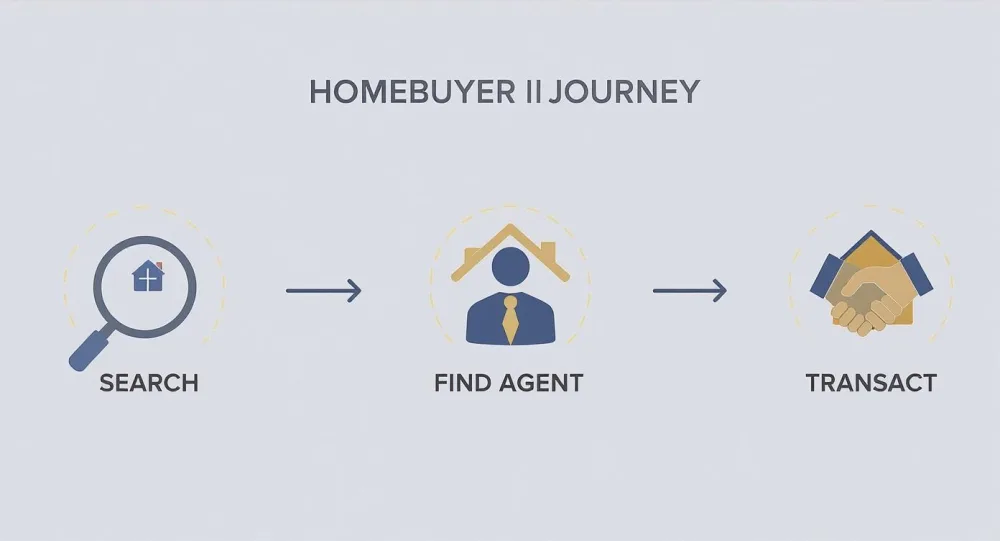
As you can see, before a client ever thinks about contacting an agent, they are deep in the 'Search' phase. Whether you're the one they find and decide to trust comes down to your website's structure and keyword strategy.
Uncovering High-Intent Keywords
Good keyword research isn't about guessing; it's about listening to what the market is telling you. The real goal is to find phrases that signal a strong intent to buy or sell. We often call these long-tail keywords because they're longer and much more specific.
Think about it. Someone searching for "real estate" is probably just browsing. But a person searching for "average price per square foot in 78704" is way further down the funnel. Those are the leads you actually want.
Here are a few practical ways I find these gems:
- Put on your buyer hat: Jot down all the questions you get from clients. What are their biggest headaches? What do they need to know about certain neighborhoods, school districts, or property types?
- Use the tools right in front of you: Google's own search bar is a goldmine. Just start typing a phrase like "homes for sale in..." and pay close attention to the auto-suggestions. Google is literally showing you what real people are searching for.
- Spy on your competition: Take a look at the websites of the top-performing agents in your market. What phrases are they using in their page titles and main headings? This can give you a massive head start.
Your keyword strategy is basically your market intelligence report. It tells you exactly what buyers and sellers in your area care about, which lets you create content that solves their problems and positions you as the local expert.
Once you have a solid list of keywords you want to target, the next move is to organize them logically. And that's where your website’s structure comes into play.
Structuring Your Website for Success
A well-structured website does two things perfectly: it helps visitors find what they need without any friction, and it makes it dead simple for search engines to understand what your site is all about. For real estate agents, this means creating a logical hierarchy based on locations and property types.
I like to think of a website as a digital filing cabinet. You wouldn't just toss all your client files into one giant drawer, right? In the same way, you shouldn't cram all your listings and neighborhood info onto a few generic pages.
Instead, you need to create a clear, tiered structure. Your homepage is the main cabinet. From there, you have "drawers" for each major city or area you serve. Inside those drawers, you have "folders" for specific neighborhoods.
Here’s a simple example of what that looks like:
- Homepage: This is your main hub, linking out to your key service areas.
- Austin Homes for Sale (City Page): A high-level page covering the entire Austin market.
- Hyde Park Homes for Sale (Neighborhood Page): A page dedicated to listings, market stats, and unique content about Hyde Park.
- Travis Heights Homes for Sale (Neighborhood Page): Another focused page for a different neighborhood, with its own content.
- Round Rock Homes for Sale (City Page): A separate top-level page for another city you serve.
- Austin Homes for Sale (City Page): A high-level page covering the entire Austin market.
This "silo" approach is how you build topical authority. By creating dedicated pages for each neighborhood, you're sending a powerful signal to Google that you are the expert on that specific area. It also creates a fantastic experience for your visitors, letting them easily drill down to find exactly what they're looking for and making all your SEO for real estate efforts much more effective.
Winning the Local Search Game
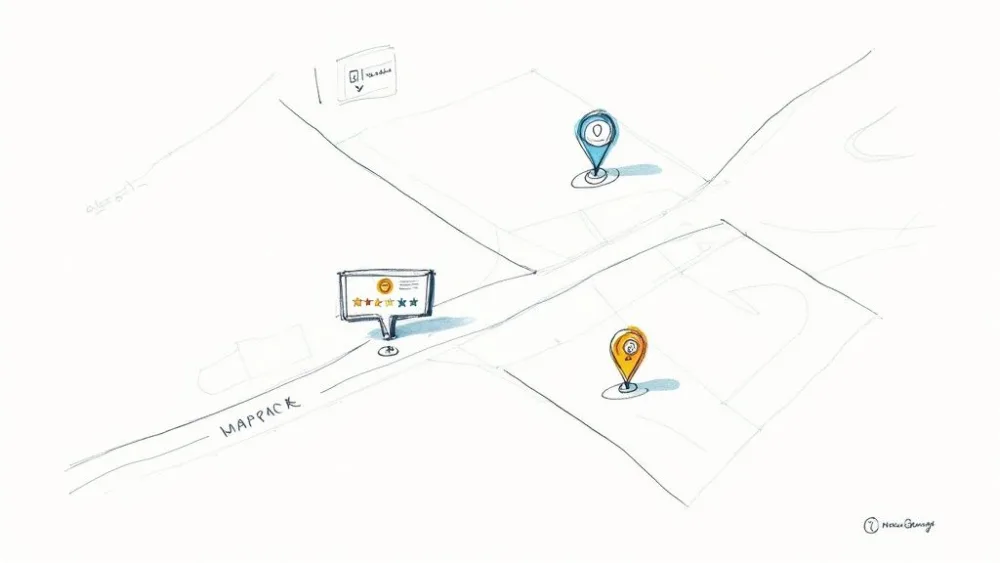
This is where you stop being just another agent online and start becoming the digital mayor of your town. The modern homebuyer’s journey is almost entirely digital, and the vast majority of buyers start that journey on a search engine long before they ever call an agent.
Organic search is one of the biggest traffic sources for real estate websites. If you’re not showing up when people in your area search for homes or agents, you’re basically invisible to most of your market.
Winning at local SEO real estate marketing is all about creating hyperlocal content that proves you have boots-on-the-ground knowledge. It’s about showing potential clients—and Google—that you know the community better than anyone else.
Create Hyperlocal Content That Actually Converts
Generic blog posts like "tips for first-time homebuyers" are a waste of your time. To really stand out in local search, you have to get specific. Think like a local, not just an agent. What are the burning questions people have about living in your service area?
Your goal is to answer those questions with your own personal insights. This is how you build real trust and authority.
- Detailed Neighborhood Guides: Go way beyond basic stats. Talk about the best coffee shops, the vibe of the local farmers market, or the quietest dog-walking routes.
- School District Deep Dives: Don't just list the schools. Compare specific programs, talk about the parent-teacher communities, and mention any unique extracurricular activities that make a school special.
- Zip Code Market Updates: Instead of a generic city-wide report, shoot a quick monthly video or write a post analyzing the trends in a specific zip code. This targeted info is gold to a serious buyer.
Hyperlocal content is your secret weapon. The big national portals can’t replicate your personal experience of a neighborhood's character, its hidden gems, or its community spirit. Share that, and you'll attract clients who are looking for true expertise.
This is the kind of content that naturally pulls in high-intent local search traffic. Someone searching for "best elementary schools in North Austin" is a much more qualified lead than someone just browsing Zillow.
Master Your Google Business Profile
Think of your Google Business Profile (GBP) as your digital storefront. For many people searching locally, it’s the very first impression they'll have of you. A strong profile is your ticket into the coveted "map pack"—that block of three businesses at the top of local search results that gets most of the calls and clicks.
Optimizing your GBP isn’t a set-it-and-forget-it task. It needs constant attention to show it’s an active, thriving business.
Key GBP Optimization Actions:
- Complete Every Single Section: Fill out every field Google gives you, from services offered and business hours to accessibility options. The more complete it is, the better.
- Add High-Quality Photos Weekly: Regularly upload new photos. Think new listings (with permission!), happy clients at closing, or even shots of local community events you attend. This signals to Google that your business is active.
- Use Google Posts: Treat this feature like a mini-blog on your profile. Share quick market updates, highlight a new listing, or link back to your latest hyperlocal blog post. Posts do expire, so aim to add a new one weekly.
- Encourage and Respond to Reviews: Reviews are a massive local ranking factor. Actively ask happy clients to leave one, and always, always respond to new reviews—both the good and the bad.
Fine-Tune Your On-Page SEO for Local Clicks
Once you've got your hyperlocal content and an optimized GBP, you need to make sure your actual website pages are set up to get the click. This means tweaking key on-page elements to include the local keywords you're targeting. For a much deeper dive into this, check out our guide on property listing optimization.
A well-written title tag and meta description can be the difference between someone scrolling right past you and clicking through to your site.
On-Page SEO Checklist for Real Estate Listings
Here’s a simple checklist to follow for every property listing or neighborhood page you create. Getting these three elements right is fundamental to on-page success.
| SEO Element | Real Estate Example | Why It Matters |
|---|---|---|
| Title Tag | Luxury Condos for Sale in Brickell Miami | Your Name Realty | This is the most critical on-page SEO factor. It tells Google and users exactly what the page is about. Always include your primary keyword and location. |
| Meta Description | Discover stunning waterfront condos in Miami's Brickell neighborhood. View updated listings, 3D tours, and local market insights. Contact us for a showing! | This is your sales pitch in the search results. While not a direct ranking factor, it heavily influences whether people click on your link. Always include a call-to-action. |
| Header (H1) | Explore Modern Brickell Condos for Sale | Your H1 should reinforce the title tag and clearly state the page's main topic. Every page on your site should have a unique H1 tag. |
Paying attention to these details ensures that when your page shows up in search, it's compelling enough to earn that click.
By combining authentic, hyperlocal content with a meticulously managed Google Business Profile and sharp on-page SEO, you'll build a powerful local presence that attracts the right clients directly from Google.
Making Your Visuals Work for You
Let's be honest, in real estate, the visuals do the heavy lifting. A stunning photo can sell a home before a buyer even reads the description. But here's something most agents miss: if your images, videos, and virtual tours aren't optimized for search, they could be sabotaging your entire SEO real estate marketing effort.
The most common trap is uploading those gorgeous, high-resolution photos straight from your photographer. Those huge files bring your website to a screeching halt, and site speed is a massive ranking factor for Google. A slow-loading listing page means potential buyers will bounce before they even see the master suite—and that tells Google your page isn't worth showing.
Nail Your Image File Names and Alt Text
You can give your SEO a serious boost before an image even hits your website. While Google is smart, it can't "see" a photo of a beautiful kitchen. It relies on text clues, like the file name and the alt text, to understand what the image is about.
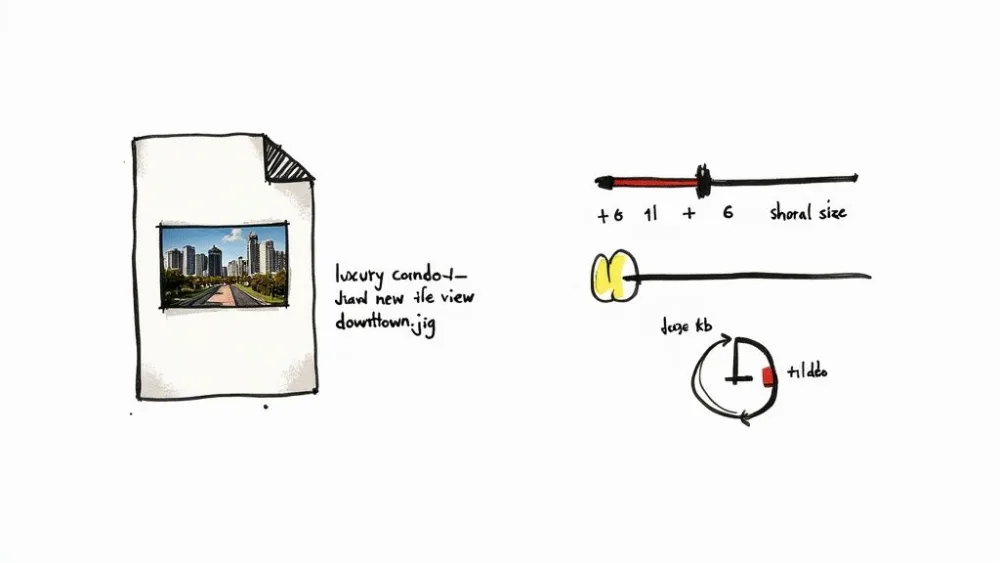
This is your chance to feed Google the exact keywords you're trying to rank for. Stop uploading images with default names like IMG_9876.jpg and start being descriptive.
Real-World Example
- Generic File Name:
DSC_0123.jpg - Optimized File Name:
luxury-condo-view-downtown-miami.jpg
See the difference? That simple tweak helps your images show up in Google Image Search for relevant terms. After renaming the file, you'll need to write good alt text. This is the text that shows up if an image breaks, but more importantly, it’s what screen readers use for visually impaired visitors.
Think of alt text as describing the photo over the phone to someone. Be concise, be descriptive, and use your target keywords naturally. It’s a win for SEO and a win for accessibility.
Compress Images Without Sacrificing Quality
With your file names sorted, the next crucial step is compression. You have to shrink the file size of your images so they load lightning-fast, but you can't afford to lose that crisp, professional quality buyers expect. It’s a balancing act, but it’s not as hard as it sounds.
You don't need to be a Photoshop pro to get this right. Plenty of user-friendly tools can do the job for you.
- Online Tools: Sites like TinyPNG or Google's Squoosh are fantastic. Just drag, drop, and download the much smaller file.
- WordPress Plugins: If you're on WordPress, I highly recommend plugins like Smush or ShortPixel. They can compress your images automatically right when you upload them.
As a rule of thumb, try to get your key property photos under 200 KB. This one change can make a night-and-day difference in your site's performance.
Use Video and Virtual Tours to Boost Engagement
Video and 3D tours aren't just flashy add-ons; they're SEO gold. Why? Because they keep people on your website for longer. That metric, called dwell time, is a powerful signal to Google that your content is engaging and valuable.
A well-shot video walkthrough or a Matterport tour can easily turn a 30-second visit into a 5-minute exploration. That extended engagement tells search engines that your listing is a great result, which can bump you up in the rankings. To get the most out of your videos, always include captions for accessibility and to help search engines understand the content.
Building Trust and Local Authority
While optimizing your own website is critical, what happens off your site is just as important. For a real estate agent, this isn't some dark art of SEO wizardry. It’s the digital version of what you already do best: building a rock-solid reputation and becoming the go-to expert in your community.
This all comes down to two things: earning backlinks and managing your local citations.
Think of a backlink as a digital referral. When a respected local business or publication links to your website, they're essentially giving you a vote of confidence, telling Google, "This person knows their stuff."
Local citations are simply mentions of your business's name, address, and phone number (we call this NAP) online. Consistency across these listings proves to Google that you're a real, established business in a specific area.
Earning Backlinks Without Being Spammy
Let's get one thing straight: the goal is quality, not quantity. The old days of spammy, irrelevant links are long gone. Today, it’s all about earning genuine endorsements from sources that matter in your local market. Your professional network and community involvement are your biggest assets here.
The best way to build links is to create something genuinely valuable. For instance, you could team up with a trusted mortgage lender to co-author the ultimate first-time homebuyer's guide for your city. Not only is that incredibly helpful for potential clients, but the lender will naturally link to it from their site—earning you a powerful, relevant backlink.
Here are a few practical ways to get valuable local links:
- Sponsor a local event. Putting your name on a little league team, a charity 5k, or a neighborhood festival almost always gets you a link from the event’s website. It's a fantastic way to get a hyper-local endorsement.
- Get featured in local media. Pitch a story idea or offer your expert analysis on the housing market to a local newspaper or neighborhood blog. When they quote you, they’ll link back to your site.
- Create amazing local resources. Think bigger than blog posts. A beautifully designed infographic on local property tax trends or a comprehensive relocation guide is the kind of content other businesses and community groups will want to share.
This whole process is a cornerstone of a smart real estate content marketing strategy. You're not just creating great content; you're making sure it gets in front of the right people.
The Power of Consistent Citations
Picture this: a potential client searches for you online and finds three different phone numbers. It's confusing and instantly erodes trust. It does the same thing to Google. When your business information is all over the place, it sends mixed signals that damage your ability to show up in local searches and the map pack.
Your mission is to ensure your Name, Address, and Phone number (NAP) are 100% identical everywhere they show up online.
Think of your NAP as your business's digital fingerprint. Every consistent mention across the web reinforces Google’s confidence that you are a legitimate, active business at a specific physical location. This makes the search engine far more likely to show you to people searching nearby.
Start with an audit. Check your listings on the big players: Google Business Profile, Zillow, Realtor.com, Yelp, and your local chamber of commerce website. Fire up a simple spreadsheet to track everything, and then patiently update any outdated or incorrect information.
Yes, it can feel tedious, but the payoff is huge. Consistency cements your geographic relevance and makes it a no-brainer for Google to connect you with local buyers and sellers.
Answering Your Top Questions About Real Estate SEO
Jumping into SEO for your real estate business can feel like you're trying to learn a new language. You know it’s important, but a ton of questions pop up immediately about the time it takes, where to put your money, and what to actually do first. Let's cut through the noise and tackle the questions I hear from agents all the time.
These aren't just textbook answers. This is what I’ve seen work—and not work—for agents in the trenches. The goal here is to give you straightforward advice you can use to make smarter marketing decisions right out of the gate.
How Long Does SEO Really Take for a Real Estate Agent?
This is the big one, isn't it? The honest answer is that real estate SEO is a marathon, not a sprint. You can definitely see some small wins within the first 3 to 6 months, like a nice bump in your local keyword rankings or more clicks from your Google Business Profile.
But the real, lead-generating results—the kind that fill your pipeline—take time to build. Think of it as building equity in your digital presence; it takes patience and consistent effort. Most agents start seeing significant, sustainable results around the 9 to 12-month mark. Of course, this timeline really depends on how competitive your local market is and how consistently you're putting out high-quality, hyperlocal content.
Should I Spend Money on SEO or Paid Ads Like Zillow?
I get this question a lot, and the best strategy isn't choosing one over the other. It's about using both, especially when you're starting out.
Here’s how to think about it:
- Paid Ads (Zillow, Google Ads, etc.): This is like renting a billboard on the busiest highway in town. You get instant visibility and a quick burst of traffic, which is fantastic for short-term lead flow. But as soon as you stop paying, that billboard comes down, and the leads dry up.
- SEO: This is like buying the land and building your own permanent billboard. It’s a long-term asset. It takes time and sweat equity to build, but once it starts ranking, it can generate a steady stream of "free" organic leads for years to come.
Plus, SEO leads are often much higher quality because the person was actively searching for a solution, not just scrolling past a sponsored ad. A smart plan is to use paid ads to get the phone ringing now while your long-term SEO strategy starts to gain traction.
Your ultimate goal should be to build your SEO into such a powerful lead-generation machine that you can scale back your paid ad spend. That's when you gain real control over your marketing budget and business growth.
What Are the Most Important SEO Metrics to Track?
It's way too easy to get bogged down in a sea of data. To stay focused, you have to ignore the "vanity metrics" and zero in on the numbers that actually impact your bottom line.
These are the key performance indicators (KPIs) that truly matter for your business:
- Organic Traffic Growth: Don't just look at the overall number. Specifically track the traffic flowing to your most valuable pages, like your neighborhood guides and individual property listings.
- Local Keyword Rankings: Are you showing up on page one for searches like "realtor in [your city]" or "[neighborhood name] homes for sale"? This is your visibility score.
- Google Business Profile Clicks: Pay close attention to how many phone calls, website clicks, and requests for directions are coming directly from your GBP listing. This is often where your hottest local leads come from.
- Qualified Leads: This is the metric that pays the bills. How many contact form submissions and phone calls actually came from an organic search? Tracking this is how you connect your SEO efforts directly to closed deals.
Can I Do My Own Real Estate SEO?
Absolutely. Many agents are more than capable of handling the fundamentals of their own SEO, especially if you have the time and are willing to learn.
Here are a few things you can definitely manage yourself:
- Writing and optimizing hyperlocal blog posts about your community.
- Keeping your Google Business Profile fresh with new photos, updates, and Q&As.
- Actively asking for and responding to all your client reviews.
However, when it comes to the more technical stuff, it often pays to bring in a specialist who lives and breathes real estate SEO. Things like a deep technical site audit, improving your website’s loading speed, or building a high-level backlink strategy are where an expert can save you a massive amount of time and get you results much faster. This frees you up to do what you do best—serve your clients and sell houses.
Need compelling listing copy to match your optimized visuals? Try our free listing description generator to create professional property descriptions in seconds.
Transforming your property visuals is just as critical as optimizing your text. With Pedra, you can instantly create virtual staging, photo enhancements, and interactive tours in a single click. Elevate your listings and sell faster — try Pedra.
SEO is a long game. For the channels that pay off faster, see our guide to marketing for realtors.