
Imagine having an expert interior designer on call, ready to instantly visualize a property in dozens of different styles. That's essentially what interior design AI offers. It’s technology that uses artificial intelligence to create, modify, and visualize interior spaces automatically, turning an empty room into a beautifully furnished home in a matter of seconds.
How Interior Design AI Is Remodeling Real Estate
At its heart, interior design AI acts like a creative partner with two incredible skills: an artistic brain and a photographic eye. You can think of these as generative AI (the artist) and computer vision (the eye). It all starts the moment you upload a photo of a room.
First, computer vision gets to work analyzing the image. It scans and identifies the walls, windows, floors, and any existing furniture. It measures the room's dimensions and gets a feel for the layout, essentially creating a digital blueprint of the space while noting things like key features and lighting.
Then, the generative AI takes the baton. This is where the real magic happens. You give it a prompt—like "make this living room look modern minimalist" or "show this kitchen with a marble island"—and the AI gets creative. It intelligently places furniture, swaps out wall colors, and even adjusts the lighting to match the style you asked for, producing a stunning, photorealistic version of the reimagined room.
The Technology Behind The Transformation
This whole process is powered by complex algorithms trained on millions of images of interior designs, architectural styles, and furniture. This massive visual library is what allows the AI to understand not just what a "sofa" is, but which type of sofa looks right in a "coastal modern" living room. This rapid learning curve is fueling some serious market growth. The global AI in interior design market is projected to skyrocket from USD 829 million in 2023 to an estimated USD 7.3 billion by 2033.
This simple workflow shows just how the AI turns a basic photo into an eye-catching design concept.
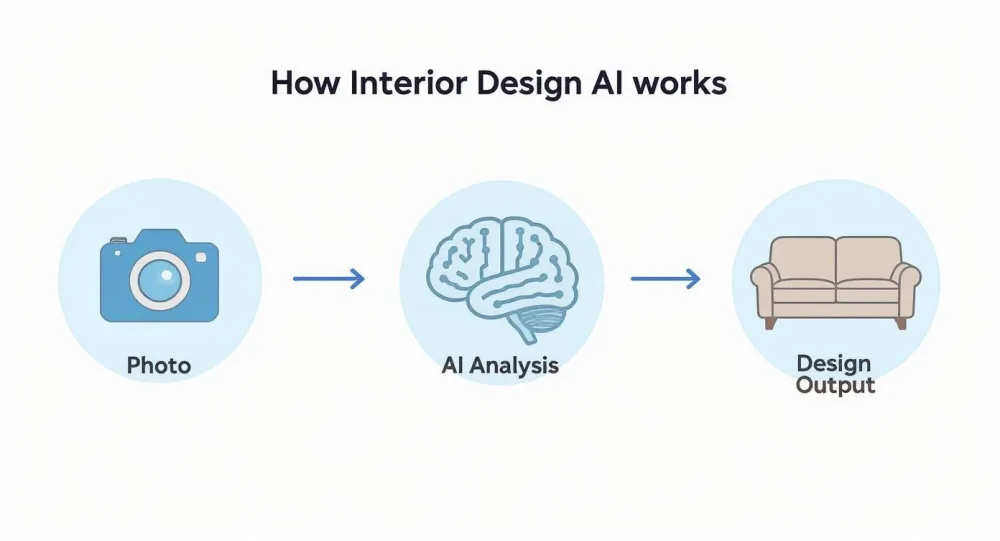
As you can see, it's a seamless jump from a simple input to a professional, market-ready image.
The real power of this technology lies in its speed and accessibility. It democratizes design, allowing any real estate agent to produce high-quality visuals without needing a background in design or complex software.
Understanding how AI can be applied is the first step. Our complete guide on AI for real estate offers even more ideas to help you get started. Of course, to make the most of these visuals, a solid grasp of SEO for real estate is crucial for attracting local clients and showing off your AI-enhanced properties to the right audience.
AI-Powered Tools to Elevate Your Property Listings
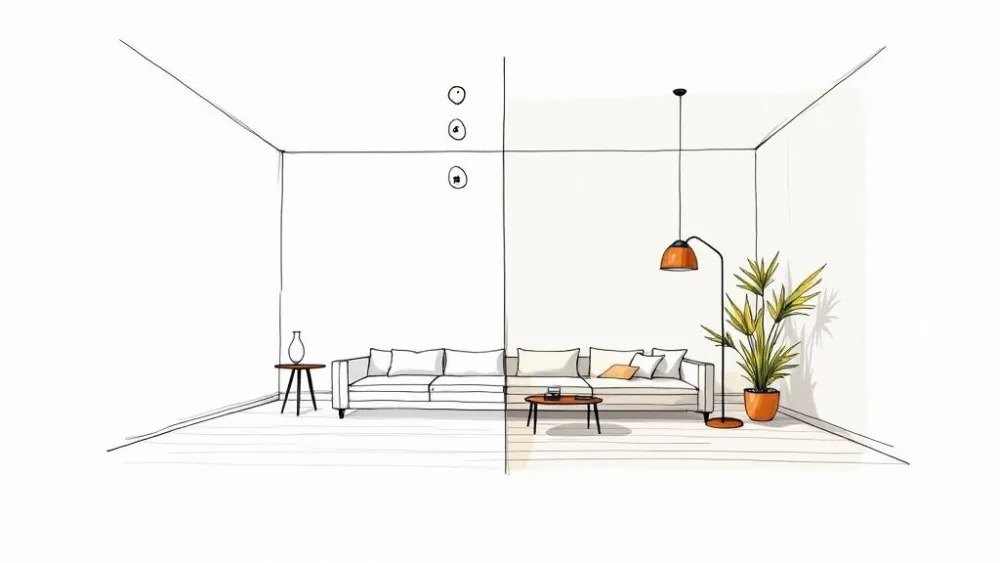
So, how does all this AI theory actually help you sell houses? It comes down to practical tools that solve some of the oldest problems in real estate marketing. These aren’t just gimmicks; they’re designed to make your listings pop, helping buyers see a property for what it could be, not just what it is today.
And the demand for these solutions is exploding. The AI interior design market is projected to skyrocket from USD 1.82 billion to USD 12.46 billion between 2024 and 2032. That's a massive jump, and it’s being fueled by tools that automate layouts, create stunning virtual scenes, and give buyers the personalized design ideas they crave.
Let's look at a few ways you can put this technology to work right now.
Instantly Stage Empty Spaces
An empty room is a blank canvas. But for most buyers, it just feels cold, impersonal, and hard to picture themselves in. Virtual staging fixes this in a snap by filling vacant properties with stylish, realistic furniture and decor.
Forget spending thousands on physical furniture rentals and movers. You can simply upload a photo of an empty room and let the AI furnish it. This helps you showcase a home's true potential and gives buyers that crucial emotional connection. A boring, vacant box becomes a cozy family room, showing someone exactly how they could live there. Our guide on virtual home staging dives deeper into how this one trick can transform your listings.
Visualize Future Renovations
Let's be honest, properties with dated kitchens or bathrooms are a tough sell. It’s hard for most buyers to look past those avocado-green countertops or worn-out shag carpets. AI-powered virtual renovations let you show them the future.
You can take a photo of that outdated kitchen and instantly generate a new version with modern appliances, sleek cabinets, and a contemporary layout. This "before-and-after" effect is incredibly powerful. It helps justify the asking price by revealing the property's hidden value, turning a potential deal-breaker into a key selling point.
By showcasing a property's potential, you’re not just selling square footage—you're selling a vision. AI makes that vision tangible, helping buyers see the incredible opportunity that awaits them.
Declutter and Depersonalize Occupied Homes
Selling a home while the owners are still living there is always a challenge. Family photos, kids' toys, and personal clutter can easily distract buyers from seeing the actual property.
AI decluttering tools are a lifesaver here. They can digitally erase unwanted items from your listing photos, creating clean, neutral images that appeal to a much wider audience. It saves you from having those awkward conversations about asking clients to hide their personal belongings. The result is a polished, professional listing that looks market-ready, even if the home is still very much lived-in.
Generate Floor Plans and Video Tours
Beyond beautiful images, AI can also create other essential marketing assets that give buyers a complete picture of the property.
- AI Floor Plan Generation: Some tools can analyze property photos and automatically generate accurate 2D or 3D floor plans. This gives buyers a clear sense of the home's layout and flow before they even step inside.
- Immersive Video and 360 Tours: AI can also stitch images together to create dynamic video walkthroughs or interactive 360-degree tours, offering an engaging virtual experience that makes buyers feel like they're right there.
To bring it all together, here’s a quick look at how these applications directly benefit agents, developers, and potential buyers.
AI-Powered Real Estate Marketing Applications
| AI Application | Primary Benefit for Agents | Impact on Buyers |
|---|---|---|
| Virtual Staging | Fills empty rooms to attract more interest and sell faster. | Helps buyers visualize themselves in the home. |
| Virtual Renovations | Shows the potential of outdated spaces, justifying the price. | Lets buyers see the "after" and understand the property's value. |
| AI Decluttering | Creates clean, market-ready photos without physical effort. | Provides a distraction-free view of the property's features. |
| Floor Plan Generation | Quickly provides an essential marketing asset. | Gives a clear understanding of the home's layout and size. |
| Video & 360 Tours | Creates immersive virtual experiences to engage more buyers. | Offers a convenient and detailed way to tour the property remotely. |
Each of these tools works to remove friction from the buying process, making it easier for a prospect to see themselves in a new home and, ultimately, make an offer.
What's the Real ROI on AI-Enhanced Listings?
Sure, the before-and-after photos look amazing, but what does AI interior design actually do for your bank account? Let's get down to brass tacks. This isn't just about making listings look pretty; it's a strategic move designed to boost your profitability in very real ways.
When you look at the numbers, the value of using AI breaks down into three core benefits. Each one hits a major pain point in real estate marketing and ultimately puts more money in your pocket.
Sell Properties Faster
Every day a property sits on the market, it costs you. Time is money, and a listing that lingers loses momentum and becomes stale. AI-powered visuals like virtual staging cut through the noise and grab a buyer's attention immediately.
When people can actually see themselves living in a beautifully furnished home, they feel an emotional pull that an empty room just can't create. That connection gets them to book a viewing and, ultimately, make an offer. The math is simple: faster sales mean faster commissions, and you can move on to the next deal. Want to dig deeper into the numbers? Check out our complete guide on the ROI of virtual staging.
Attract Higher Offers
Empty spaces and tired, old kitchens practically invite lowball offers. Buyers see a blank canvas and immediately start subtracting the cost and hassle of renovations from their bid. AI flips that entire conversation on its head.
By presenting a home not just as it is, but as it could be, you anchor the conversation around its full potential, not its current flaws.
Instead of seeing a dated bathroom, a potential buyer sees a stunning, modern redesign. This removes the guesswork and builds confidence, which naturally leads to stronger, more competitive offers that reflect the property's true market value.
Slash Your Marketing Budget
Let's be honest: traditional property marketing gets expensive fast. Physical staging can set you back thousands of dollars a month, and scheduling a professional photoshoot for a cluttered home is a logistical headache. AI offers a smarter, much more affordable way to get the job done.
You can virtually stage an entire property for a tiny fraction of what it would cost to rent furniture. You can digitally declutter photos in seconds instead of paying for a crew to haul things away. This isn't a small trend, either. The interior design software market, which is where these AI tools live, was valued at USD 5.37 billion in 2024 and is projected to hit USD 9.66 billion by 2030. To see how these savings directly impact your bottom line, it helps to understand how to calculate marketing ROI and apply it to your own listings.
A Practical Workflow for Using AI in Your Listings
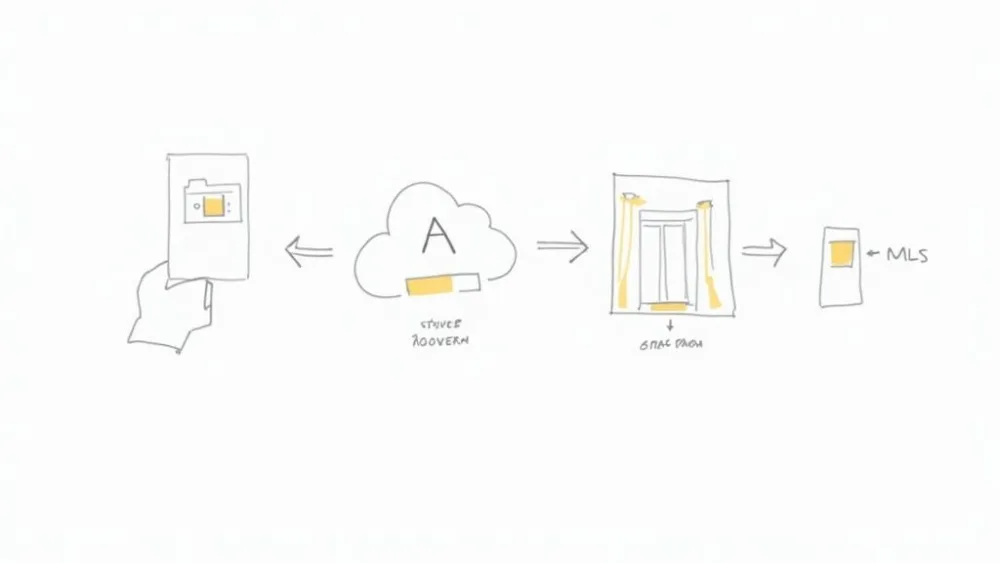
So, how do you actually start using interior design AI without completely overhauling your marketing process? It’s simpler than you think. You don’t need a new, complicated system; you just need to add a powerful tool to your existing one.
Think of this as a simple, step-by-step guide to fitting this tech into your day-to-day work. The idea is to produce stunning visuals in minutes, not to get bogged down in technical details.
Step 1: Start with Good Photos
Great AI results always begin with great source material. The quality of your photo directly shapes the final image, but don't worry—you don't need a professional photographer on standby. The phone in your pocket is usually all you need.
Just focus on the basics. Find good, natural light if you can. Stand in a corner or doorway to get the widest possible view of the room. A clear, steady shot is the perfect canvas for the AI to work its magic.
Step 2: Decide on a Design Direction
This is where your expertise as an agent really comes into play. You know the market and the buyers. What story are you trying to tell with this space? Are you staging an empty loft for a first-time buyer, or are you showing a family how that dated kitchen could be their dream renovation project?
Your vision is what steers the AI. Think about specific styles that will click with your target audience.
- For Staging: You might use prompts like "Coastal Modern living room" or "Scandinavian minimalist bedroom."
- For Renovations: Try something like "Open-concept kitchen with a marble island" or "Modern bathroom with matte black fixtures."
Getting this right ensures the AI’s output isn't just pretty—it's a targeted marketing asset that speaks directly to your ideal buyer.
A clear, concise prompt is like giving a designer a perfect brief. The more specific you are about the style, mood, and key features, the faster the AI can deliver the exact look you need to attract the right audience.
Step 3: Generate and Tweak the Designs
Once your photo is uploaded and your prompt is ready, it's time for the fun part. With a tool like Pedra, you just click a button. The platform gets to work, analyzing your photo and applying the style you've requested. In just a few seconds, you'll have several design options to choose from.
Rarely is the first option the final one. Look through the different versions and see which one really sells the property's potential. Many tools let you make small adjustments, so you can fine-tune the image until it’s just right for your listing.
Step 4: Use the New Visuals Everywhere
Now that you have these polished, professional images, put them to work. The key is to get them in front of as many eyes as possible.
Add the new photos to your MLS listings, and update your profiles on Zillow and Realtor.com. They're perfect for creating "before and after" carousels on Instagram and Facebook, which are great for grabbing attention. When you use these visuals across all your channels, you build a powerful, consistent campaign that stops people from scrolling and gets them genuinely interested. This is how the technology translates into real business.
Using AI Tools Ethically and Effectively
There's no doubt that AI is a powerful tool for real estate professionals, but how we use it is what truly matters. The goal is to showcase a property's potential, not to create a fantasy that misleads buyers. This all boils down to one simple, crucial principle: transparency.
When you show a potential buyer a stunningly staged photo, they need to know what they're looking at. Being upfront isn't just good practice; it's essential for building trust. The last thing you want is a client feeling like they've been tricked.
By being transparent, you change the conversation from, "Is this what the house actually looks like?" to, "Wow, look at what this space could become." It’s a subtle but powerful shift that builds your credibility and keeps everyone on the same page.
Clearly labeling your visuals manages expectations and frames the AI-generated images for what they are—inspiring concepts, not a literal snapshot of the property today.
Best Practices for Responsible AI Use
So, how do you use these incredible tools without compromising your integrity? It’s actually pretty straightforward. You just need to balance innovation with good old-fashioned honesty.
A few key practices will make all the difference:
- Always Disclose: A simple watermark or a clear caption like "Virtually Staged" or "Conceptual Renovation" on your images is non-negotiable. It's the cornerstone of ethical use.
- Show the "Before": Always, always, always include photos of the property as-is alongside the enhanced versions. This gives buyers the full story—the reality and the potential—so they can make an informed decision.
- Educate Your Clients: Take a moment to explain how you're using AI. For sellers, it's a marketing advantage. For buyers, it’s a visualization tool. Setting expectations from the get-go prevents any confusion down the line.
Navigating Technological Imperfections
Finally, let's be real: AI isn't perfect. You'll occasionally get an image with a wonky shadow, a chair at a slightly impossible angle, or a texture that just doesn't look quite right. Don't just gloss over these little hiccups.
Instead, use them as part of the conversation. Acknowledge that the tech is an assistant, not a flawless artist. This approach actually makes the process feel more human and reinforces your role as the expert who is guiding the vision. By being open about the strengths and occasional quirks of interior design AI, you stay in control and prove you're a credible professional who knows their tools inside and out.
The Future of Real Estate Is AI-Assisted
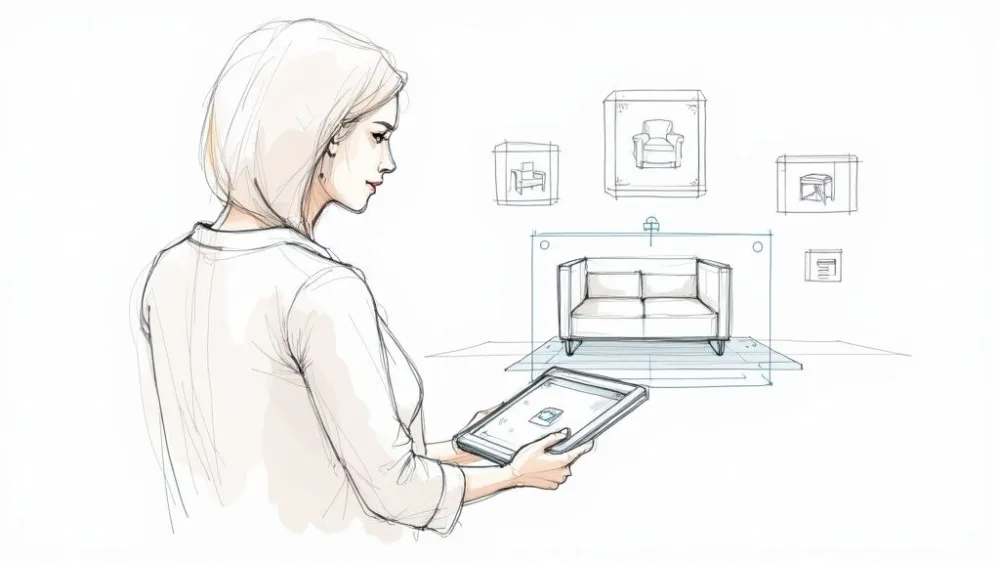
AI in interior design isn't just a passing fad; it’s quickly becoming a real estate professional's secret weapon. The tools we have now—from virtual staging to spitballing renovation ideas—are just scratching the surface of a major shift in how we market and sell properties.
These platforms let you tell a much better story for every listing. Instead of showing four walls and a floor, you're presenting what a home could be. You’re helping buyers connect with the space emotionally before they even book a showing. It's not about replacing your gut instinct and experience, but about giving them a serious upgrade.
What's Next for AI in Real Estate?
The potential here is genuinely exciting. Think about leading a virtual tour where a buyer can switch design styles on the fly, swapping "modern farmhouse" for "industrial loft" with just a click. Imagine an AI that crunches local market data to recommend the specific renovations that will actually deliver the highest ROI in that neighborhood.
The bottom line is this: getting on board with interior design AI gives you a serious leg up. You can offer a better client experience, market listings more powerfully, and stay ahead of the curve.
The future isn’t about AI taking over your job. It's about AI becoming your best assistant. By folding these tools into your workflow, you’re simply sharpening your own expertise, helping you close deals faster and deliver more value than ever before.
Common Questions About Interior Design AI
As AI for interior design starts to become a regular part of the toolkit, it's totally normal for questions to come up. Let's walk through some of the most common things real estate pros ask before they jump in.
Is Virtual Staging Misleading?
This is a big one, and a fair question. The short answer is no, not if you're open about it. The point of virtual staging isn't to trick anyone or cover up problems—it's to help buyers see what a home could be.
Think of it as showing off a property's potential. As long as you clearly label your images as "virtually staged" and make sure to also provide photos of the empty space, you're building trust. It's all about framing the visuals as inspiration, not a smoke-and-mirrors trick.
How Does AI Cost Compare to Physical Staging?
The difference here is night and day. With traditional staging, you're looking at monthly furniture rentals, movers, and a designer's time, which can easily run into thousands of dollars for just one property.
On the other hand, AI-powered virtual staging costs just a tiny fraction of that. You're usually looking at a small, one-time fee for each photo, not a recurring monthly bill. It makes getting that high-end, polished look accessible for every single listing.
Suddenly, you can stage every property professionally without blowing your entire marketing budget.
Do I Need a Professional Camera?
Nope, not at all. A fancy DSLR is nice to have, but the camera in your pocket is more than good enough. Today's smartphones take incredible photos that work perfectly with AI design tools.
What really matters is your technique, not the gear. Just focus on getting good, natural light and stand in a corner to capture as much of the room as possible. A steady, bright photo from your phone gives the AI a perfect canvas to work its magic.
Ready to transform your listings with just a few clicks? Pedra offers instant virtual staging, renovations, and decluttering to make every property shine. See how it works at https://pedra.ai.