
At its heart, real estate email marketing is all about using email to connect with clients—past, present, and future—to generate leads and close deals. It’s a shift away from sending generic, one-size-fits-all messages. Instead, the focus is on sending valuable, targeted content that keeps your name at the top of their mind. This approach helps you nurture contacts efficiently, turning a simple list of email addresses into a serious business-generating machine.
Why Email Is Your Most Valuable Marketing Tool
Think about your social media presence. It's kind of like standing in a crowded town square, shouting your message and hoping the right people hear you. Email, on the other hand, is like inviting a potential client into your office for a private, one-on-one chat. It's direct, personal, and incredibly effective in an industry that runs on trust.
Social media platforms can change their algorithms on a whim, but your email list? That's an asset you truly own and control. It's a reliable foundation for your marketing, giving you a direct line to your audience without a gatekeeper. This is exactly why real estate email marketing is still a cornerstone of any smart agent's growth plan.

Driving Tangible Business Results
Email consistently delivers one of the strongest returns of any marketing channel, and real estate is no exception. Unlike paid ads, you don't pay for every impression, and unlike social media, your reach doesn't depend on an algorithm. That makes email a dependable, low-cost way to stay in front of the people most likely to transact with you.
A strong email strategy does more than just announce new listings. It works on several fronts to build a healthier business.
- Builds Authority and Trust: When you consistently share useful market analysis, homeownership tips, or local news, you become the go-to expert people rely on.
- Nurtures Leads Over Time: Not everyone is ready to buy or sell right now. A steady stream of helpful emails keeps the conversation going, so when they are ready, you're the first person they think of.
- Generates Repeat and Referral Business: Staying in touch with past clients is the easiest way to earn their next transaction and get them to recommend you to their network.
To really nail this, it helps to see the key benefits laid out clearly.
Key Benefits of Real Estate Email Marketing at a Glance
| Benefit | Impact on Your Business | Example |
|---|---|---|
| Direct Ownership | You control your audience without relying on third-party algorithms. | A social media platform's reach drops, but your email list's effectiveness remains unchanged. |
| Low Cost, High ROI | Your marketing dollars go further than most paid channels. | A single newsletter that re-engages a past client can lead to a referral or repeat sale. |
| Lead Nurturing | Build relationships with potential clients over the long term. | Sending a monthly market update to a lead who eventually lists with you 6 months later. |
| Brand Building | Position yourself as a trusted local expert. | Sharing a guide to the best school districts in your area establishes your authority. |
| Client Retention | Stay top-of-mind for repeat and referral business. | An annual "home anniversary" email reminds past clients of your great service. |
As you can see, the impact goes far beyond just sending emails; it's about building a resilient and profitable business.
The real goal of real estate email marketing isn't just to sell houses; it's to build a loyal community around your brand. When people trust your expertise, they’ll trust you with their most important investments.
Email is the thread that ties your entire marketing plan together. To get a clearer picture of how it fits in, check out our complete guide on developing a winning real estate marketing strategy. By mastering this channel, you build a dependable system for finding and converting leads that will keep your business thriving, no matter what the market is doing.
Building a Smarter Email List Through Segmentation
If you're sending the same email to every single person on your list, you’re making a classic mistake. It's like trying to sell a sleek downtown condo to a family looking for a quiet house in the suburbs. It just doesn't work, and it's a waste of everyone's time. This is exactly why segmentation is so crucial—it’s the simple art of grouping your contacts into smaller, more relevant buckets.
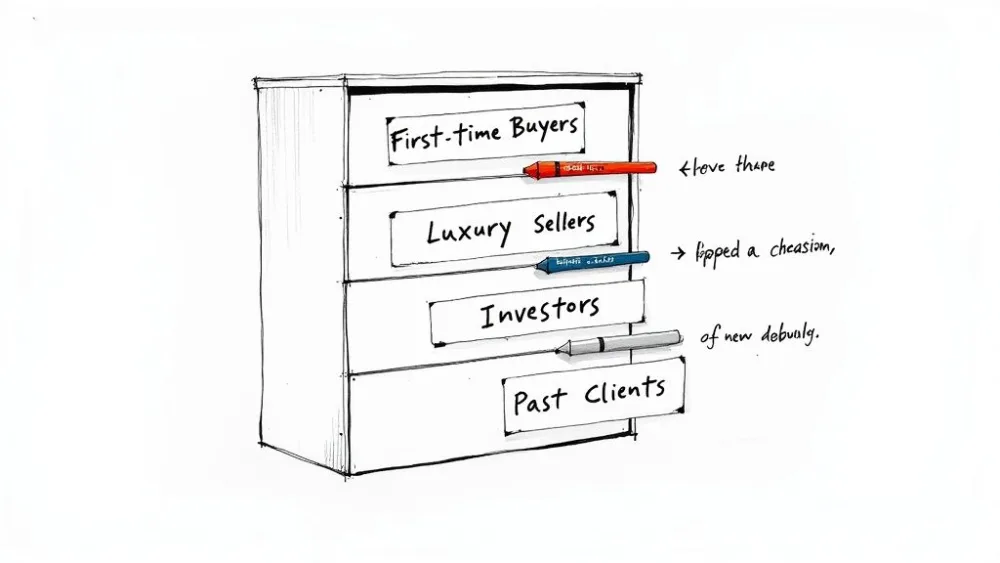
Think of your email list like a big filing cabinet. Without segmentation, all your client files are just jumbled together in one giant drawer. Segmentation is you taking the time to create separate, clearly labeled drawers: 'First-Time Buyers,' 'Luxury Sellers,' 'Investors,' and 'Past Clients.' Now, when a perfect starter home hits the market, you know exactly which drawer to pull from.
This targeted approach makes your real estate email marketing exponentially more effective. People get content that actually speaks to them, which means they’re far more likely to open, read, and—most importantly—act on your messages.
Why Segmentation Drives Real Results
It all comes down to one word: relevance. When an email feels like it was written just for them, it immediately stands out in a crowded inbox. It shows your contacts you're paying attention to their needs, not just blasting out generic newsletters to the masses.
Segmented, automated campaigns that deliver content matched to each contact's stage consistently outperform generic blasts on opens, clicks, and conversions. That’s why savvy agents are ditching the "one-size-fits-all" approach for smarter, segmented strategies.
By grouping your audience, you turn your email list from a clumsy megaphone into a set of precision tools. Segmentation also works hand in hand with a broader real estate content marketing plan, since you can map the right resource to the right segment.
Actionable Segments You Can Create Today
Getting started with segmentation doesn't have to be some massive, complicated project. You can start small by creating a few powerful groups based on who your contacts are and what they've shown interest in.
Here are a few essential segments every real estate agent should have:
- First-Time Homebuyers: These folks are often nervous and need a guide. Send them helpful explainers on the buying process, tips for getting pre-approved, and what to look for during an inspection.
- Potential Sellers: This group is all about their home's value and the state of the market. They'll appreciate neighborhood market reports, instant home valuation offers, and checklists for getting a property ready to list.
- Past Clients: Don't forget this group! They are your best source of referrals and repeat business. Stay in touch with home anniversary emails, news about local events, and friendly reminders about your referral program.
- Active Home Searchers: These are your hot leads—the people who just inquired about a listing or came to an open house. They need timely info, like immediate new listing alerts and invitations to upcoming open houses.
The real magic of segmentation is making a list of a thousand people feel like a one-on-one conversation. When a client gets an email that perfectly matches their current needs, it builds incredible trust and cements you as the expert they want to work with.
When you organize your contacts this way, you ensure every email you send actually adds value. No more sending luxury market reports to a first-time buyer on a tight budget.
Pairing Your Segments with Automation
Once you've got your segments set up, the next logical step is to put your communication on autopilot. You can create automated email sequences, or workflows, that trigger whenever someone is added to a specific group.
For example, when a new lead downloads your "First-Time Buyer's Guide," they can be automatically added to that segment and immediately start receiving a welcome series full of tips just for them. You can learn more about setting this up in our guide to real estate marketing automation. It’s a brilliant way to save yourself a ton of time while giving every single lead a professional and personalized experience from day one.
Crafting Emails That Actually Get Opened and Read
Once you've got your audience neatly segmented, the real work begins: creating emails they actually want to open. Let's be honest, an inbox is a battlefield for attention. Winning that battle takes more than a good contact list—it requires compelling content, smart design, and a clear purpose behind every single message you send.

Think of your email as a digital property showing. The subject line is the curb appeal; it has to be intriguing enough to make someone want to step inside. The email itself is the interior tour—it needs to be clean, well-staged, and easy to navigate. If either part falls flat, your audience will just scroll on to the next thing.
At the end of the day, any successful real estate email marketing strategy is built on two simple pillars: a magnetic subject line that sparks curiosity and email content that delivers real value.
Writing Subject Lines That Demand a Click
Your subject line is the single most important part of your email. No exaggeration. It's the gatekeeper that decides whether your message gets opened or completely ignored. A great one is short, specific, and feels personal.
Please, avoid generic phrases like "Weekly Newsletter" or "New Listings." Instead, you want to create a little intrigue and offer something tangible.
Here are a few formulas that just plain work:
- Location-Specific: "Just Listed: 3-Bedroom Craftsman in Northwood"
- Value-Oriented: "Your Exclusive Look at Northwood's Latest Market Report"
- Question-Based: "Is Now the Right Time to Sell in Northwood?"
- Urgency-Driven: "Open House This Saturday Only! Don't Miss Out."
Your subject line should promise a solution or an insight. It’s not just describing the email; it's selling the reason to open it. Make it feel like an exclusive piece of information tailored just for them.
And remember, a huge chunk of emails get read on phones. Keep your subject lines tight—around 6 to 8 words is the sweet spot.
The Power of Visual Storytelling
In real estate, visuals aren't just a nice-to-have; they're the whole show. Generic stock photos or blurry phone pictures will kill your engagement in a heartbeat. This is where high-quality, professional visuals become your secret weapon for grabbing and holding attention.
Our brains are just wired to process images way faster than text. An email featuring a stunning property photo will always beat a wall of text, every single time.
You can instantly level up your emails with AI-powered visuals from tools like Pedra. Instead of just describing a property, you can show its full potential.
- Virtual Staging: Imagine sending an email showcasing an empty listing that has been beautifully staged with virtual staging, or learn how to stage an empty house for sale. You’re showing clients not just what the house looks like, but what it could look like.
- 360° Virtual Tours: Embed a link to an interactive tour. This lets subscribers explore a property from their couch, which dramatically boosts their engagement and interest.
- AI Renders: For new developments or homes needing a renovation, use realistic AI renders to bring a future vision to life. This is how you help buyers connect emotionally with a property that doesn't even exist yet.
An email with a gorgeous, virtually staged living room is infinitely more compelling than one that just says, "This home has great potential." You’re selling a lifestyle, not just a floor plan. Strong visuals help you tell that story.
Essential Email Templates for Real Estate Agents
Having a few core templates ready to go saves a ton of time and keeps your brand consistent. You don't need to reinvent the wheel for every campaign. Here are four essential email types every agent should have locked and loaded.
- New Listing Alert: This is your bread and butter. Keep it simple and let the pictures do the talking. Lead with a stunning hero image of the property, followed by a compelling property description with the key details (beds, baths, price) and a big, clear call-to-action button like "View the Full Gallery & Details."
- Open House Invitation: Your goal here is to build excitement. Put the date, time, and address right at the very top. Adding a map and a few standout photos of the home is a nice touch. A clear "Add to Calendar" button makes it incredibly easy for people to remember to show up.
- Hyper-Local Market Report: This is how you position yourself as the go-to expert. Share key stats like average sale price, days on market, and new listings for a specific neighborhood. Use simple charts or infographics to make the data easy to digest. This provides huge value and builds a mountain of trust.
- Client Success Story: People connect with stories, not statistics. Share a quick story about a recent client's journey—the challenge they faced and how you helped them succeed. If you can, include a great photo of them in front of their new home (with their permission!) and a testimonial. This kind of social proof is pure gold for building credibility.
For more guidance on weaving compelling narratives into your emails and listings, our detailed article on copywriting for real estate offers actionable tips to help you connect with buyers on a deeper level. Every part of your email, from the subject line to that final call-to-action, should work together to guide your reader toward the next step.
Putting Your Lead Nurturing on Autopilot
What if you had a tireless personal assistant who followed up with every single lead, perfectly and on schedule, without you lifting a finger? That’s what email automation feels like. It’s the engine that runs your real estate email marketing strategy in the background, making sure no opportunity ever slips through the cracks.
This isn't about sending out cold, robotic messages. It's about delivering the right information to the right person at exactly the right time. It’s how you build trust and nurture relationships at scale, saving you countless hours while making sure every client gets a consistent, professional experience from their very first click to the closing table.
This system works 24/7. It engages new leads the moment they show interest and keeps you top-of-mind with prospects who might be months away from making a move. By setting up smart, automated workflows, you’re really building a reliable lead-nurturing machine that consistently guides people toward a conversation with you.
Mapping Your Core Automation Sequences
Getting started with automation is simpler than you might think. All it means is creating a series of pre-written emails—often called a sequence or workflow—that get sent automatically when a contact takes a specific action. That action, or "trigger," could be anything from filling out a form on your website to checking in at an open house.
Here are the three essential automation workflows every agent should build.
- The New Lead Welcome Series: This is your digital handshake. When someone signs up for your newsletter or downloads a guide, this sequence immediately welcomes them and starts positioning you as the local expert.
- The Post-Showing Follow-Up: After a potential buyer tours a property, a quick follow-up is crucial. An automated email can thank them for their time, ask for feedback, and even suggest similar properties they might love.
- The Long-Term Nurture Campaign: Let's face it, not every lead is ready to buy or sell today. This sequence keeps cooler leads engaged over several months with valuable, non-salesy content, ensuring you're the agent they call when the time is right.
Automation is your secret weapon for consistency. It guarantees that every lead, whether they came in at 2 PM on a Tuesday or 2 AM on a Sunday, gets the same high-quality, professional welcome. That’s how you establish your brand as reliable from the very first interaction.
Let's break down what these sequences actually look like in practice.
Building Your First Automation: The New Lead Welcome Series
If you only set up one workflow, make it this one. Its job is to make a powerful first impression and establish you as a trusted expert right out of the gate. When a new lead subscribes, they should immediately get this three-part series.
- Email 1 (Sent Immediately): The Welcome & Delivery. Start with a warm, personal welcome and deliver whatever they signed up for (like your "First-Time Homebuyer's Guide"). Keep it short, friendly, and focused on giving them what they asked for. You can end with a simple line like, "I'll be back in a couple of days with some common mistakes to avoid."
- Email 2 (Sent 2 Days Later): The Value-Add. This email should offer a piece of genuinely helpful advice related to their interest. For a first-time buyer, this could be "3 Questions You Must Ask Your Mortgage Lender." The goal here is to be helpful, not salesy.
- Email 3 (Sent 4 Days Later): The Soft Pitch. Now that you've built a little trust, you can gently introduce your services. Share a client success story or invite them to a free, no-obligation buyer consultation. The call-to-action should be low-pressure, something like, "Ready to chat? Book a 15-minute call on my calendar."
This simple three-step sequence is incredibly effective. It turns a cold lead into a warm prospect by building a relationship based on your expertise and willingness to help.
Advanced Automation Workflows
Once your welcome series is humming along, you can get more targeted. Advanced workflows let you create personalized conversations that speak to specific situations and different client needs.
Here are a couple of examples of powerful, segment-specific automations:
| Workflow Name | Triggering Action | Goal of the Sequence |
|---|---|---|
| Post-Showing Follow-Up | A lead is tagged as having attended an open house or showing. | To gather immediate feedback on the property, gauge their interest level, and keep the conversation moving forward. |
| Cold Lead Re-Engagement | A contact hasn't opened or clicked an email in over 90 days. | To reignite their interest with a compelling offer or valuable resource, or to clean your list by identifying inactive subscribers. |
Think of these automated systems as a team of assistants, with each one dedicated to a specific task. They handle the repetitive follow-up, freeing you up to focus on what you do best: building relationships and closing deals. This is how you make your real estate email marketing work smarter, not harder.
Turning Your Email Data Into Smarter Decisions
Sending emails is only half the job. The real work—and where the magic happens—is understanding what happens after you hit "send." If you aren't looking at the data, you’re basically marketing with a blindfold on, just hoping something sticks. This is where analytics save the day, turning your guesswork into a solid, repeatable strategy.
Think of your data as direct feedback from your audience. It’s not just a bunch of boring numbers; it’s a story about what’s working, what’s falling flat, and where a few small tweaks could make a huge difference. By keeping an eye on a few key performance indicators (KPIs), you can turn your real estate email marketing from a simple broadcast into a smart system for growing your business.
Decoding Your Key Email Metrics
You don’t need to be a data scientist to figure this out. Honestly, just a handful of core metrics can tell you almost everything you need to know about how people are interacting with your emails. Think of them as the vital signs for your marketing health.
Here are the big ones you absolutely need to watch:
-
Open Rate: This is the percentage of people who actually opened your email. It's your first and biggest hurdle. A low open rate is a loud-and-clear signal that your subject line, sender name, or even the time you sent it just wasn't compelling enough to stand out in a crowded inbox.
-
Click-Through Rate (CTR): This tells you what percentage of people who opened the email also clicked on a link inside. CTR is your engagement score. A high CTR means your copy, your visuals, and your calls-to-action are hitting the mark and convincing people to take the next step.
-
Conversion Rate: This is the bottom line. It tracks how many people completed the goal you set for the email—like scheduling a showing, downloading a market report, or filling out a contact form. This metric tells you if your emails are actually driving business.
-
Unsubscribe Rate: This shows you how many people are opting out. A few unsubscribes are perfectly normal, so don't panic. But if you see a sudden spike, it’s a red flag that your content might be missing the mark or you’re emailing your list a little too often.
This simple visual breaks down how you can nurture a new lead, from the first "hello" to keeping them engaged over the long haul.
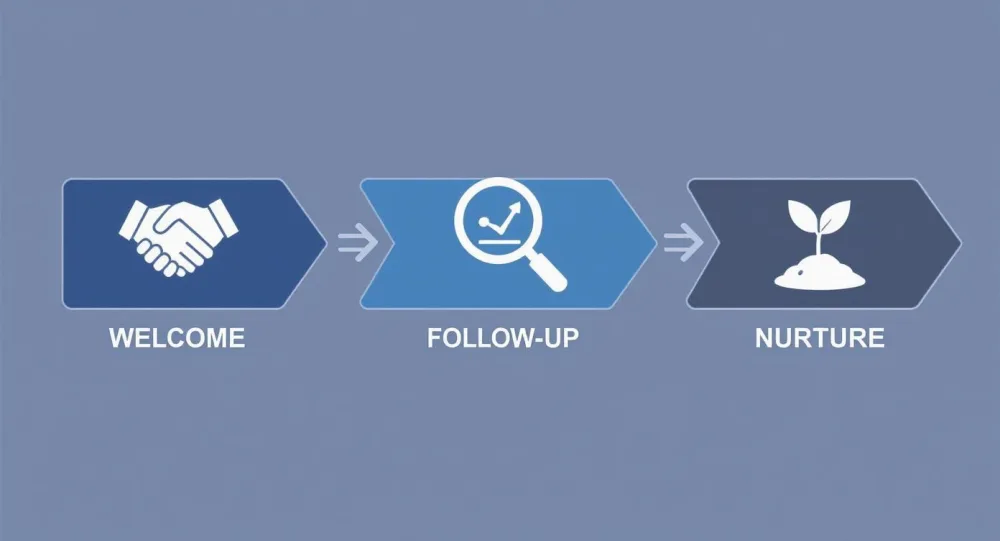
Keeping tabs on your metrics at each of these stages helps you spot exactly where people are dropping off, so you know just what to fix.
From Data Points to Action Plans
Knowing your numbers is one thing, but the real power comes from doing something with them. Every metric is a clue, and reading those clues consistently is what separates agents who guess from agents who win more clients from the same list.
Data tells a story. A low open rate isn't a failure—it's feedback telling you to write a better headline. A weak click-through rate is a sign you need more compelling visuals or a much clearer call-to-action.
This is where A/B testing becomes your best friend. It’s a simple concept: send two slightly different versions of an email to a small part of your list and see which one does better. You can test subject lines, images, or even the text on your buttons to discover what truly gets your audience to act.
Diagnosing and Improving Your Email Campaign Performance
So, what do you do when the numbers aren't what you'd hoped for? It's time to play detective. This table is a quick troubleshooting guide to help you figure out what's wrong and how to get your campaigns back on track.
| Metric (KPI) | What It Tells You | If It's Low, Try This... |
|---|---|---|
| Open Rate | The power of your subject line, sender name, and timing. | A/B test different subject lines. Try being more specific, personal, or urgent. Also, experiment with sending at different times of the day or week. |
| Click-Through Rate (CTR) | The relevance and appeal of your email's content, visuals, and calls-to-action (CTAs). | Upgrade your visuals with professional, eye-catching images like Pedra's AI virtual staging. Make sure your call-to-action is a single, obvious, and compelling button. |
| Conversion Rate | How well your email's promise lines up with your landing page's offer. | Check that the landing page your email links to is dead simple, clear, and directly continues the conversation from the email. Cut down the number of fields on your forms. |
| Unsubscribe Rate | Your content's relevance and how often you're sending emails. | Re-check your audience segmentation to make sure you're sending the right content to the right people. You might also want to send less frequently or ask subscribers for their preferences. |
By consistently checking these metrics and making smart adjustments, you create a powerful feedback loop. This ongoing cycle of testing, learning, and refining is the absolute key to mastering your real estate email marketing. Do it right, and your email list will become one of your most valuable business assets.
Staying Compliant and Building Trust
Look, great email marketing isn't just about getting people to open your messages. It’s about building a solid reputation and a business that lasts. If you ignore the rules, you risk more than just a few unsubscribes—you could face hefty fines and seriously damage your brand.
Think of it this way: compliance is the bedrock of your digital reputation. Every single email you send is a chance to show respect for your clients' time and their inbox. That means no shady tactics, like adding people to your list without asking, and always giving them an obvious way to opt out if they're no longer interested.
Understanding the Legal Essentials
You don’t need a law degree to do this right, but you absolutely need to know the basics. The big ones are the CAN-SPAM Act in the U.S. and GDPR over in Europe. They might seem complicated, but they boil down to two simple ideas: be transparent and get permission.
So, what does that look like in practice?
- Honest Subject Lines: No clickbait. Your subject line should accurately reflect what's inside the email.
- Clear Identification: Make it obvious the email is from you. You also need to include a valid physical mailing address.
- Easy Opt-Out: Every email needs a clear, one-click unsubscribe link. And you have to process those requests right away.
Building a great email list is like building a great client base—it’s about quality, not just quantity. A smaller, highly engaged list of people who want to hear from you is far more valuable than a massive list of unengaged contacts.
Bending these rules doesn't just put you in legal hot water. It tells your audience you don't respect them, which is a killer in a business built on relationships.
Re-Engagement and Referral Campaigns
Once you’ve got the legal stuff down, you can focus on smarter ways to grow. A great place to start is with subscribers who’ve gone quiet. A re-engagement campaign is perfect for this.
Send a targeted email to people who haven't opened your stuff in a few months. Maybe you offer them an exclusive market report or a helpful home maintenance checklist. Sometimes, just a simple "Are you still interested in hearing from me?" is all it takes to either bring them back or clean up your list.
And don't forget your biggest fans: your past clients. A dedicated referral program can be a goldmine. Email your "Past Clients" segment, thank them for their business, and lay out a simple way they can earn a reward for sending new clients your way. A gift card to a local restaurant or a donation to their favorite charity works wonders. It's a genuine way to turn your past successes into your next big win.
Still Have Questions? Let's Clear Them Up
It's one thing to map out a strategy, but it’s another to put it into practice. Questions always pop up along the way. Here are some quick, no-nonsense answers to the things agents ask most often about email marketing.
When Is the Best Time to Hit 'Send'?
You'll find a lot of studies pointing to mid-week (Tuesday, Wednesday, and Thursday) as the sweet spot for engagement. Try sending your emails around 10 AM. Most people have cleared their morning backlog by then but haven't yet checked out for lunch.
But here's the real secret: your own data is your best guide. Don't be afraid to experiment. Send a campaign on a Monday and another on a Thursday, then compare the results. You might discover that your open house reminders get the most traction on a Friday afternoon when people are planning their weekends.
How Often Should I Actually Be Emailing People?
Consistency beats frequency, every time. If you email your list every single day, you're going to see your unsubscribe rate skyrocket. But if you go silent for months, they'll forget who you are.
Finding a good rhythm is key. For a general newsletter or market update, sending something once or twice a week is a great starting point.
The cadence can (and should) change based on who you're talking to:
- Active Buyers: They'll want new listing alerts the moment they hit the market.
- Past Clients: A friendly, value-packed email once a month is perfect for staying top-of-mind.
The golden rule? Only send an email when you have something genuinely valuable to say. If you prioritize quality over quantity, you’ll build the trust that keeps people opening your messages.
What’s the Best Email Marketing Software for a Real Estate Agent?
Honestly, the "best" platform really boils down to what you need and what you're willing to spend. The non-negotiables are strong segmentation tools, an automation builder that doesn't require a computer science degree, and clear analytics.
Many of the big names offer templates designed specifically for real estate, which can save you a ton of time. Think about where you want your business to be in a year or two and pick a tool that can keep up with your growth.
Ready to make every email pop and get more clicks? With Pedra, you can create AI-powered virtual staging, enhance your listing photos, and generate 360° tours in a single click—so your listings grab attention in a crowded inbox. Transform your property visuals with Pedra.
Email works best as part of a wider mix — our guide to advertising and marketing for realtors covers the other nine channels.