
The same property can trigger two completely different conversations in the same week. A young buyer visits and asks about the mortgage, upfront costs, and whether they "can imagine" the living room furnished. An investor comes in afterwards and barely comments on the kitchen. They want to know whether the layout allows for a profitable renovation and if the asset can be repositioned quickly.
When the agent uses the same listing, the same photos and the same pitch for both, they lose credibility with both. The first-time buyer lacks clarity. The investor finds too much decoration and too few arguments. The problem is rarely the property. The problem is the approach.
Introduction: The End of Generic Real Estate Marketing
This commercial logjam happens more often than it seems. A listing with decent photos and an acceptable description is no longer enough when each client filters information with a different logic. The first-time buyer buys with excitement but also with fear. The investor buys with a mental calculator. Families look for functionality. The skeptical profile analyzes whether anything is being hidden.
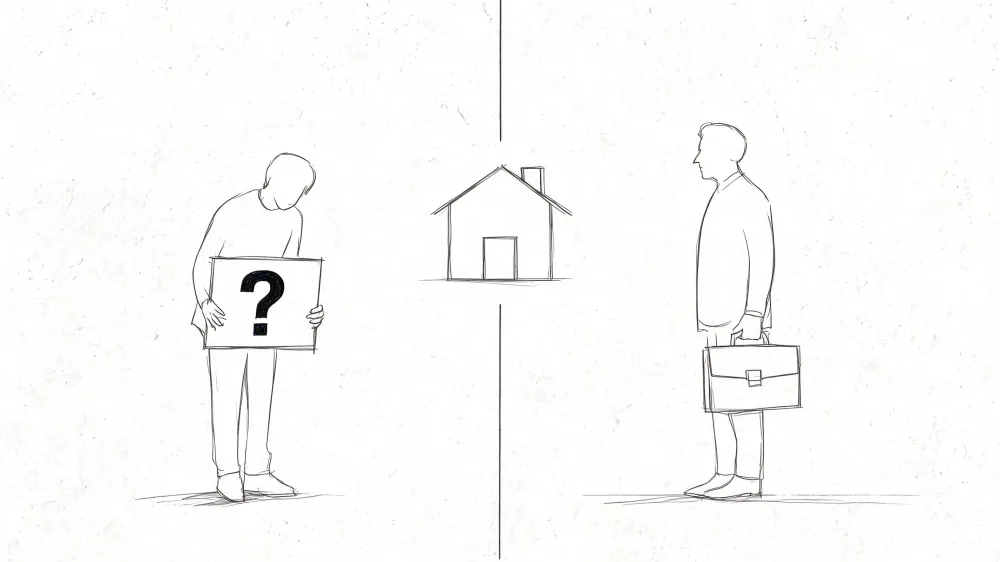
In Spain, millennials represented 37% of all home buyers in 2020, and within the 22–30 age group, 82% were first-time buyers, according to these industry statistics compiled by Digitalegy. That matters because it explains why so many real estate conversations today require more visual guidance and less generic talking points.
The same flat doesn't sell the same way to everyone
A client still calculating their monthly budget doesn't process a property the same way as someone comparing yields. In fact, many buyers arrive with basic doubts about cost of living, savings and real purchasing power. In those cases, a useful, clear reference can be this EnvíaDinero guide on Spanish living costs, because it helps ground the financial conversation before discussing the property.
The practical change is simple. First identify the archetype. Then choose the visual asset that reduces their friction. That's when a visual-based strategy stops being "pretty marketing" and becomes a sales tool.
A listing doesn't fail just for having bad photos. It fails when it shows things the client doesn't need to see and omits exactly what would help them decide.
From the right property to the right message
Client archetypes aren't a branding theory. They're a way to decide what to show first, which objection to answer before it appears, and what material to send after the visit. If you want to dive into how artificial intelligence is integrating into that daily work, this AI for real estate guide offers good operational context.
Sales improve when the agent stops thinking "what do I have to publish" and starts thinking "what does this person need to see to move forward". That shift organizes everything else.
What Client Archetypes Are and Why They Matter
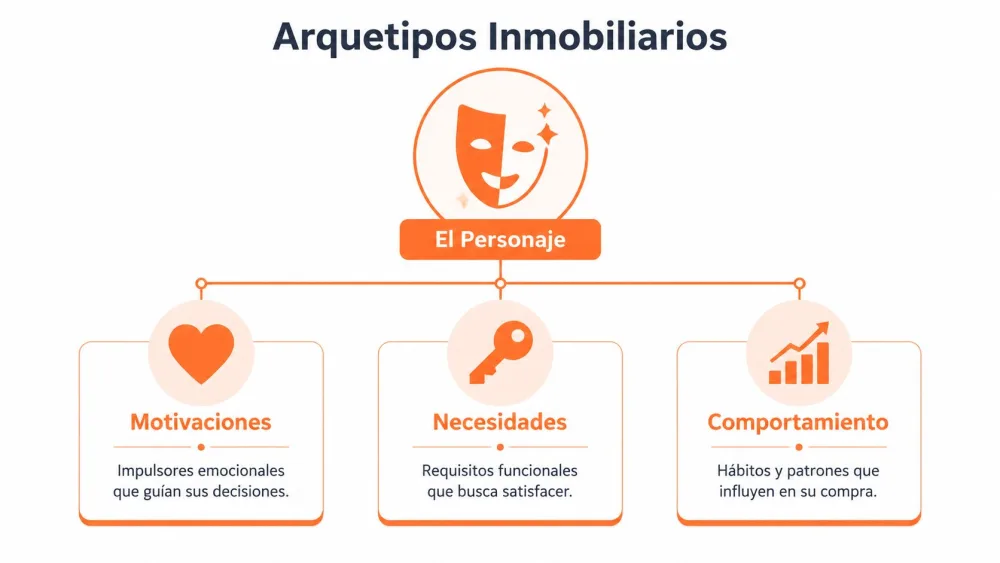
A client archetype works like a character sheet in a script. It doesn't only describe age or income level. It describes what drives them, what they fear, how they compare options and what kind of proof they need to trust. That completely changes how you attract, show and follow up.
Three practical layers that matter
If an agent wants to work effectively with real estate client archetypes, it's useful to separate three layers:
- Motivations. The outcome they truly seek: security, return, space, speed, status or peace of mind.
- Needs. What the property or process must provide to move forward: clear financing, functional layout, renovation potential or tidy documentation.
- Behavior. How they make decisions: whether they compare a lot, respond quickly, ask for proof or get stuck with too many options.
With those three layers, the agent stops improvising. They no longer show the house "as always". They show the right part of the house at the right time.
Segmentation saves selling time
Applying archetypes not only improves the message. It also prevents burnout. When you can read a lead's profile, you set expectations earlier, detect if they fit the asset and choose more useful supporting materials. That shortens sterile conversations and gives meetings a clear purpose.
According to [the analysis cited by Inmogesco based on Fotocasa data](https://inmogesco.com/blog/tipos-clientes-real estate agency/), understanding and applying archetype-based strategies can reduce time on market by up to 25%. The logic behind that figure is operational: when message and materials match the buyer's expectation, there's less friction and fewer unnecessary back-and-forths.
Operational rule: if the client needs confidence and you only send visual impact, they won't move forward. If they need potential and you only send photos of the current condition, they won't move forward either.
What changes in the agent's day-to-day work
The real difference shows up at four moments in the process:
| Commercial moment | Generic approach | Archetype approach |
|---|---|---|
| Lead capture | Same message for everyone | Message tailored to motivation |
| First visit | Standard walkthrough | Tour based on anticipated objections |
| Follow-up | Send basic listing | Send specific visuals |
| Closing | Reactive answers | Objections anticipated in advance |
Most agents already segment intuitively. They can recognize the client who needs guidance and the one who wants to get straight to the point. The mistake is not translating that intuition into concrete materials. That's where many teams stall.
The 4 Real Estate Client Archetypes You Need to Know
In one week you can show the same flat to four leads and receive four opposite readings. One asks whether they can make ends meet. Another calculates yield. Another checks whether the family routine really fits. And another looks for any gap between what you say and what they see. If you use the same listing, the same photos and the same follow-up for all of them, you lose commercial speed.
These four archetypes recur in residential transactions and help make practical decisions: what to show first, which objection to anticipate, and which visual asset to send after the visit. That step—from archetype to asset—often separates a promising conversation from a stalled deal.
The anxious first-timer
They arrive with real intent to buy but with an overload of poorly organized information. They've compared portals, received opinions from everywhere and fear making a mistake in the most expensive purchase of their life. Their blockage is rarely price-related. It's a lack of clarity.
For this profile, an empty property often works against them. They struggle to translate square meters into daily life, layout into comfort and potential into a concrete image. If the agent responds with technicalities, a list of finishes and pressure to decide, the anxiety rises.
The commercial priority here is very specific: reduce mental friction.
That's why it's helpful to present the property with materials that make it easy to understand how people live there. A sober virtual staging, a readable floor plan and a short, well-sequenced walkthrough usually work better than a battery of photos without context. With tools like Pedra, that type of material can be prepared in hours rather than days, allowing you to respond while interest is still hot.
The analytical investor
This client evaluates assets, not dream homes. They buy for yield, repositioning, rental income or wealth protection. If they don't spot clear margins, they move on without much debate.
According to [the analysis published by Inmovilla](https://inmovilla.com/tipos-de-clientes-en-una-real estate agency/), investors represent roughly 25%–30% of buyers in Spain. The same analysis notes that properties with professional visuals, such as virtual staging and 360° tours, generate 22% more qualified leads and reduce decision time by 40%.
Here the common mistake is confusing visual impact with commercial utility. A pretty image attracts attention, but the investor decides when they understand the asset's trajectory. They need to see current condition, improvement potential and an unembellished spatial reading.
What they actually need:
- Potential for appreciation. Identify intervention margins and exit strategy.
- Quick reading of the layout. Know what can be renovated, subdivided or repositioned.
- Useful visual proof. Before-and-after, usage options, and well-organized basic data.
If the investor has to build the property's story themselves, the agent is leaving strategic work to the buyer.
The busy family
This profile buys with operational urgency. They don't always visit many properties, but they filter strictly. Their mind is on schedules, logistics, cohabitation and square footage that genuinely works Monday to Friday.
Their questions are usually very concrete: whether two kids fit plus a study area, whether the living room allows daily dining without blocking circulation, whether a room truly serves as a home office or only appears so in the photo. Decisions here aren't driven by aesthetic aspiration but by visible functionality.
They respond well to materials that answer doubts quickly and can be forwarded without extra explanation to a partner or family member involved in the decision. A furnished floor plan, a visual proposal of uses per room and a clear carousel for sharing via WhatsApp or social media typically perform better than a long presentation. If your team publishes acquisition content for this segment, it's worth working formats like those explained in this guide on real estate social media content.
The demanding skeptic
This profile doesn't buy talk. They buy consistency. They check details, detect exaggerations and penalize any omission, even if the property otherwise fits.
In practice, they're easy to spot. They ask for exact measurements, compare floor plan and photos, ask about orientation, inspect poorly shown areas and often return to ambiguous answers. With this client, any heavy editing or inflated promise reduces credibility.
The right strategy isn't to impress. It's to document well. Faithful photos, a coherent floor plan, complete room coverage, visible defects when relevant and precise explanations about the asset's condition. They may appear less appreciative, but when they sense rigor they usually move forward with less noise than more emotional buyers.
Clear signs of this archetype
- Asks for precision. Poses closed questions and verifies answers.
- Detects gaps. If a room or angle is missing, they see it as a relevant omission.
- Values consistency. Expects the listing, visit, floor plan and follow-up to tell the same story.
With this archetype, the right visual asset isn't the flashiest. It's the one that best withstands scrutiny.
How to Create Visual Content for Each Archetype
The match between archetype and visual asset determines sales velocity. If the material doesn't address the right objection, the lead asks for more information, postpones the visit or disappears. The useful criterion isn't to produce more pieces. It's to assign each profile the asset that helps them decide.
What to send the anxious first-timer
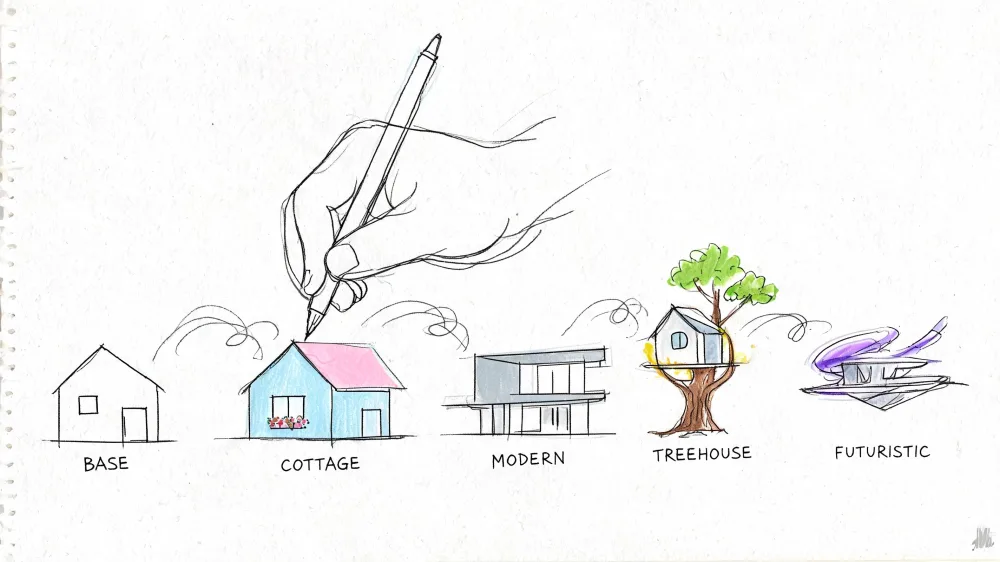
This client needs to understand quickly how the property feels to live in. An empty home forces too much imagination, and that effort usually slows the decision. Reduce that visual load from the first contact.
The most effective pieces tend to be:
- Virtual staging in key rooms: living room, main bedroom and dining area.
- Short video with a simple walkthrough. Best if it follows a logical daily-use sequence.
- Clear floor plan. Legible, prioritizing circulation and layout.
One important nuance: too much decoration can work against you. If the staging imposes a very strong style, the buyer stops projecting themselves and starts evaluating your taste.
What to show the analytical investor
The investor wants to read the asset quickly. They need to see current condition, scope for improvement and the likely effect of an intervention. Build a visual sequence with intention: clean photos first, then renovation proposals, then technical support that orders the reading.
For these operations, tools like guides for social content and reusable visual assets help produce virtual staging, renovation renders, videos and tours from the property's own photos. That lets you adapt the same asset to multiple commercial messages without remaking everything.
What works with the investor
| Visual asset | What it solves |
|---|---|
| Virtual renovation | Shows possible repositioning |
| 360° tour | Speeds up spatial reading |
| Floor plan with visual aid | Facilitates analysis without a visit |
A gallery focused only on lifestyle rarely advances this conversation. This profile evaluates structure, layout and return potential.
How to help the busy family
The busy family isn't asking for inspiration. They ask for clarity. They want to know if the house can support the daily life of several people without clashes.
Strip back the space reading. If there are too many objects, poorly scaled furniture or confusing angles, the property appears less practical than it really is.
The most useful pieces usually are:
- Object removal in photos to show square footage and circulation.
- Versions of the same room with different uses, e.g., child's bedroom, office or study area.
- Short routine-oriented video showing entrance, kitchen, living room and bedrooms.
A family doesn't buy a wide shot. They buy the feeling that their daily life fits without friction.
What the demanding skeptic needs to see
This profile moves forward when they detect rigor. If they sense makeup, they cut trust. If they see consistency among photos, floor plan, video and visit, they tend to accelerate.
The logic here is documentary:
- Detailed 360° tour to inspect without pressure.
- Exact floor plan to cross-check what they see.
- Improved but truthful photos in light and perspective.
- Soberly edited video if used.
I've seen this difference many times in marketing. The most eye-catching material doesn't always convert best. With the skeptic, the visual asset that withstands verification converts better, reduces doubts and avoids any sense of trickery.
Your Marketing Template by Archetype
When a new lead arrives, there's no need to reinvent the process. You need a simple template that lets you quickly decide which message to send and which piece to produce. Working this way gives the sales team consistency and makes follow-up smoother.
Quick sheet for the anxious first-timer
- Objective. Generate clarity and reduce fear.
- Key message. "You'll understand well how life works here and what options you have."
- Essential visuals. Warm virtual staging, clear floor plan and a short walkthrough video.
- Avoid. Overloaded listings, technicalities at first contact and galleries without context.
Quick sheet for the analytical investor
For this profile, speak precisely and let visual material carry part of the argument.
- Objective. Show the asset's potential.
- Key message. "You can quickly evaluate current condition and margin for improvement."
- Essential visuals. Virtual renovation, 360° tour, readable floor plan and before/after comparisons.
- Avoid. Long emotional narratives and decoration that hides structure.
Quick sheet for the busy family
- Objective. Demonstrate everyday functionality.
- Key message. "This space can be arranged for your daily routine."
- Essential visuals. Decluttered photos, room-use proposals and a short circulation-focused video.
- Avoid. Extreme angles, oversized furniture and visual sequences that don't explain connections between spaces.
Tip: if the couple can't attend the visit together, prepare material one can forward to the other without additional explanation.
Quick sheet for the demanding skeptic
This profile requires order, consistency and few frills.
| Element | Recommendation |
|---|---|
| Objective | Build trust |
| Key message | "I'll show you the property with the highest possible level of detail" |
| Essential visuals | 360° tour, precise floor plan, truthful photos |
| Avoid | Aggressive edits and grandiose descriptions |
Save this template in your CRM, commercial folder or a shared team document. If the agent identifies the archetype quickly, they can also decide fast what to send after the call or visit.
Turn Archetypes into Closed Deals
Most agents already know that not every client buys the same way. The difference isn’t just sensing that — it’s turning that intuition into a system. That’s where real estate client archetypes come in. Not as rigid labels, but as a guide to know which proof each person needs before taking the next step.
A first-time buyer needs to picture themselves living there. An investor needs to see potential. A family needs to confirm functionality. A skeptic needs transparency. When the visual asset answers that specific need, the conversation stops being generic and starts moving forward.
A small change with daily impact
You don’t need to overhaul your whole operation overnight. Start with something simpler:
- Classify your leads using one of the four archetypes.
- Assign a materials folder to each profile.
- Standardize follow-up after viewings with the appropriate visual asset.
- Review recurring objections and create a piece that answers them in advance.
It’s also worth checking how this fits into your broader commercial strategy. If you need ideas for organizing lead generation, follow-up, and positioning, this marketing strategies guide for real estate agents can serve as an additional framework.
Selling better doesn’t always mean talking more. Often it means showing better.
The agent who masters this stops chasing closes through persistence. They start building decisions with less friction. That’s the important shift. It’s not just about marketing properties. It’s about presenting each property in the way the right buyer can understand it, trust it, and act.
If you want to turn property photos into virtual staging, videos, 360° tours and other visual materials without building a complex workflow, Pedra brings those tasks together on a single platform for real estate use.