
There comes a point in almost every agent’s career when the problem is no longer lack of motivation. It’s the ceiling. You source properties, show them, negotiate, follow up, close some good deals, but you feel the business depends too much on you and too little on a system. If you slack off for a week, the pipeline cools. If you push hard, you slip back into survival mode.
That stagnation usually isn’t due to lack of technical knowledge. The agent already knows how to talk to owners, understands the neighbourhood, and has learned to handle objections. What’s almost always missing is structure, judgment and a way to turn good intentions into sustained execution. That’s where real estate coaching stops being a soft concept and becomes a business tool.
I see this especially clearly in today's market. A busier market means more opportunity, yes. But it also means more competition, more operational pressure and less margin for improvisation. The agents who pull ahead aren't the ones working the most hours. They're the ones who turn their time into a repeatable system.
Introduction: Why Good Agents Stall
The agent who stalls is rarely the worst. Often it’s the good one. The one who already invoices, already has a reputation, the problem-solver. Precisely for that reason, people rely on their ability to handle everything. They end up acting as salesperson, sourcer, coordinator, content creator, incident manager and almost the operations director of themselves.
The problem appears when that model stops scaling. The agent stays busy, but doesn’t necessarily move forward. They do many things, but not always the things that move the business. The calendar fills with low-leverage tasks and important decisions are made hastily, between viewings and calls.
An agent rarely falls short because they don’t work enough. They fall short by repeating without reviewing.
In a market as active as today’s, the difference isn’t only who responds first. It’s who converts their time better into listings, exclusives and closings. That’s why well-applied real estate coaching isn’t about “motivating” the agent, but about ordering how they operate.
The real symptom isn’t lack of effort
I’ve seen agents lose listings not because the competitor knew more, but because they arrived with a clearer process. A cleaner presentation. A sharper pitch. More consistent follow-up. Less improvisation.
When that pattern repeats, the solution isn’t more hours. The solution is to review how the work is done. That includes calendar, focus, sales preparation and prioritization. If that’s your bottleneck, start with something as simple as reviewing how you protect your sales blocks and your critical tasks. Pairing better routines with stronger lead generation, like the tactics in this guide on how to get clients for real estate, is usually where momentum returns.
What changes when coaching is real
A good coaching process brings order where there was scattered will. It forces uncomfortable questions. Where are listings lost? Which part of the funnel is weak? Which activities look like work but are actually noise? Which sales conversations are being avoided?
That type of work moves the business because it lowers daily friction. And when friction drops, the agent sells better, suffers less and stops relying so much on momentum.
What Real Estate Coaching Really Is — and What It Isn’t
Real estate coaching is best understood with a simple comparison. It’s like having a personal trainer for your business. The trainer doesn’t run for you, lift the weight for you, or compete in your place. What they do is correct technique, prevent repeated mistakes and demand consistency.
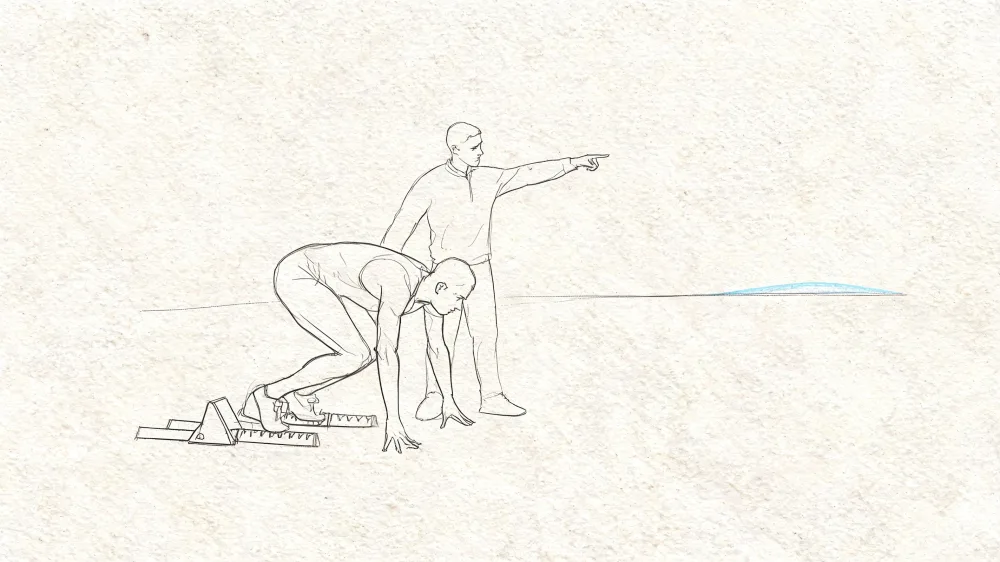
The same happens in real estate. The coach doesn’t replace the sales work. They improve it. They help detect patterns, sustain useful habits and turn vague goals into concrete commitments. If your goal is “get more listings,” that’s useless. If the conversation ends with “I’ll review my exclusive listing presentation, practise price objections and block morning follow-up time with owners,” that’s when things start to happen.
What a coach does
A useful coach works on four fronts simultaneously: performance, focus, accountability and execution. They don’t stick to inspirational phrases or purely theoretical office talk.
They typically intervene like this:
- Refine commercial judgment so the agent knows where to insist and where not to waste energy.
- Point out blind spots the agent normalises after months of repeating them.
- Demand follow-up. Understanding an idea isn’t enough. You must apply it.
- Turn intention into routine. That step has the biggest impact on results.
What coaching is not
This is where many get it wrong. Not all accompaniment is coaching.
| Role | What it provides | Where it tends to fail if confused |
|---|---|---|
| Consultant | Tells you what to do based on their diagnosis | Can create dependency if the team executes without understanding |
| Mentor | Shares experience and shortcuts that worked for them | Their context may not be yours |
| Coach | Helps improve judgment, habits and self-execution | If they don’t know the real estate business, they can stay too abstract |
Practical rule: if after several sessions you have interesting ideas but no visible change in calendar, follow-up, listings or closings, that isn’t working as business coaching.
The difference that matters in an agency
In an agency, real estate coaching raises the standard without turning the director into a permanent firefighter. A coached team needs less chasing and more intelligent review. That changes culture.
It also avoids a classic trap: confusing activity with progress. Some very active agents remain stuck because nobody helped them review method, not just effort.
The 4 Pillars of a High-Performance Agent Built by Coaching
Solid performance in real estate doesn’t come from a single skill. It comes from several pieces working together. When coaching works, it doesn’t just push sales. It builds a career that withstands market pressure and reduces the likelihood of dropping out. Agents who get structured support early tend to stay in the profession longer, because they build habits before bad ones harden.
Mindset and resilience
Real estate agents hear a lot of “no.” Sometimes from owners. Sometimes from buyers. Sometimes from the market. If they don’t know how to process rejection and pressure, they wear out quickly.
Coaching helps separate a single result from professional identity. Losing a listing doesn’t make anyone a bad agent. But not reviewing why it was lost does end up affecting the business. Useful resilience isn’t holding on out of pride. It’s learning without breaking inside.
Systems and processes
This is often where the money hides. Many agents accept working with a handcrafted system for too long. Everything depends on memory, WhatsApp and urgency.
A coach with judgement forces order around:
- Follow-up so contacts don’t cool from lack of consistency.
- A sales calendar to protect prospecting, preparation and closing hours.
- A work funnel to detect where the process sticks.
- A weekly routine so the business doesn’t depend on Monday’s mood.
Without systems the agent works a lot. With systems, the agent repeats what works.
Communication and influence
Some agents know the product well and still present their value poorly. They talk about square footage, areas and portals, but can’t get the owner to see why they should sign with them and not another agency.
Here coaching sharpens the conversation. Less generic speech and more questions, listening and structure. A good listing meeting doesn’t improvise the proposal. It builds it.
Clients don’t buy only experience. They buy clarity.
Business strategy and vision
This pillar separates the self-employed from the professional building a commercial machine. When an agent operates without vision, they only react. When they work with strategy, they decide which niche to push, which property types to pursue, which differentiating arguments to reinforce and what activities to stop doing.
This is also where coaching and marketing meet. A clear strategy is only as good as the channels behind it, so it pays to align your coaching goals with a deliberate plan, like the ideas in this guide on marketing strategies for realtors. Turning individual talent into sustained performance is mostly a matter of pointing it at the right activities, consistently.
Coaching Models and the Structure of a Successful Program
Not every format works for the same purpose. The usual mistake is copying a model because it sounds good, not because it fits the agent’s stage or the agency’s reality. An advisor who’s just starting needs one thing. An experienced team needs another.
Comparison of real estate coaching models
| Criterion | Individual Coaching (1-to-1) | Group Coaching |
|---|---|---|
| Focus | Highly personalised | Shared across multiple profiles |
| Ideal for | Agents with specific challenges or clear blockages | Teams that need a common language and standards |
| Main advantage | Depth and direct follow-up | Collective learning and operational efficiency |
| Main limitation | Requires more individual commitment | May be short on deeply personal issues |
| Common use | Sourcing, leadership, focus, negotiation | Role play, objections, processes and commercial culture |
The individual format works better when there’s a concrete bottleneck. An agent who doesn’t land exclusives, who gets distracted, or who already sells but doesn’t scale usually benefits more from direct, demanding conversation.
The group format has different strengths. It builds culture. Aligns messaging. Reduces improvisation between agents and makes the agency speak a similar commercial language. Done well, that’s very noticeable in the client experience.
How to set up a program that actually works
A serious program doesn’t start with “we’ll see.” It begins with agreement, focus and clear rules. If that’s not set from the start, the process dilutes.
The minimum pieces are:
-
Diagnostic
Review the agent’s or team’s real situation. Not the polished version. Calendar, funnel, follow-up rate, listing meetings, recurring objections, operational disarray. -
Operational objective
The objective must be observable in behaviour, not just desire. For example: improve the quality of listing presentations, professionalise follow-up or standardise team meetings. -
Established cadence
Regularity matters more than dramatic intensity. A brilliant session without follow-up is worth little. A clear cadence creates traction. -
Commitments between sessions
Each session must end with concrete actions. Not ideas to ponder.
A useful session has a simple structure
There’s no need to make it complicated. Most effective sessions follow a similar scheme:
- Review of commitments to check what was done and what wasn’t.
- Win or progress to consolidate what’s already working.
- Central problem to avoid scattering the conversation.
- Real options to decide what to do this week.
- Next step with owner and application context.
If a session ends without a clear next step, the same conversation usually repeats the following week.
Signs the program is working
You don’t need a sheet full of complex metrics to notice progress. In real estate there are visible signs early on. The agent prepares meetings better. They follow up with less friction. They speak more coherently. They waste less time on weak opportunities. And above all, they stop living every week as if it started from zero.
The team atmosphere changes too. Less improvised complaining. More useful conversation about what’s working, what isn’t and what will be tested next.
The Bridge Between Coaching and Sales: Using Pedra to Materialise Strategy
The biggest shortcoming of traditional real estate coaching isn’t intention. It’s execution. People talk about differentiating, elevating the presentation, showing value, improving listing marketing. That all sounds good. The problem comes when the agent asks how to do it today, with a real apartment, a demanding owner and little time.
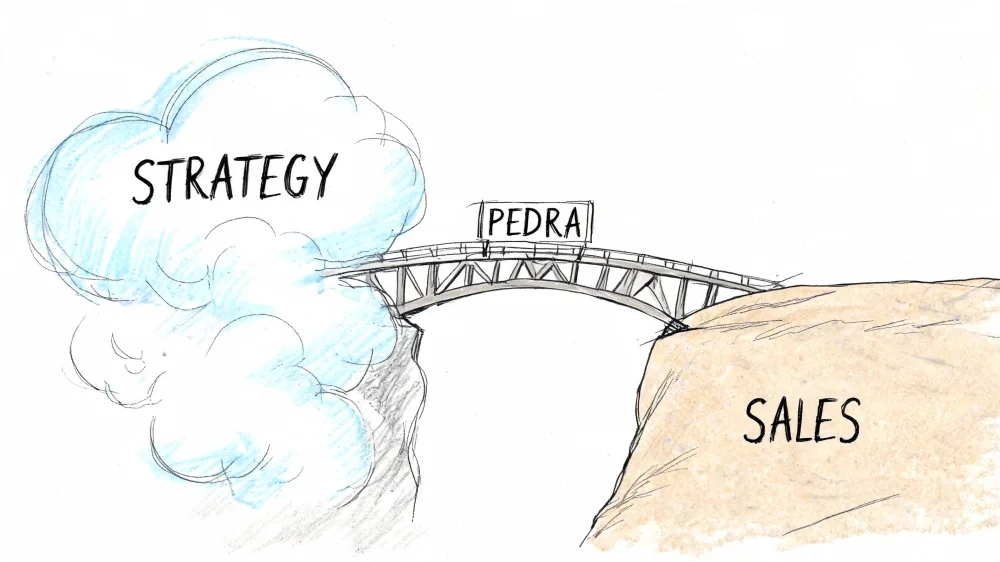
Here the missing link appears. Most coaching programs are strong on mindset and accountability but weak on the practical, visual side of marketing a property. They tell agents to elevate the presentation, but rarely show them how to create quality visual assets quickly.
Abstract advice is no longer enough
Telling an agent “be more professional” does little. Telling them “present the renovation potential with a visual proposal, bring an enhanced version of the living room and show a short video for social and sourcing” is another thing.
In practice, many exclusives are won or lost on that detail. Owners compare agents who promise, but lean towards the one who demonstrates. If a property is empty, outdated or poorly presented, modern coaching must include the bridge between strategy and the visual asset.
A good coach not only corrects the message. They also demand visible proof of that message.
A real coaching conversation
The scene is common. An agent with a difficult listing. A property with an old kitchen, a dark living room and an owner convinced “it will sell anyway.” In a classic approach, the session ends with a recommendation: “work on your value proposition.”
In a useful approach, the conversation gets practical:
- What we want to show. Renovation potential, spaciousness, use of space.
- What asset is needed. Enhanced image, short video, visual walkthrough or comparative proposal.
- How it’s used. Listing presentation, publication, WhatsApp send or support during viewings.
When that’s well integrated, the coaching session stops being an interesting chat and becomes real sales preparation.
Tools to close the gap between idea and execution
Today it no longer makes sense to rely on several suppliers for every visual need. If the agent needs a platform that turns photos or floor plans into market-ready materials, they can use Pedra, which brings virtual staging, image enhancements, video and tours together in one environment.
That changes the internal conversation in an agency. The coach or director no longer says “do better marketing.” They can say “bring the photos, let’s rework the property’s visual narrative and use it in the next meeting.”
To see the type of material that can support that transition between strategy and execution, this visual resource helps understand it better:
What changes in sales when coaching lands
It changes implementation speed. It closes the gap between a good recommendation and an action carried out. And that has a direct effect on three critical business moments:
- Capturing. The owner sees preparation, not just pitch.
- Marketing. The property is presented with more context and potential.
- Follow-up. The agent has concrete materials to reignite interest.
Coaching that doesn’t translate into tangible assets falls short. The coaching that does usually drives faster decisions, clearer conversations and a much stronger perception of professionalism.
Practical Guide to Choosing a Coach or Building an Internal Program
Choosing the wrong coach is costly. Not just financially, but in wear and tear. A poor process leaves the agent skeptical and management thinking "this doesn't work." The issue is almost never coaching as a concept — it's hiring support without criteria.
If you’re an agent hiring a coach
Ask direct questions. No fluff. You’re not looking for charisma; you’re looking for the ability to improve your performance in a demanding business.
Minimum checklist:
- Real estate experience. Ask what types of deals, teams, or contexts they’ve worked in.
- How progress is measured. If everything is evaluated by feelings, that’s a bad sign.
- Session format. You need to know whether there’s structure or just free conversation.
- Level of challenge. A useful coach doesn’t only listen — they also confront.
- Practical application. Request examples of the decisions or behavior changes they typically work on.
It’s also worth reviewing the differences between coaching, mentoring and commercial management. If you want a deeper comparison, this guide on the real estate mentor and their role in professional development can help you filter options more effectively.
If you run an agency and want to create an internal program
You don’t need to start with something sophisticated. You need to start well. First decide what the program is for: retention, productivity, onboarding, improving listings, or commercial cohesion. If you mix everything from the outset, the program becomes diffuse.
Recommended steps:
-
Identify teachable leaders
This doesn’t always match the top seller. Sometimes the best internal coach is the person who knows how to organize, observe and give useful feedback. -
Define a fixed routine
Better a few consistent sessions than an initial avalanche with no continuity. -
Create a common language
Objections, listing appointments, follow-ups, visit preparation — all of this should have visible standards. -
Avoid turning it into covert control
If the team feels every session is an audit, they’ll stop speaking honestly.
Internal coaching works when the agent leaves with more clarity and responsibility, not more fear.
Signs you’re on the right track
The agency starts detecting blockages earlier. New agents integrate better. Veterans stop trying to solve everything "their way." And management no longer has to repeat the same commercial advice every week.
Measuring ROI and Overcoming the Mental Barriers to Coaching
The common objections are predictable. "It’s expensive." "I don’t have time." "I can do it myself." They all sound reasonable, but usually mask another problem: comparing the visible cost of coaching with the invisible cost of stagnation.
The three most frequent barriers
- Cost. If an improvement in listings, follow-up or closing produces an extra deal or prevents a good agent from leaving, the calculation changes completely.
- Time. Coaching takes time upfront but returns focus later. That trade-off usually pays off.
- Self-sufficiency. Being able to do it yourself doesn’t mean you will do it, nor that you’ll do it quickly enough.
A simple way to think about return
Coaching ROI shouldn’t be evaluated solely on direct revenue. Consider reduced turnover, better onboarding, less improvisation and more commercial consistency. In agencies that weighs heavily. For individual agents it matters even more, because every organizational mistake comes out of their own pocket.
The right question isn’t how much it costs. It’s how much it costs to remain the same for another twelve months.
The market won’t wait for an agent to get organized whenever they feel like it. In an activity where the difference between appearing professional and being perceived as one becomes apparent quickly, well-implemented real estate coaching stops being optional. It becomes a competitive advantage.
If you want to turn coaching ideas into visual materials that help you attract more leads, present properties more powerfully and move faster, it’s worth trying Pedra. It’s a practical way to bring strategy into the commercial field without relying on a slow external production pipeline.