
Real Estate Open House: The Definitive 2026 Guide for Agents
Run a real estate open house that converts: prep, marketing, hybrid promotion and follow-up scripts. Turn casual visitors into qualified buyers and offers.
You arrive on Saturday with the property spotless, the sign up and the feeling that this time it will work. You open the door, twenty minutes pass, a neighbour drops in, then a couple who are “just looking,” and the event ends without a serious buying conversation. That open house didn’t fail because of bad luck. It failed because it was treated as an open visit, not a marketing operation.
Today that costs money. In a fast-moving market, standing out no longer depends only on having a property to show. It depends on how you present it, how you filter interest before the visit and how you support the decision afterwards.
The real estate open house that works in 2026 isn’t purely physical. It’s hybrid. It starts before the buyer steps into the property, continues during the visit and follows up afterwards with measured outreach. That shift separates agents who “run events” from those who turn visits into second appointments and offers.
Beyond Traditional Viewings
The classic open house model has become insufficient. Putting up a listing, opening for a few hours and hoping for spontaneous traffic is no longer enough. Buyers arrive better informed, compare faster and rule things out sooner.
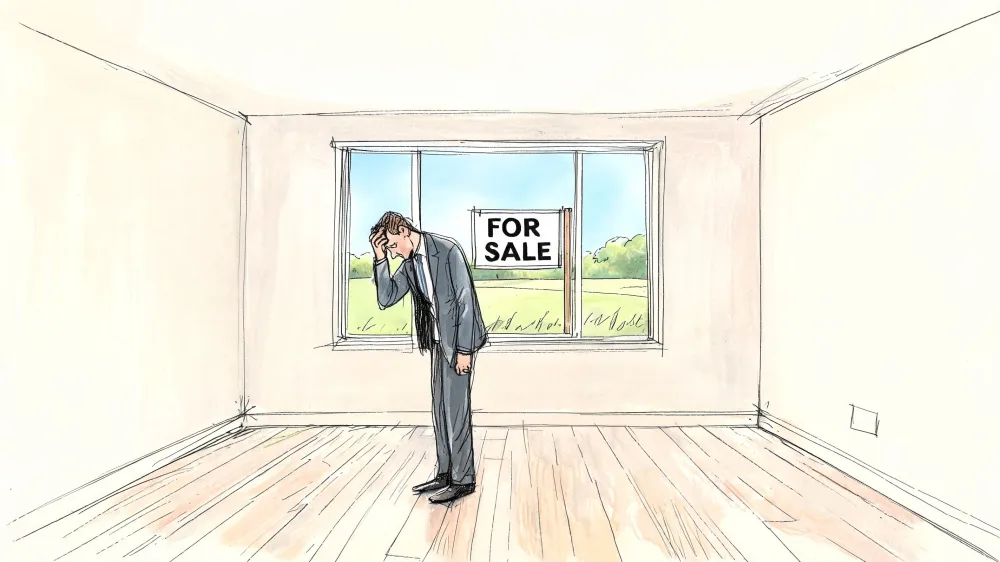
Most weak open houses follow the same pattern. The property is shown well, but promoted poorly. Or it’s promoted but lacks visual assets that filter the curious and attract buyers who are already ready to act. Here is the first big difference between a tactical action and a commercial system.
What actually works now
An effective real estate open house does three things at once:
- Pre‑qualifies before the visit. The buyer has seen enough material to decide whether it’s worth attending.
- Builds context during the event. You don’t just show square footage and finishes. You show use, potential and fit with a lifestyle.
- Keeps momentum afterwards. Interest isn’t allowed to cool.
Practical rule: if the first serious contact with the property happens when they cross the door, you’re late.
The hybrid format fixes this. The on-site tour is stronger when preceded by well‑made digital assets. A preview tour, a short video and a visually optimised representation of the property reduce friction and improve the quality of conversations during the visit. If you adopt this approach, it’s worth reviewing how agents use virtual tours for real estate as a commercial filter, not just a showcase.
A change of focus
An open house should no longer be measured by how many people walk in. It should be measured by who walks in, what they do inside and what happens in the following hours. That nuance changes the preparation, the promotion and even the agent’s role on the day.
In a market where transaction volume is at recent highs, buyers don’t reward improvisation. They reward clarity. And clarity begins long before the door opens.
Phase Zero — Planning and Preparing the Property
A good open house starts when you decide what it’s for. It sounds obvious, but many agencies prepare the event without setting a specific commercial intention. Then results are hard to interpret. If you don’t know whether you’re seeking a quick sale, capturing pent‑up demand or feeding your buyer database, any outcome will feel ambiguous.
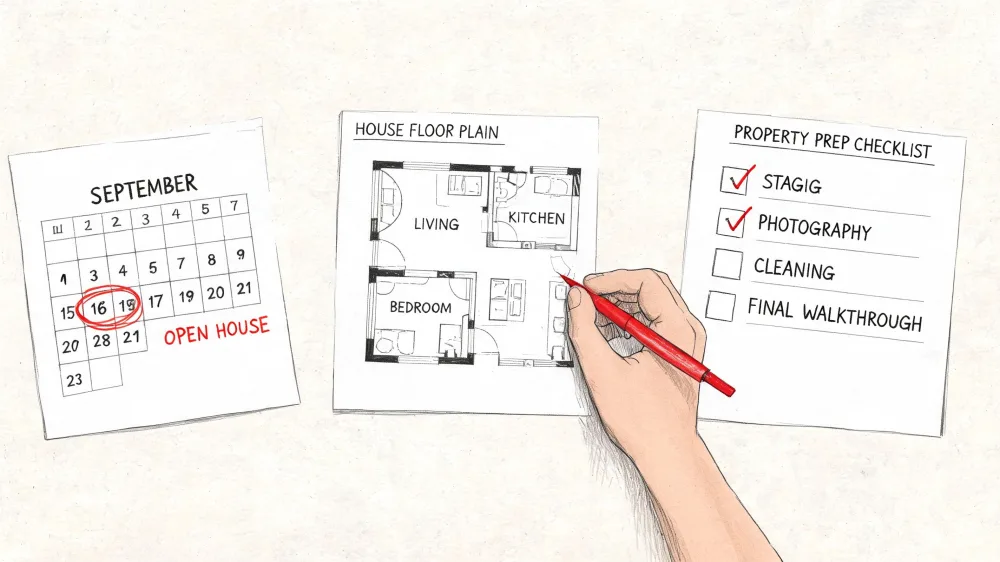
First define the type of operation
Before you move a single chair, be clear which of these scenarios applies:
| Property situation | Recommended approach |
|---|---|
| Move-in-ready apartment | Maximize qualified attendance and speed up the decision |
| Empty home | Build the sense of a home and help buyers read the scale |
| Property with renovation potential | Show the possibilities instead of asking buyers to imagine them alone |
| Difficult asset (layout or aesthetics) | Reframe the conversation with visual support |
This diagnosis governs everything else, including the tone of the invitation. You don’t advertise the same way a move‑in‑ready flat and a property with upside potential after refurbishment.
You don’t show the property as it is. You show it as it should be understood
This is where many agents lose sales. They confuse honesty with raw literalism. Showing an empty, cold or visually chaotic property doesn’t make it more transparent. It forces the buyer to do extra mental work. Most won’t.
Empty, cold or cluttered spaces tend to sit longer because they force the buyer to fill in the gaps. Virtual staging solves this: it shows a space furnished and lived-in so buyers can read the layout at a glance. The practical takeaway is clear. If you leave a property empty without visual support, you’re making the sale harder.
What to prepare before you launch the invite
Keep it simple, but organised.
-
Objective — be explicit
Decide the success signal: second visit, offer, or lead generation. Without it you can’t adjust. -
Property narrative
Summarise in one sentence why this property deserves a visit. Don’t try to say everything. Say what’s decisive. -
Pre‑visit visual assets
If the home is empty or irregular, prepare versions that help reading the space: furniture, style, functional layout or potential improvements. -
Resolve sensitive issues
Odours, poor lighting, excess personal items, small defects. None of this is fixed by a good listing.
A bare room doesn’t automatically communicate space. Often it communicates doubt.
What I always check when preparing a property
Small details change the quality of a visit more than you’d expect:
- Entry and first impression. Lobby, hallway and smell. If the start fails, the rest is uphill.
- Realistic lighting. Open blinds, correct cold or uneven bulbs and avoid dark corners.
- Depersonalisation. Buyers need to project themselves, not learn the owner’s biography.
- Route sequence. Decide the entrance, where you pause and which room closes the visit.
To refine these operational aspects, a prepare-home-for-sale checklist helps agents avoid last-minute improvisation.
The underlying mistake
The issue isn’t only aesthetic. It’s commercial. A well‑staged open house converts better because it reduces the buyer’s cognitive load. It allows them to grasp the space quickly, connect sooner and ask better questions. When that happens, the conversation stops being “how odd it looks empty” and becomes “how would this fit.”
An Irresistible Promotion to Fill the Schedule
Promoting an open house isn’t just posting a listing and waiting. It’s building anticipation with a clear sequence. Done right, the event stops feeling like a general invitation and starts to be perceived as a concrete opportunity worth attending.
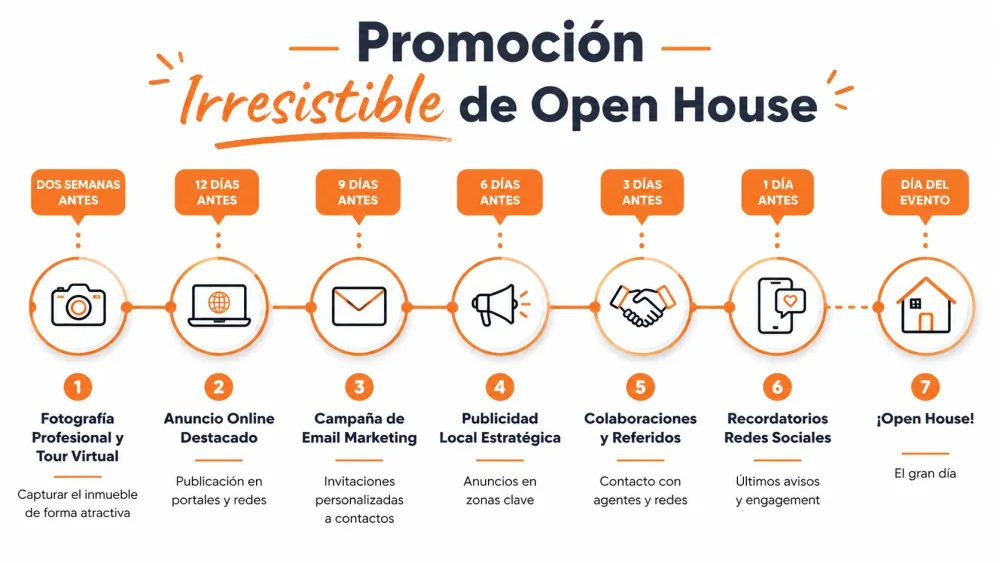
The most undervalued asset here is not the listing. It’s the pre‑visit material that lets the buyer tour, understand and remember the property before Saturday. Tools like Pedra let you produce virtual tours, short videos and optimised images in minutes instead of waiting on a separate production. It fits what any sales team sees in the field: buyers respond better when they’ve already “entered” the property online before they show up in person.
The sequence I use to promote
Not all actions carry the same weight. This order does.
Two weeks before
Publish the campaign base: strong photos, a decision‑oriented description and a digital walkthrough that acts as a filter. If the property has weaknesses, don’t hide them—reframe them with visual context.
At this stage create several pieces, not just one:
- Main listing with the cleanest photos and central message.
- Short video for social media and messaging.
- Virtual tour so the buyer arrives better prepared.
- Audience‑specific versions. Don’t copy the same text for portals, email and social.
A campaign doesn’t repeat. It adapts
A common mistake is using the same copy everywhere. That tires attention. Portal users look for information. Social users respond to a reason to stop scrolling. Email needs context and a clear call to action.
If all your content says exactly the same thing, the market perceives it as repeated noise.
What to publish on each channel
Property portals
Don’t sell illusions—sell readability. The headline should clearly state the asset type and the reason to be interested. In the description, prioritise what changes the decision to visit: layout, condition, light, terrace, possible refurbishment, useful location.
Instagram and Facebook
A short sequence of pieces works better than a lone post. A brief video with overlaid text often opens curiosity better than an overloaded carousel. Add a simple CTA: reserve your slot or request early access to the tour.
Email to your database
Don’t send a generic blast. Segment by area, budget and typology. Keep the body short. Clear subject, one reason to attend and access to the pre‑visit material.
Example approaches:
-
For a hot buyer
“We’re opening this home on Saturday. If it fits your area and layout needs, see it before it goes into second‑visit rounds.” -
For an exploring buyer
“Here’s a property worth a look for location and potential. You can view it online first and decide if you want to come.”
WhatsApp and direct messaging
Use it judiciously. Not to spam, but to recover interest from leads you’ve already spoken with. A short message with a link to the right visual asset usually works better than pasting a long listing without context.
The visual material that drives qualified attendance
Not all content attracts equally. This order tends to deliver the best commercial results:
| Asset | What it does |
|---|---|
| Virtual tour | Filters the curious and pre-empts objections |
| Short video | Captures fast attention on social and messaging |
| Optimised images | Improve perception and the initial click |
| Potential visuals | Help with empty or improvable homes |
If you need format ideas, copy suggestions and channel combinations, these real estate marketing ideas are useful to turn a flat promotion into a layered campaign.
What not to do
- Announce too late. You miss repetition and recall.
- Use technically correct but cold photos. The property is seen, not desired.
- Invite everyone the same way. The message loses impact when it’s not targeted.
- Rely only on the portal. The portal captures active search, but doesn’t by itself build event momentum.
The difference between a full schedule and a weak morning rarely lies in the property. It almost always lies in how interest was warmed up beforehand.
D‑Day — Execution and Lead Capture
The ideal Saturday doesn’t start when the first visitor arrives. It starts an hour earlier, when the route is already planned. Signage is visible from the street, the property smells clean, lights are on and each room has an evident function.
A couple parks nearby but hesitates at the complex entrance. Poor signage causes many to get lost or give up, and an owner hovering during the visit makes buyers self-conscious and reluctant to speak freely. That’s why I emphasise two seemingly small things: clear signage and keeping owners out of the scene.
How the visit should feel
Visitors don’t want a sales monologue as soon as they enter. They want orientation. Time to look. To confirm if what they saw earlier matches reality. The agent who runs a successful real estate open house accompanies without invading.
This accompaniment follows a simple cadence:
- Short welcome. Greeting, quick registration and the basic tour outline.
- Supervised freedom. You leave space but observe which rooms hold attention.
- Useful intervention. Step in to clarify or point out a relevant detail.
- Light close. Before they leave, make the next step clear.
A good host doesn’t chase the buyer through the house. They remove friction so the buyer can imagine their life there.
Registration mustn’t be a loose sheet of paper
If a lead comes and goes without leaving contact details, you’ve funded an experience you can’t monetise. Registration must be fast, clear and natural. A QR at the entrance works better than a passed‑around sheet, provided the process doesn’t feel bureaucratic.
Capture the minimum useful info: name, contact, interest range and a brief commercial note. If your team lacks an organised process for this, a structured real estate marketing workflow helps define what to collect and how to turn it into actionable follow-up without improvisation.
What separates a live visit from a dead one
There are signs you should read in real time. Someone who returns to a room, asks about delivery times or discusses layout in detail isn’t visiting the same way as someone who does a quick lap and leaves. The agent should note that behaviour on the spot, not rely on memory later.
And there are mistakes that kill a visit instantly:
- Owner present, correcting or overhearing conversations.
- Overly talkative agent filling every silence.
- An environment without rhythm: closed rooms, poor light or uncomfortable temperature.
- Exit without a next step, as if the event ended at the door.
When execution is sharp, the buyer’s feeling is simple: they didn’t “look at a house.” They experienced a clear, comfortable and easy path to the next step.
Follow‑up — The Phase that Closes Sales
Most agents evaluate an open house by what happened during the event. I evaluate it by what happens that same afternoon and the next day. That’s where the operation is won or lost.
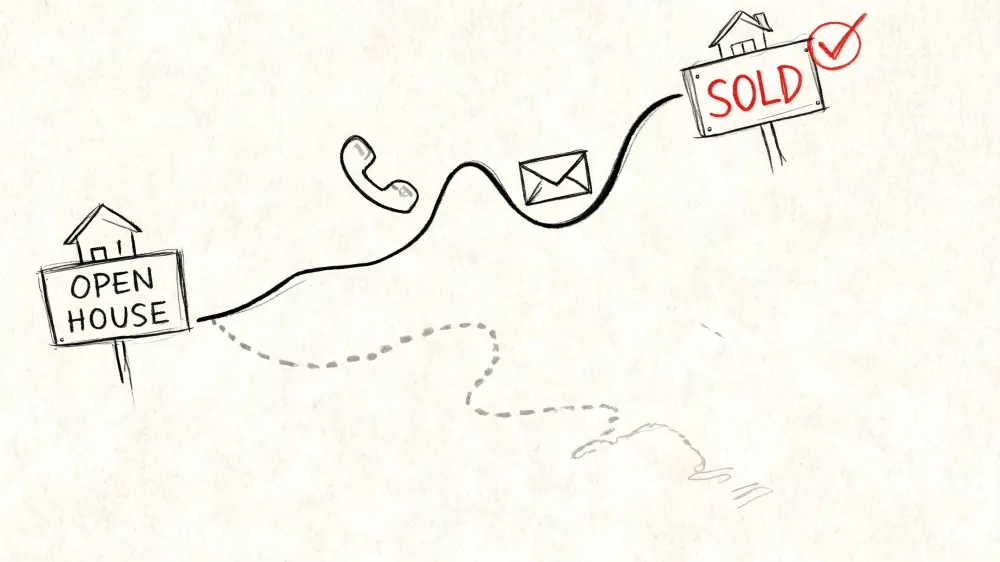
The principle here is direct. A well-managed open house turns a meaningful share of attendees into second visits, and a smaller share into offers — but only if you move quickly. Interest cools fast when follow-up slips past the first day, while other properties take up the buyer’s attention. That completely changes the team’s priorities after the door closes.
Segment before you write
Not every attendee deserves the same message. If you treat the person who asked about financing the same as the curious neighbour, you waste time and dilute impact.
I work with three groups:
| Lead type | What I observed | What I do |
|---|---|---|
| Very interested | Specific questions, long time on-site, visible intent | Personal contact the same day |
| Interested | Good fit, but fewer urgency signals | Follow-up message with a clear next step |
| Curious or indirect | Weak fit or side interest | Light nurturing and an orderly archive |
The useful window is short
Good follow‑up isn’t pushy. It’s fast and specific. The buyer has just left the property. They still remember sensations, objections and comparisons. If you wait too long, other properties fill that mental space.
Do it like this:
-
Same afternoon
Send a brief message thanking them for visiting and proposing the appropriate next step. -
The next day
Call the best‑fit leads. Not to ask “what did you think?” but to uncover the real blocker. -
After the call
Send material that helps decide. Not a massive dossier—only what answers their questions.
Effective follow‑up doesn’t add pressure. It adds clarity at the exact right moment.
What to say by interest level
Don’t use obvious templates. Use context.
-
Very interested lead
“Thanks for coming today. From your questions about layout and timing, I think it’s worth a deeper look. If it suits you, I’ll reserve a private viewing.” -
Interested lead
“Thanks for stopping by. I’ll send the key details so you can review them calmly. If you like, we can discuss any questions tomorrow.” -
Cold but useful lead for the database
“Thanks for visiting. I’ve noted your search and will alert you if something similar comes onto the market.”
What to measure for real
You don’t need a complex dashboard. You need discipline to review:
- How many attendees left complete contact details
- How many requested or accepted a second visit
- Which objections repeated
- Which channel brought the best leads
An open house doesn’t improve by intuition. It improves when you identify which profiles attended, what held them back and what pre‑visit content attracted the best matches. The agent who records this stops repeating events and starts honing a system.
Turn Every Open House into Your Best Tool
The real estate open house is no longer a once-a-week, standalone event. It’s a central component of both listing acquisition and closing marketing. When you treat it that way, everything changes. The property is prepared with purpose, promotion is layered, the visit is executed as an experience, and follow-up is driven by commercial intent.
Here’s the key point. A hybrid format solves a historic limitation of the traditional open house. Before, you relied almost entirely on who showed up. Now you can reach people earlier, filter prospects more effectively, and keep selling after the event using visual assets and a structured process.
That also strengthens your position as a real estate agent. You’re not just showing a property. You’re demonstrating a method. And in a competitive market, method sells twice: it sells the current property and helps you win the next listing.
When an open house is well-designed, it doesn’t work only for that property. It works for your brand, your inventory, and your pipeline.
If you apply this playbook with discipline, you’ll stop measuring the event by turnout and start measuring it by quality of opportunity. That’s when an open house becomes a true commercial tool.
If you want to build this system without relying on multiple vendors, Pedra lets you create from one place the visual assets that save the most work for a sales team: virtual staging, image enhancements, property videos, and 360° tours with lead capture. For an agency that wants to turn a traditional open house into a hybrid, fast, repeatable experience, that’s the kind of stack that makes a difference.

Related Posts
How to Market a Real Estate Listing: The 6 Things a Professional Listing Needs
The six assets a professional real estate listing needs — photos, video, virtual tour, floor plan, s...
Best AI Video Tools for Real Estate Agents (2026): Tested and Compared
Nine AI video tools compared for real estate work, with current prices and the one distinction most ...
Best Virtual Staging Software (2026): Seven Tools Compared on Cost Per Listing
Seven virtual staging tools compared with current prices, priced the way you actually buy — per list...
BoxBrownie Virtual Staging Pricing (2026): What It Really Costs Per Image
BoxBrownie charges €30 per image for virtual staging with under-48-hour turnaround. Here's the full ...
Listing Presentation Templates: Win More Clients
Professional listing presentation templates that close deals. Customizable CMA templates, market ana...
Win More Deals with Your Real Estate Listing Presentation
Master your real estate listing presentation to attract clients and close more deals. Learn expert t...